SHANGHAI: China said on Saturday it will ban exports of some petroleum products to North Korea, as well as imports of textiles from the isolated North, in line with a United Nations Security Council resolution passed after Pyongyang’s latest nuclear test.
The announcement from Beijing came at the end of a week that saw tensions ratchet up between the US and North Korea, with the leaders of both countries trading insults.
The Ministry of Commerce said in a statement on its website that China would limit exports of refined petroleum products from October 1 and ban exports of condensates and liquefied natural gas immediately to comply with the latest UN sanctions.
Imports of textiles from North Korea would also be banned immediately, the statement said.
Textile trade contracts signed before September 11 would be respected if import formalities are completed before midnight on December 10, the statement said.
The moves follow the adoption of a unanimous UN Security Council agreement on sanctions after the isolated North conducted its sixth and most powerful nuclear test on September 3.
That resolution imposed a ban on condensates and natural gas liquids, a cap of 2 million barrels a year on refined petroleum products and a cap on crude oil exports to North Korea at current levels.
Russia urged calm on Friday after US President Donald Trump called North Korean leader Kim Jong Un a “madman”. Kim had called Trump a “mentally deranged US dotard” a day earlier after Trump said Washington would “totally destroy” North Korea if it threatened the US or its allies.
Trump announced new US sanctions on Thursday that he said allows the targeting of companies and institutions that finance and facilitate trade with North Korea. US Treasury Secretary Steven Mnuchin also said banks doing business in North Korea would not be allowed to operate in the US.
China has also urged calm, with Foreign Minister Wang Yi telling his Japanese counterpart that Tokyo should not abandon dialogue over North Korea.
North Korea has launched dozens of missiles this year, several of them flying over Japan, as it accelerates a weapons program aimed at enabling it to target the US with a nuclear-tipped missile.
The US and South Korea are technically still at war with North Korea because the 1950-53 Korean conflict ended with a truce and not a peace treaty.
The North accuses the US, which has 28,500 troops in South Korea, of planning to invade and regularly threatens to destroy it and its Asian allies.


![]()
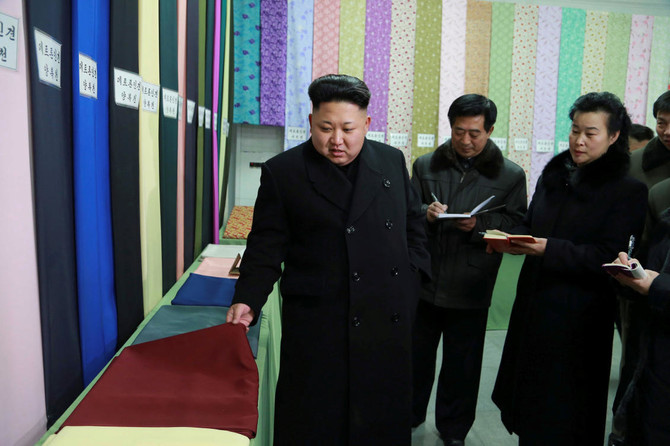
China follows UN sanctions with bans, limits on fuel products to North Korea
China follows UN sanctions with bans, limits on fuel products to North Korea
Latest updates




© 2026 SAUDI RESEARCH & PUBLISHING COMPANY, All Rights Reserved And subject to Terms of Use Agreement.