

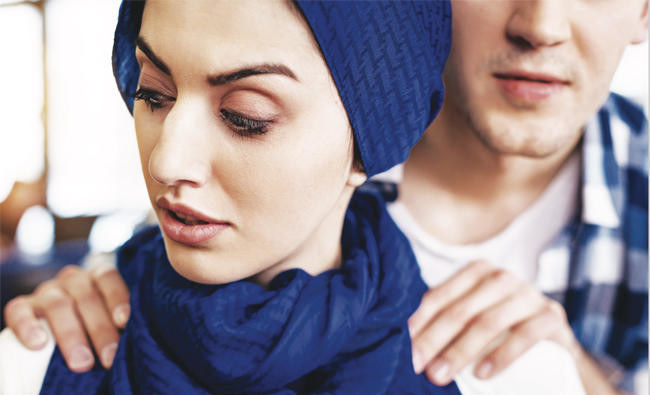
LONDON: The car slows down and the driver leans over and leers at the woman trying to hail a taxi beside a busy road in downtown Amman.
Eyes averted, she waves a little more frantically at the taxis driving by.
Balad, Amman’s downtown area, is one of the city’s harassment hotspots and women here are frequently subjected to sexualized looks and comments or even followed down the street.
The harassment can also take the form of groping, indecent exposure or unwelcome advances.
Now some women in Jordan and elsewhere in the Arab world are taking matters into their own hands by posting details of these incidents on social media to expose the assailants and challenge normalized perceptions of sexual harassment in patriarchal societies.
In the Middle East, where fear of victim shaming prevents many women from reporting perpetrators, sexual harassment remains an inescapable part of everyday life.
“The impacts of sexual harassment go far beyond the incident itself. It affects the daily routines of many women and hinders them from carrying out normal activities to avoid being harassed,” said Farah Mesmar, a Jordan-based human rights advocate.
“Simple activities like going for a run or catching the bus need a lot of consideration, especially regarding choice of clothing or timing.”
In Egypt, where according to a UN survey in 2013, over 99 percent of women have experienced some form of sexual harassment, the female population is fighting back.
“It used to be taboo to talk about sexual harassment. Even the media would describe it as flirtation,” said Alia Soliman, communications manager at HarassMap, an NGO that logs the details of sexual harassment and assaults across Egypt in an online map.
“Now, people are starting to speak up,” she said.
Launched in 2010 and aiming to end the social acceptability of sexual harassment in Egypt, HarassMap has been instrumental in raising awareness surrounding the issue. “In the beginning there was denial that it was happening so the map provided proof,” Soliman said.
Since then, thousands have detailed their ordeals anonymously via the platform, which aims to stop social tolerance of harassment and encourage bystanders to intervene rather than remain silent.
“We’ve seen how one small intervention, even just asking the time, can divert the attention of the harasser and give the victim a window to get away.”
Public pressure can be equally effective online. Soliman recalls an incident in 2015 when a well-known store at a mall in central Cairo was forced to fire a male assistant after a women shared details of his harassment via social media.
The previous year, a video featuring a female student being surrounded and harassed by men while walking across the Cairo University campus went viral after it was uploaded to Facebook and YouTube.
Since then, a growing number of women in countries across the region have taken to the online sphere to share their stories.
In August, a video showing a group of men hounding a young women in Morocco sparked outrage, prompting popular local news site Ladepeche.ma to say that harassment had become “a national sport.”
Earlier this month a girl in Egypt shared pictures on Facebook after a man tried to grope her on a bus.
“The first thing I did was to take a picture of it so when he says he did not do anything, I will know how to respond,” she wrote.
“I’m not wearing tight clothes and my face is barely visible, find other excuses to justify what happened.”
Many are using trending hashtags to spread the word via social media, such as “My first sexual harassment experience was at age …” and “mesh basita” or “It’s not ok,” which is part of a six-week social media campaign launched over the summer by the KIP Project on Gender and Sexuality in Lebanon.
Previously, women avoided sharing these stories online for fear of being shamed, Mesmar said. “However, recently, women have been empowered by feminist social media movements such as ‘expose a harasser,’ which shares pictures or screenshots of online sexual harassment.”
Responses to these posts typically veer from sympathy and encouragement to verbal abuse and outright victim-blaming.
“People want to know what she was wearing at the time, accuse her of wanting (to be harassed), or ask why she was out at night,” said Soliman. “That’s still a very big challenge.”
Lubna Dawany, a lawyer and women’s rights activist who has co-founded several women’s rights NGOs in Jordan, said it boils down to separation between the sexes from a young age.
“When they grow to become teenagers it’s not easy to prevent the interaction — then it will come out as sexual harassment.
“It is not because they are wearing tight clothes or anything else.”
While there has been an increase in this content on social media in the past two to three years, most of the women posting already operate in the activist domain according Raghida Ghamloush, a case management supervisor at ABAAD, a gender equality NGO in Lebanon.
“A lot of women, particularly in rural communities, don’t know how to use these platforms to address the situation, or they are too scared to try.”
Many, she said, may also fear retaliation from the perpetrator’s family, or their own.
However, a growing number of women are reaching out via Facebook and WhatsApp to seek advice in dealing with harassment. “These platforms are used by everyone in Lebanon so it’s a good way for them to get in touch.”
Social media is also instrumental for ABAAD’s awareness-raising activities, she said. “It’s one of the main ways we advocate against sexual harassment and other forms of violence against women.”


