BAGHDAD: Iraq's supreme court Monday ordered the suspension of a September 25 referendum on the independence of Iraqi Kurdistan, as legal and political pressure mounted on the Kurds to call off the vote.
"The supreme court has issued the order to suspend organising the referendum set for September 25... until it examines the complaints it has received over this plebiscite being unconstitutional," it said.
Court spokesman Ayas al-Samouk told AFP it had "received several complaints", as a parliamentary source said at least eight lawmakers had called on the court to intervene on constitutional ground.
Prime Minister Haider al-Abadi's office said it had also filed a complaint against the referendum in the oil-rich autonomous Kurdish region of northern Iraq on constitutional grounds.
There was no immediate reaction from Iraqi Kurdish leader Massud Barzani, who called the referendum and has so far resisted pressure from Baghdad, Iraq's neighbours Turkey and Iran, as well as from the United States and its Western allies, all opposed to the poll.
Britain's Defence Secretary Michael Fallon said he would try to persuade Barzani at a meeting later Monday in the Kurdish capital of Arbil.
"I will be this afternoon in Arbil to tell Massud Barzani that we do not support the Kurdish referendum," he said at a press conference in Baghdad.
"We are committed to the integrity of Iraq. We are working with the UN on alternatives to this referendum," he said before heading to the northern city.
The United States and other Western nations are backing a UN-supported "alternative" plan for immediate negotiations on future relations in exchange for dropping the referendum.
Washington argues that the vote will weaken Arab-Kurdish joint military operations that have helped to send Daesh jihadists into retreat in both Iraq and war-torn Syria.
Israel is alone in openly supporting Kurdish independence.
Barzani has said a "yes" vote would not trigger an immediate declaration of independence but rather kick-start "serious discussions" with Baghdad.
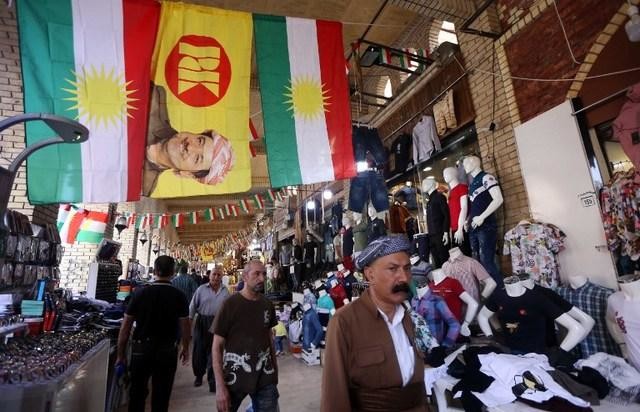
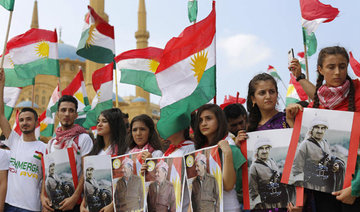
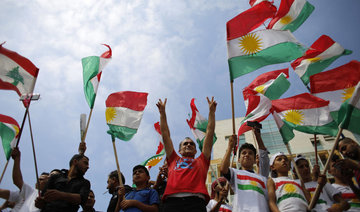
He has mustered huge popular support for the vote, with the streets of Arbil festooned with red, white and green Kurdish flags and large crowds holding nightly rallies.
The non-Arab Kurds -- more than 25 million people spread across Iraq, Turkey, Iran and Syria -- have long sought a state of their own.
According to analysts, Barzani is using the referendum as leverage in his Kurdish Regional Government's (KRG) longstanding disputes with federal authorities in Baghdad over territory and oil exports.
The KRG has already expanded the territory it effectively controls and its peshmerga forces have seized areas outside its borders from Daesh.
Oil-rich Kirkuk province, disputed by Baghdad and Arbil, has voted to take part in the referendum in defiance of the federal authorities.
The government responded by sacking Kirkuk's Kurdish governor, who has refused to leave his post. Rumours are rife that rival communities are stockpiling arms.
Turkey, concerned that the referendum might stir separatist dreams among its own Kurds, has threatened Arbil with "a price" to pay if the vote goes ahead.
Turkey launched a military drill featuring tanks close to the Iraqi border on Monday, its army said.
The KRG's economy is heavily dependent on oil exports via a pipeline running through Turkey to the Mediterranean.
Iran, with a sizeable Kurdish minority of its own, warned Sunday that Iraqi Kurdish independence would mean an end to all border and security arrangements with the KRG.

Supreme court steps in to block Iraq Kurd independence vote
Lebanon, Jordan seek solutions after Damascus bans non-Syrian trucks
- Lebanon and Jordan are seeking a solution with Syria after the latter barred foreign trucks from entering its territory, officials from both countries told AFP on Tuesday.
BEIRUT: Lebanon and Jordan are seeking a solution with Syria after the latter barred foreign trucks from entering its territory, officials from both countries told AFP on Tuesday.
Damascus had issued a decision on Saturday stipulating that “non-Syrian trucks will not be allowed to enter” the country, and that goods being imported by road must be unloaded at specific points at border crossings.
The decision exempts trucks that are only passing through Syria to other countries.
Dozens of trucks unable to enter the country were lined up on the Lebanese side of the Masnaa border crossing on Tuesday, an AFP photographer saw.
Ahmad Tamer, head of land and maritime transportation at the Lebanese transport ministry told AFP that discussions were underway with Damascus over the decision.
He said the issue was not specifically targeting Lebanon — which is trying to reset ties with Damascus after the fall of Bashar Assad — adding that he hoped to hold a meeting with the Syrian side soon.
Lebanon sends around 500 trucks to Syria per day, according to Tamer.
In Jordan, also affected by the decision, transport ministry spokesperson Mohammed Al-Dweiri told AFP that “discussions are currently underway, and we are awaiting a response from the Syrian side regarding allowing foreign trucks to enter and cross.”
Dweiri said that Jordanian trucks were continuing to unload their cargo at the free zone at the Nassib border crossing with Syria despite some “confusion.”
Around 250 Jordanian trucks travel to Syria daily, according to him.
A source in the Syrian General Authority for Ports and Customs told AFP that the decision aimed to “regulate the movement of cargo through the ports.”
Representatives of unions and associations in Lebanon’s transport sector denounced the decision on Tuesday and warning of “negative repercussions,” according to the state-run National News Agency.
Syria is the only land route Lebanon can use to export merchandise to wealthy Gulf markets.
As part of continued attempts to rekindle ties, the two countries signed an agreement on Friday to hand around 300 Syrian convicts over to Damascus.
Damascus had issued a decision on Saturday stipulating that “non-Syrian trucks will not be allowed to enter” the country, and that goods being imported by road must be unloaded at specific points at border crossings.
The decision exempts trucks that are only passing through Syria to other countries.
Dozens of trucks unable to enter the country were lined up on the Lebanese side of the Masnaa border crossing on Tuesday, an AFP photographer saw.
Ahmad Tamer, head of land and maritime transportation at the Lebanese transport ministry told AFP that discussions were underway with Damascus over the decision.
He said the issue was not specifically targeting Lebanon — which is trying to reset ties with Damascus after the fall of Bashar Assad — adding that he hoped to hold a meeting with the Syrian side soon.
Lebanon sends around 500 trucks to Syria per day, according to Tamer.
In Jordan, also affected by the decision, transport ministry spokesperson Mohammed Al-Dweiri told AFP that “discussions are currently underway, and we are awaiting a response from the Syrian side regarding allowing foreign trucks to enter and cross.”
Dweiri said that Jordanian trucks were continuing to unload their cargo at the free zone at the Nassib border crossing with Syria despite some “confusion.”
Around 250 Jordanian trucks travel to Syria daily, according to him.
A source in the Syrian General Authority for Ports and Customs told AFP that the decision aimed to “regulate the movement of cargo through the ports.”
Representatives of unions and associations in Lebanon’s transport sector denounced the decision on Tuesday and warning of “negative repercussions,” according to the state-run National News Agency.
Syria is the only land route Lebanon can use to export merchandise to wealthy Gulf markets.
As part of continued attempts to rekindle ties, the two countries signed an agreement on Friday to hand around 300 Syrian convicts over to Damascus.
© 2026 SAUDI RESEARCH & PUBLISHING COMPANY, All Rights Reserved And subject to Terms of Use Agreement.