The Ban Treaty ignores global security climate warns Wood

In this July 19, 2016 file photo, a worker watches a monitor of radioactivity detector at Reduction Recycling Pilot plant in Iidate, Fukushima Prefecture, northeastern Japan. (AP)
Updated 15 September 2017
Follow

The Ban Treaty ignores global security climate warns Wood

LONDON: The US has reiterated its opposition to the Treaty on the Prohibition of Nuclear Weapons, saying it would only make the world more dangerous at a time when it is facing a “very serious international security climate.”
The deal, known as the ‘Ban Treaty’, was adopted by 122 UN member states in July, and if at least 50 states sign it on Sept. 20, it will enter into legal force.
Robert Wood, the US Permanent Representative to the Conference on Disarmament based in Geneva, said if that happens it would be a grave error, even though it would not be mandatory for those who do not sign it.
“You cannot divorce nuclear disarmament from the prevailing security environment,” Wood told Arab News in a phone interview from Geneva.
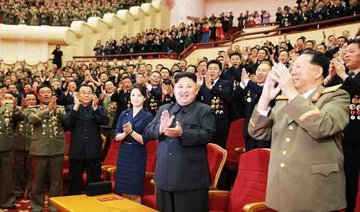
“The security environment today is a very, very serious one with what Russia is doing, with what China is doing in the South China Sea and, of course, we cannot forget the gentleman in Pyongyang who is trying to destabilize the Korean peninsula with threats of using nuclear weapons.”
The recent saber-rattling by North Korea continued on Thursday when the pariah state threatened to sink Japan and said the US should be “beaten to death like a rabid dog.”
For some that only adds to the need to rid the world of nuclear weapons, for the US, though, the current crisis underlines why now is not the time to talk about disarmament.
“North Korea is the greatest nuclear challenge that the world faces and what the Ban Treaty is proposing is for nuclear weapons states to give up their nuclear weapons and for a number of our allies to stop depending on the nuclear umbrella for their security.
“The question I ask is that if the nuclear weapons states were to disarm tomorrow, is that something that’s going to be good for security when you have someone like Kim Jong-un, who is building up his nuclear weapons capabilities and is a huge danger to the planet?
“This is not a time to talk about nuclear disarmament.”
Kim Jong-un’s recent rhetoric has evoked memories of the Cold War, when nations lived in permanent fear of nuclear conflict.
Still, there are clear differences between now and then, according to Wood.
“I hesitate to compare periods, but I think when you look back to the 1950s and 1960s – the Soviet Union and its leadership at that time were certainly not irrational.
“What we’re dealing with today is a very irrational actor, in my view, a very dangerous one and this is a very huge threat.”
He rejected the notion that the current White House administration could also be accused of pursuing irrational foreign policy.
“Trying to compare Kim Jong-un and that regime with the President of the United States is an absolutely false comparison, it’s ridiculous,” he said.
“The President has been trying to communicate the concerns we have about North Korea in a way the North Korean leader understands. We are a responsible actor, we are a democracy and these people who try to make those comparisons are farcical in my view.”
In the short term Wood said the only way to end the crisis was through diplomacy.
“We need to exhaust all of the diplomatic options we have with North Korea. The existing sanctions we have on the books need to be fully enforced.”


Ukraine says Russia launched a major aerial attack before Kyiv’s talks with US

Updated 7 sec ago
Follow

Ukraine says Russia launched a major aerial attack before Kyiv’s talks with US

  • The bombardment targeted critical infrastructure and residential areas across eight regions of Ukraine, Zelensky said
  • Dozens of people, including children, were injured, officials said

KYIV: Russia launched a barrage of 420 drones and 39 missiles at Ukraine overnight, President Volodymyr Zelensky said Thursday, as US and Ukrainian envoys held more talks in Geneva on ending the war that is now in its fifth year.
The bombardment, which included 11 ballistic missiles, targeted critical infrastructure and residential areas across eight regions of Ukraine, Zelensky said. Dozens of people, including children, were injured, officials said, though authorities did not immediately publish a confirmed total.
Zelensky said late Wednesday he had spoken by phone with US President Donald Trump and thanked him for his “efforts and engagement” in pursuing peace negotiations.
The US-brokered talks between Moscow and Kyiv are continuing but are deadlocked on the issue of the future of Ukrainian territory that Russia claims as its own.
Zelensky has pushed for a summit with Russia’s President Vladimir Putin, saying a face-to-face meeting could be decisive in unlocking an agreement, but the Kremlin has rebuffed that proposal beyond inviting the Ukrainian president to Moscow, which Zelensky refused.
Trump representatives Steve Witkoff and Jared Kushner, who were also discussing nuclear negotiations with Iran in Geneva before turning to the war in Europe, met with Rustem Umerov, the head of Ukraine’s National Security and Defense Council. They also joined Trump’s call with Zelensky.
The envoys were to discuss economic support and the recovery of Ukraine, ways of attracting investment to the country, and frameworks for long-term cooperation, Umerov said on X.
Also, the meeting would look at preparations for the next round of trilateral negotiations involving Russia and consider possible further exchanges of prisoner, according to Umerov.
Washington is looking to keep momentum in its yearlong push to stop the fighting and overcome deep enmity between the warring countries.
Ukrainian and European officials have accused Putin of feigning interest in peace negotiations, hoping to avoid punitive US measures such as additional sanctions while pressing forward with the invasion.
Thursday’s talks between the American and Ukrainian envoys were to address details of a possible postwar recovery plan for Ukraine and discuss preparations for an upcoming trilateral meeting with Moscow officials, perhaps next week, according to Zelensky.
He said he has also tasked Umerov with discussing a possible prisoner exchange.
Russia returned 1,000 bodies of fallen soldiers to Ukraine, and got back 35 bodies of its fallen troops, Vladimir Medinsky, the head of the Russian delegation at previous talks with Ukraine, said Thursday. He did not say when the exchange happened.
Ukraine’s Coordination Headquarters for the Treatment of Prisoners of War later confirmed the return, though it referred to “bodies which, according to preliminary information provided by the Russian side, may belong to Ukrainian defenders.”
Russia struck gas infrastructure in the Poltava region and electrical substations in the Kyiv and Dnipropetrovsk regions, Zelensky said. Emergency crews responded in five other regions, as well as in the capital.
Ukraine’s air defenses shot down most of the Russian missiles, Zelensky said, crediting Western partners for timely delivery of additional air defense interceptors. Ukraine needs foreign help to sustain its fight against Russia’s bigger forces.
Ukrainian Foreign Minister Andrii Sybiha urged allied countries to provide more military aid.
“When the whole world demands Moscow to finally stop this senseless war, Putin bets on more terror, attacks and aggression,” Sybiha said in a post on the Ministry of Foreign Affairs website.
The Russian Defense Ministry said its air defenses shot down 17 Ukrainian drones overnight over a number of Russian regions, as well as the Black and Azov Seas.
Ukraine’s domestically developed long-range drones have struck oil refineries, fuel depots and military logistics hubs deep inside Russia.
Meanwhile, Russia continued to push allegations of a purported plot by European nations to provide Kyiv with a nuclear bomb, without providing any evidence.
The Kremlin-controlled lower house of the Russian parliament on Thursday unanimously approved an address urging the United Nations and European lawmakers to prevent the alleged plan.
It followed a statement on Tuesday by the Russian foreign intelligence service alleging that France and the UK were planning to covertly transfer nuclear weapons or components of a “dirty bomb” device.
British and French officials said the claim was a lie.