LONDON: Israa Ababneh was skeptical when her uncle signed her up for a plumbing course at a vocational center in North Jordan.
“At first I thought what am I doing here? It’s just for men and it’s hard.”
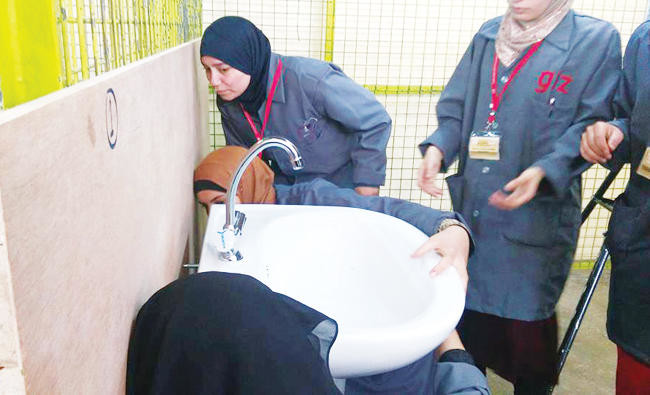
But she stuck it out for three days and mastered the basics before moving onto practical skills.
“That’s when we started to have fun, learning how to cut iron pipes, connect them and fix leakages behind a wall.”
The 27-year-old is one of a growing number of women taking up plumbing in Jordan, raising eyebrows in local communities where social norms prevent many women from working, particularly in roles traditionally occupied by men.
Some 81 percent of women in Jordan are unemployed, according to a report by UNHCR.
The country ranks 134th out of 142 in terms of women’s economic contribution, according to a 2016 study by the Jordan Strategy Forum.
At first, Ababneh and the other female plumbers she works with found these patriarchal attitudes prohibitive — particularly when people refused them work because they were women.
“They used to laugh and say we couldn’t do it. It was like a challenge.”
Now, she said, clients call specifically seeking female plumbers.
“A man just mends the faucet and leaves a mess but when a woman does it she fixes the problem and leaves it clean.”
Women plumbers can also gain access that is off limits to men, carrying out work in households where male family members are not present.
This means leaks can be fixed faster with less water lost – a big benefit for a country where water availability is among the lowest in the world.
Jordan has an annual water supply of just 150 cubic meters per person, well below the official UN threshold for “absolute scarcity” set at 500 cubic meters.
“Water is a highly sensitive issue in Jordan,” said Bjorn Zimprich, project manager at German Development Agency GIZ, which initiated the Water Wise Women’s Initiative to train female plumbers in the country.
“There have been a lot of awareness campaigns and people know that water is scarce but with regards to behavioral impact there is limited impact.”
Most Jordanian households subsist on just one water tank a week so fixing a burst pipe quickly can make all the difference for families dependent on limited supplies.
With between 40 and 50 percent of Jordan’s water lost through its aging distribution network, due in large part to leakages and theft, there is an urgent need for more efficient maintenance.
Conservation is a key concern on the training program, which aims to raise awareness surrounding water scarcity among local and refugee communities across Jordan.
“People from Syria, Iraq and Palestine are all living in this country and sharing the water,” said Ababneh, pointing to the additional pressure on Jordan’s limited resources created by a refugee crisis.
“We go into schools and tell them how to stop leakages and advise households on using water-saving devices,” says Ababneh, who is now part of a professional female plumbing cooperative.
The women work in pairs, with different teams responding to calls around the country.
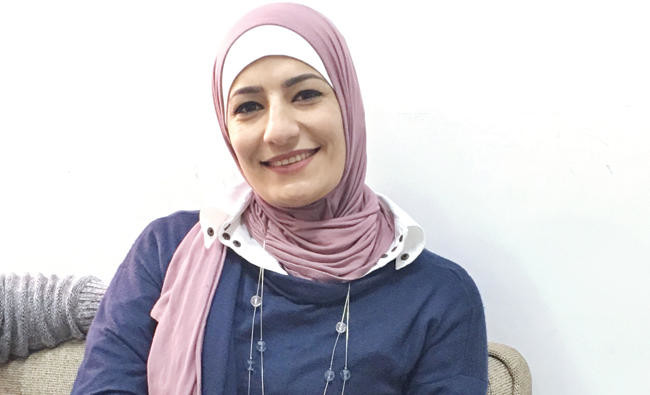
Plumber Ala Abu Heja, 32, hopes that this could help pave the way for more diversity in Jordan’s labor force.
“Before, a female plumber is not something people here would accept.
Now we’re seeing some females working in electricity, plumbing and mechanics so these initiatives will influence the entrance of women into other occupations traditionally dominated by men.”
More than 160 women have now graduated from the program, which runs separate sessions for male trainees.
Nargis Al-Mahmoud, 23, arrived in Jordan in 2013 after bombs destroyed her home in Dar’aa, Syria. With little means of generating an income in Jordan, her husband signed up for the course.
“He was really struggling to understand the theoretical part but reading his notebook one time I said, are you kidding? This is something I can do.”
The daughter of a handyman, Al-Mahmoud already knew her way around a toolbox and she enrolled in the program, eager to pursue a career in plumbing. “The first time I went to a house they started to make fun of me and I ran out crying. It was really bad. I told my husband and he said just stay at home, we don’t need this.
But Al-Mahmoud was determined to put her new skills to use. “I didn’t do all this training just to sit at home,” she said. After fixing a few things for free to showcase her skills, Al-Mahmoud’s client base began to grow and she is now working alongside her husband to expand their budding family business.
For Abu Heja, the opportunity to earn and contribute to the household budget has had a personal as well as a financial impact. “I now have a source of income and a greater sense of self-respect,” she said, a feeling shared by many graduates of the program. “In the past, we felt shy and restricted, but now we’re working, we feel we can go wherever we like and do what we want. It’s really built our confidence in a way that we never thought it would.”


![]()
![]()
![]()
Jordan’s women plumbers fix pipes as men leave puddles

Jordan’s women plumbers fix pipes as men leave puddles


Latest updates


© 2026 SAUDI RESEARCH & PUBLISHING COMPANY, All Rights Reserved And subject to Terms of Use Agreement.