CAIRO: A high-level Hamas delegation arrived in Cairo on Sunday to meet Egyptian officials. The delegation will discuss the blockade of Gaza and achieving national reconciliation with the Fatah movement.
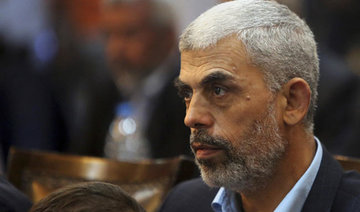
Hamas has sought to improve relations with Egypt in the past few months. This week’s visit includes the group’s head, Yahya Al-Sunwar, and head of the political bureau, Ismail Haniyeh, on his first foreign visit since being elected to the post last May.
The talks, according to a statement from Hamas spokesperson Fawzi Barhoum, will cover the mechanisms for allowing entry into Egypt through the Rafah border crossing, in addition to mending a longstanding rift with rival group, Fatah.
Senior Hamas member, Mousa Abu Marzook, told the local Egyptian Al-Shorouk newspaper, “Hamas has always welcomed Egypt’s leading role.”
Regarding the Rafah border, Abu Marzook said: “We understand that opening the crossing is solely an Egyptian decision but we hope it will be opened on a regular basis in order to allow the passage of people and goods.”
He also said the talks would discuss the stringent measures taken by Palestinian President Mahmoud Abbas against the movement ruling the Gaza Strip.
Egypt’s state-owned Al-Ahram newspaper said Sunday that a delegation headed by the former Fatah leader, Mohammed Dahlan, is expected to join the meetings in Cairo.
Hamas’ leadership has been in talks with Mohammed Dahlan, the exiled former Fatah leader in Gaza who was defeated by Hamas when it took control of the territory in 2007.
The group hopes Dahlan can persuade Egypt to come to the aid of the people of Gaza who are struggling under the decade-long Israeli blockade which has been supported by successive Egyptian governments.
On whether the delegation will meet Dahlan on the Cairo visit, Abu Marzook was quoted as saying, “This issue is not on the agenda of the delegation.”
“The visit to Egypt could represent a message from Hamas to Palestinian President Mahmoud Abbas that they are open to overtures by the Dahlan supporters,” political analyst Mohammed Gomaa told Arab News.
Hoping to pressure Hamas to relinquish control of Gaza, Abbas has cut payments to Israel for the electricity it supplies to Gaza. This means that electricity has often been provided for less than four hours a day, and never more than six.
Abbas has vowed to maintain sanctions on Gaza, saying the measures are aimed against Hamas and not ordinary people. In turn, Hamas is trying to make a crack in the wall of sanctions by improving its relations with Egypt and other Arab countries.


![]()

Top Hamas leaders visit Egypt for national reconciliation
Top Hamas leaders visit Egypt for national reconciliation

Latest updates


Recommended


© 2026 SAUDI RESEARCH & PUBLISHING COMPANY, All Rights Reserved And subject to Terms of Use Agreement.