SEOUL/WASHINGTON: Most South Koreans doubt that North Korea will start a war, a survey showed on Friday, just days after the North’s largest nuclear test, as US President Donald Trump again highlighted the possibility of a US military response.
Tension on the Korean Peninsula has escalated as North Korea’s young leader, Kim Jong-un, has stepped up the development of weapons in defiance of UN sanctions, testing a string of missiles this year, including one flying over Japan, and conducting its sixth nuclear test on Sunday.
Experts believe the isolated regime is close to its goal of developing a powerful nuclear weapon capable of reaching the US, something Trump has vowed to prevent.
Still, a Gallup Korea survey showed South Koreans were considerably less concerned about war compared with June 2007, nine months after North Korea conducted its first nuclear test, in September 2006.
The survey found that 58 percent of those questioned felt there was no possibility North Korea would cause a war, while only 37 percent thought it could.
In 2007, 51 percent of respondents said they expected a war, while 45 percent did not.
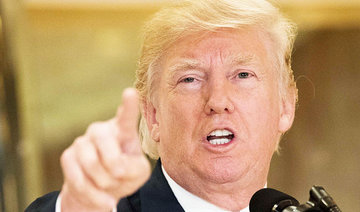
Trump has repeatedly said all options are on the table in dealing with North Korea and on Thursday said he would prefer not to use military action, but if he did, it would be a “very sad day” for North Korea.
“Military action would certainly be an option. Is it inevitable? Nothing is inevitable,” said Trump.
Even as Trump has insisted that now is not the time to talk, senior members of his administration have made clear that the door to a diplomatic solution is open, especially given the US assessment that any pre-emptive strike would unleash massive North Korean retaliation.
North Korea says it needs its weapons to protect itself from US aggression and regularly threatens to destroy the US.
South Korea and the US are technically still at war with North Korea after the 1950-53 Korean conflict ended with a truce, not a peace treaty.
US carrier on the move
The USS Ronald Reagan, a nuclear-powered carrier, left its home port in Japan for a routine autumn patrol of the Western Pacific, a Navy spokeswoman said. That area included waters between Japan and the Korean Peninsula, she added, without giving any further details.
The Ronald Reagan was out on routine patrol from May until August, and was sent to the Sea of Japan with the another carrier, the USS Carl Vinson, to take part in drills with Japan’s Self Defense Forces as well as the South Korean military.
North Korea vehemently objects to military exercises on or near the peninsula, and China and Russia have suggested the US and South Korea halt their exercises to lower tension.
While Trump talked tough on North Korea, China agreed on Thursday that the UN should take more action against it, but it also pushed for dialogue.
The UN Security Council is expected to vote on a new set of sanctions soon. North Korea offered fresh vitriol against the pending sanctions, specifically targeting US Ambassador to the UN Nikki Haley, who this week accused North Korean leader Kim of “begging for war.”
“There is nothing more foolish than thinking we, a strong nuclear state, will endure this evil pressure aimed at overthrowing our state,” the North’s official news agency said in a commentary.
“Even if Nikki Haley is blind, she must use her mouth correctly. The US administration will pay for not being able to control the mouth of their UN representative.”
Oil embargo
The US wants the UN Security Council to impose an oil embargo on North Korea, ban its exports of textiles and the hiring of North Korean laborers abroad, and to subject leader Kim Jong-un to an asset freeze and travel ban, according to a draft resolution seen by Reuters on Wednesday.
Russian Foreign Minister Sergei Lavrov said it was too early to talk about a vote at the council on new North Korea sanctions, insisting any pressure should be balanced against restarting talks.
China is by far North Korea’s biggest trading partner, accounting for 92 percent of two-way trade last year. It also provides hundreds of thousands of tons of oil and fuel to the impoverished regime.
China’s economic influence has been felt by South Korea as well.
The two countries have been at loggerheads over South Korea’s decision to deploy a US anti-missile system, the Terminal High Altitude Area Defense, which has a powerful radar that can probe deep into China.