DELHI: Tea, they say in India, is “the finest solution to nearly every catastrophe and conundrum that the day may bring.”
But in the foothills of the Himalayas, a storm is brewing that could cost the tea industry $60 million and dry up supplies of prized Darjeeling to the teapots of the world.
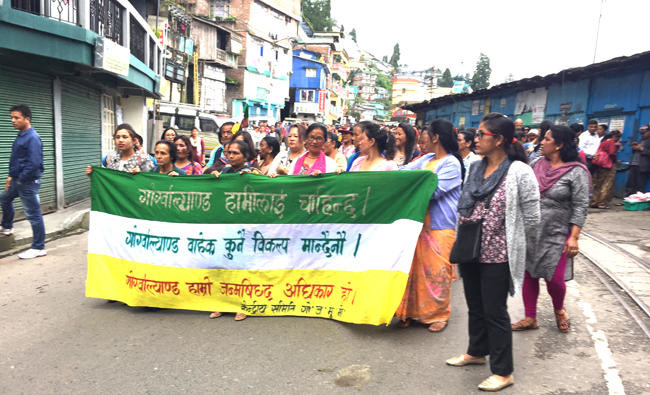
The 120,000 tea plantation workers in the area have been on strike since the beginning of June, in protest at attempts to impose Bengali as the official language and in support of demands for a separate homeland for the majority Nepali-speaking Gorkha community.
The dispute has washed out the autumn crop of Darjeeling for the first time in its 150-year history. “Never before have we had a situation where a strike has affected the functions of tea gardens as it is doing today,” said Jay Guha Neogi, manager of the Monteviot tea garden.
“If bushes and overgrowth are not cut soon, then it will take one pruning cycle, which means five years to restore the tea plantation to its normal state.”
Binod Mohan, chairman of the Darjeeling Tea Association, is equally pessimistic. “We stare not only at a loss of $60m, but also damage to the brand of Darjeeling tea, a flagship of the Indian tea industry,” he said
“There is going to be lots of direct and collateral damage to the industry. The world is not going to get Darjeeling tea next year.”
The demand for a Gorkhaland independent of West Bengal has been an emotional issue for the people of the area for the past 70 years.
“We look at the issue from the viewpoint of identity,” said Amar Singh Rai of Gorkha Janmukti Morcha, the political group that has been leading the agitation for a separate state. “We have been living in West Bengal for more than 70 years but we are still treated like second-class citizens, as outsiders. Our struggle is against this mindset and we will continue to fight till we get our statehood.” The tea workers, who are paid 132 rupees ($2) a day, are determined to continue with the strike.
“We are willing to sacrifice anything. We are not getting anything under West Bengal, once we have our own state our life will improve. Life is not easy, that’s why we want Gorkhaland,” said Devika Subba, 47.
His colleague Sushma Gurung feels the same way: “If we get Gorkhaland, our salary will go up and our house can run well.”
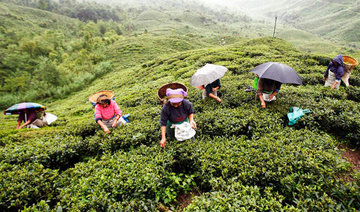
Darjeeling comprises 87 tea estates or gardens that produce about 10,000 tons of tea a year, most of it exported to Europe and the United States. Darjeeling tea is particularly valued for its delicate taste and is among the most expensive in the world; the summer harvest, or “flush,” fetches up to $900 a kilo.
When Darjeeling became part of British India in the late 18th century, the Nepali-speaking region was part of the north-eastern state of Sikkim. It was merged into West Bengal in 1947 when India gained independence.
This merger angered the people of Darjeeling, who had been expecting the status of a separate state, and immediately began demanding one. The movement reached its apex in the 1980s, when nearly 1,000 people lost their lives in violent clashes over independence.
In 2013, the movement again came to rise in a strong way.
The West Bengal government held talks last week with Gorkha Janmukti Morcha in an attempt to end the dispute, to no avail.
“We hope the political deadlock ends soon,” said tea association chief Mohan. “Otherwise Darjeeling tea is facing the most serious existential threat in its 150-year history.”


![]()
$60m storm in a teacup: Darjeeling workers strike over independence
$60m storm in a teacup: Darjeeling workers strike over independence
Latest updates


© 2026 SAUDI RESEARCH & PUBLISHING COMPANY, All Rights Reserved And subject to Terms of Use Agreement.