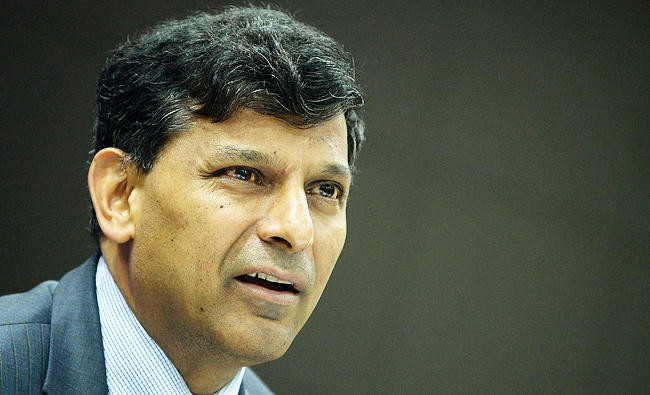
MUMBAI: India’s former central bank head Raghuram Rajan had cautioned the government that short-term costs of a radical ban of high-value currency notes would outweigh the long-term benefits, Times of India newspaper reported on Sunday.
He had first given his opinion on whether to carry out the ban in February 2016, the paper reported, citing excerpts from Rajan’s book on his stint at the Reserve Bank of India (RBI), titled “I Do What I Do: On Reforms Rhetoric and Resolve.”
That was months before Prime Minister Narendra Modi stunned the country on Nov. 8 by abolishing 500- and 1,000-rupee notes, removing 86 percent of the currency in circulation in a bid to crack down on the “shadow economy.”
“The RBI flagged what would happen if preparation was inadequate,” the paper cited Rajan as saying in the book that will be released next week.
Rajan also told the newspaper in an interview that the demonetization had a disruptive impact on the economy.
“I think all said and done, it would be fair to say the intent was good. But certainly at this point, one still cannot in any way say it has been an economic success. But again, as I said, only time will tell,” he was quoted as saying.
Indians returned most of the estimated 15.4 trillion rupees ($242 billion) in high-currency bills removed from circulation last year, the RBI said in its annual report on Wednesday.
Modi had been intending to make it difficult for hoarders of undeclared wealth to exchange their undeclared cash for legal tender, but it seems most of it was returned by individuals, implying there was a very small amount of unaccounted money held in cash or evaders had managed to legalize their unaccounted money.
While Modi’s drive to unearth unaccounted wealth did not deliver the desired result, it hurt consumer demand in a country where most people are paid in, and buy what they need with, cash.
India’s economy lost further steam in the quarter to June as growth slid to 5.7 percent, its lowest level in more than three years and a marked slowdown from a 6.1 percent growth rate in the January-March period.
— Reuters

India’s former central bank chief had cautioned government on demonetization
Saudi Arabia ranks 2nd globally in digital government, World Bank 2025 index shows
WASHINGTON: Saudi Arabia has achieved a historic milestone by securing second place worldwide in the 2025 GovTech Maturity Index released by the World Bank.
The announcement was made on Thursday during a press conference in Washington, DC, which evaluated 197 countries.
The Kingdom excelled across all sub-indicators, earning a 99.64 percent overall score and placing it in the “Very Advanced” category.
It achieved a score of 99.92 percent in the Core Government Systems Index, 99.90 percent in the Public Service Delivery Index, 99.30 percent in the Digital Citizen Engagement Index, and 99.50 percent in the Government Digital Transformation Enablers Index, reflecting some of the highest global scores.
This includes outstanding performance in digital infrastructure, core government systems, digital service delivery, and citizen engagement, among the highest globally.
Ahmed bin Mohammed Al-Suwaiyan, governor of the Digital Government Authority, attributed this achievement to the unwavering support of the Saudi leadership, strong intergovernmental collaboration, and effective public-private partnerships.
He highlighted national efforts over recent years to re-engineer government services and build an advanced digital infrastructure, which enabled Saudi Arabia to reach this global standing.
Al-Suwaiyan emphasized that the Digital Government Authority continues to drive innovation and enhance the quality of digital services, in line with Saudi Vision 2030, supporting the national economy and consolidating the Kingdom’s transformation goals.
The 2025 GTMI data reflects Saudi Arabia’s excellence across key areas, including near-perfect scores in core government systems, public service delivery, digital citizen engagement, and government digital transformation enablers. This balanced performance places the Kingdom firmly in the “Grade A” classification for very advanced countries, demonstrating the maturity of its digital government ecosystem.
Saudi Arabia’s progress in the index has been remarkable: from 49th place in the 2020 edition, to third in 2022, and now second in 2025, confirming its status as a global leader in digital transformation and innovation.
The achievement also reflects the Kingdom’s focus on putting people at the center of digital transformation, enhancing user experience, improving government efficiency, and integrating artificial intelligence and emerging technologies across public services.