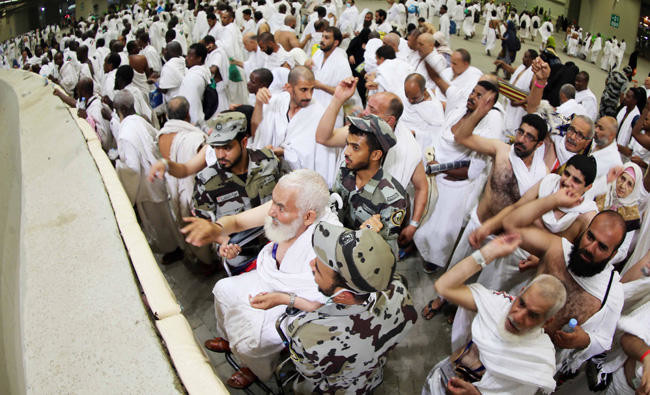
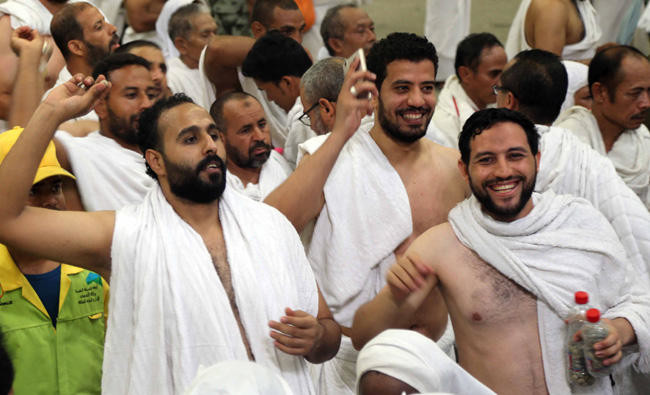
MINA, Saudi Arabia: In stifling heat, a Saudi security guard sprayed Muslim pilgrims with water as they advanced through Mina for the final rite of the Hajj, the “Stoning of the Devil”.
Saudi Arabia reported no major health or safety upsets at the Jamrat Bridge, as the Muslim faithful made their way through the last leg of the five-day pilgrimage.
For many, the pilgrimage, which all Muslims must perform at least once if physically and financially able, has been a lifelong dream.
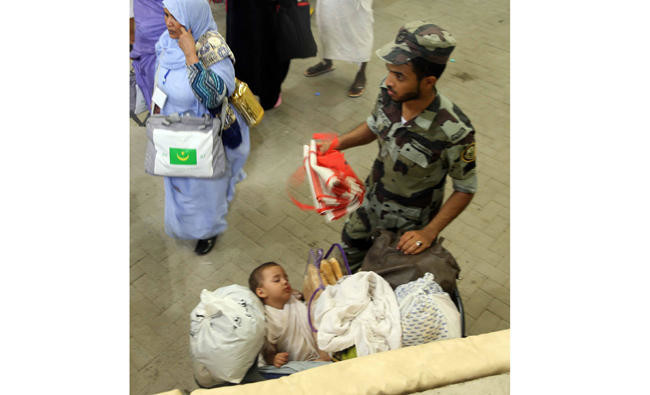
Amin Hashkir, a 26-year-old from Casablanca in Morocco, traveled to western Saudi Arabia, home of the holiest sites in Islam, together with his sister and mother, who was unable to physically perform the stoning rite herself.
“My father passed away in 2011, and we’ve been trying to make it here ever since to perform Hajj for him,” Hashkir explained on a sidewalk in Mina, near Makkah. “It was what he felt was missing from his life.”
Hashkir’s mother was also counting on her son to fulfil her dream of Hajj. “My mother is sick, so I offered to throw the stones for her.”
The 2015 stampede was the deadliest disaster ever to strike the Hajj, one of the five pillars of Islam. Hundreds more lives have been lost in several stampedes during the stoning ritual over the past 20 years.
Saudi Arabia says it has deployed more than 100,000 security personnel to keep pilgrims safe this year.
The state-run SPA news agency on Thursday reported more than 2.35 million people were participating in the Hajj this year, including 1.75 million from outside the kingdom.
Authorities said on Friday there had been no major health or safety upsets in Mina this year.
Col. Sami Al-Shweirekh, head of outreach at Saudi Arabia’s General Security, hailed the “success” of the intensified security measures at a press conference.
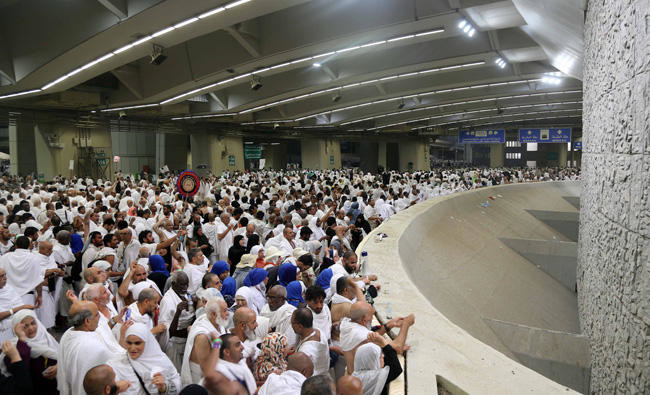
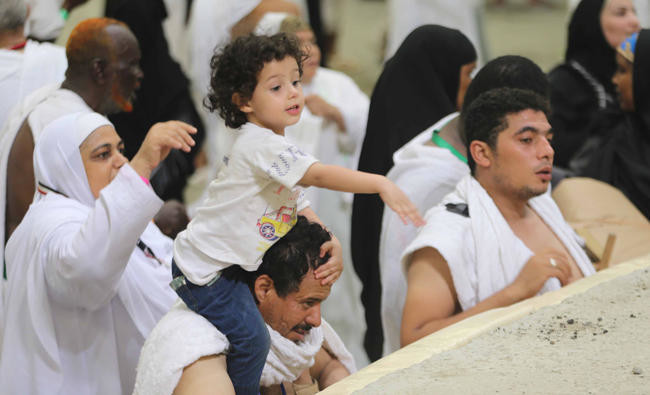
Hours earlier, huge crowds dotted with colorful umbrellas to shield pilgrims from the sun took part in the stoning rite under strict surveillance, with police tape guiding the flow of pilgrims, cameras everywhere and helicopters hovering overhead.
“It’s different every year,” said Najat Malik, 45, a Sudanese Red Crescent employee who traveled from Khartoum for the Hajj.
“Some years there are less pilgrims because of fears and warnings of disease. But this year, I feel like there are a lot more people here.”
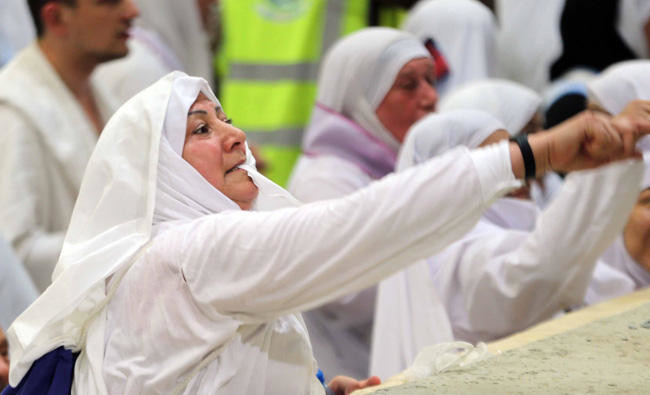
Traditionally, seven pebbles are thrown at a post representing the devil, emulating the actions of the biblical prophet Abraham.
Since 2004, it has been replaced by walls to accommodate the rising numbers of pilgrims.
By Friday afternoon, temperatures had reached 41 degrees Celsius (106 Fahrenheit), with many suffering from dehydration or heat exhaustion.
“Two pilgrims fainted right in front of me this morning,” said Almas Khattak, a Pakistani volunteer in Mina.
At the bridge, an elderly woman had collapsed onto a stretcher as her relatives tried to revive her, splashing her face with water before calling for assistance.
The shadow of the 2015 stampede still looms large over the ritual.
Iran, which with 464 dead reported the largest number of victims in the disaster, did not send its pilgrims last year to the Hajj in Saudi Arabia, as authorities in the two countries failed to agree on logistics.
Iranian authorities say more than 86,000 Iranian pilgrims are taking part this year, each equipped with an identity bracelet in case of any accident.
The stoning ritual, which lasts until Sunday, marks the first day of the Eid Al-Adha feast, or the feast of sacrifice, which commemorates Abraham’s willingness to sacrifice his son.
The holiday is marked by the sacrifice of sheep instead by Muslim communities around the world.


Muslim pilgrims mark final Hajj rite with ‘Stoning of Devil’



Muslim pilgrims mark final Hajj rite with ‘Stoning of Devil’



Saudi Cabinet condemns ‘blatant’ Iranian aggression; affirms Kingdom’s right to respond to threats
RIYADH: Saudi Arabia has warned it reserves the “full right” to respond to Iranian aggression following a series of “blatant and cowardly” strikes targeting the capital and the Eastern Province.
The warning came during a late-night Cabinet session on Tuesday, chaired by Crown Prince and Prime Minister Mohammed bin Salman via videoconference, according to the Saudi Press Agency (SPA).
During the session, the Cabinet “reaffirmed Saudi Arabia’s full solidarity with the brotherly countries whose territories were subjected to blatant Iranian aggression”, signaling a united front against regional threats.
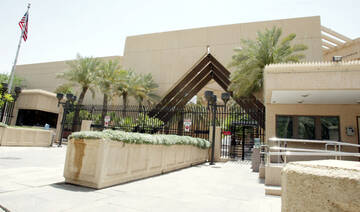
The session followed a dramatic escalation of hostilities, including a direct drone attack on the US Embassy in Riyadh.
Major General Turki al-Malki, spokesperson for the Ministry of Defense, confirmed that while air defenses intercepted multiple threats, the embassy compound sustained a “limited fire and minor material damage.”
General Al-Malki further announced that Saudi forces successfully intercepted and destroyed eight additional drones targeting the cities of Riyadh and Al-Kharj early Tuesday morning.
In a sharp rebuke of the embassy strike, the Saudi Ministry of Foreign Affairs (MOFA) cited a flagrant violation of the 1949 Geneva Convention and the 1961 Vienna Convention on Diplomatic Relations.
“The repetition of this flagrant Iranian behavior... will push the region toward further escalation,” the Ministry stated, underscoring that these provocations occurred despite Riyadh’s explicit policy of not allowing its airspace or territory to be used as a launchpad for strikes against Iran.
Global condemnation and solidarity
The Cabinet expressed deep appreciation for the wave of international support as world leaders condemned Tehran’s “indiscriminate” behavior.
In a joint show of force, the US and GCC member states (Bahrain, Kuwait, Qatar, Saudi Arabia and the UAE) along with Jordan stood united, labeling the strikes a “dangerous escalation” and reaffirming a collective right to self-defense.
Leaders from the United Kingdom, France, and India. — including Prime Minister Narendra Modi — voiced strong solidarity with the Kingdom. The UK government confirmed its forces are engaged in “defensive actions” to maintain regional stability.
Amid the heightened military tension, the Cabinet reviewed the Kingdom’s hospitality efforts for GCC citizens currently stranded at Saudi airports due to regional airspace closures. The crown prince reaffirmed that the state would mobilize all capabilities to support brotherly nations in any measures they take to restore regional peace and stability.