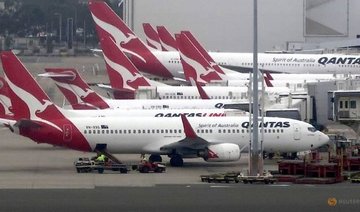
SYDNEY: Australia’s Qantas Airways will not fly to Emirates’ Dubai hub from next year and instead re-establish its Singapore stopover, redrawing a five-year-old alliance with the Gulf carrier to focus on Asian demand.
Qantas had made Dubai its hub for European flights under a 10-year deal it agreed with Emirates in 2012, as Qantas’s loss-making international division struggled.
But since the alliance began, Australia’s biggest airline has turned the corner, cutting costs, hiking fares and returning record profits, allowing it to switch back to the Singapore hub its customers liked better.
“Our partnership has evolved to a point where Qantas no longer needs to fly its own aircraft through Dubai,” Qantas Chief Executive Officer Alan Joyce said in a statement, adding later in a conference call that the change will free up aircraft for “expansion into Asia”.
Qantas said on Thursday it is retaining its partnership with Emirates for another five years, but the Australian airline will return to flying its flagship Sydney-London “Kangaroo Route” via Singapore and increase capacity on Melbourne-Singapore flights. It will retain more than 100 code share destinations with Emirates.
“When Qantas did the deal with Emirates its international fortunes were not attractive...they weren’t negotiating from a strong position,” said Neil Hansford, who runs consultancy Strategic Aviation Solutions.
“Me and a million others never enjoyed hubbing at Dubai. Now they’re going back to the traditional route,” Hansford said. Australian travelers generally prefer stopovers in Southeast Asia compared to Dubai because of timezone differences.
Qantas had already flagged plans to switch capacity to Asia, when it said in April it would axe its Melbourne-Dubai-London flights operated in partnership with Emirates, and fly via Perth instead.
Dropping Dubai as a destination altogether frees extra Airbus A380 and A330 aircraft for flights to Asia, where the airline’s low-cost arm, Jetstar, already operates a sizeable network and Qantas sees growing demand.
“Asia is where the growth market is. By pulling out of Singapore they basically forsook that whole thing; this transforms things incredibly,” said Peter Harbison, a former Australian aviation trade negotiator and chairman of consultancy CAPA.
Qantas said it expected a benefit of more than A$80 million a year to the airline from fiscal 2019 from the renewed alliance. Emirates said it was mutually beneficial.
Revenue sharing arrangements for the next five years of the deal were confidential, but a “continuation of what we’ve been doing until now”, Joyce said.
The airlines’ alliance is subject to government and regulatory approval in Australia.
Singapore’s Changi Airport welcomed the deal and said it would increase weekly Australia-Singapore capacity by 5.5 percent. However, Qantas has flagged cutting out stopovers altogether on the Kangaroo Route and flying to London directly from 2022.


![]()

Qantas keeps alliance with Emirates but drops Dubai for Singapore
Qantas keeps alliance with Emirates but drops Dubai for Singapore


Latest updates


Recommended


© 2026 SAUDI RESEARCH & PUBLISHING COMPANY, All Rights Reserved And subject to Terms of Use Agreement.