DHAKA: Bangladesh on Monday proposed joint military operations with Myanmar against Rohingya militants fighting in Rakhine state, where thousands of villagers have fled fresh violence in recent days, an official said.
An upsurge in fighting in Rakhine, an impoverished state neighboring Bangladesh, has been raging since Friday when Rohingya militants staged coordinated ambushes against Myanmar’s security forces.
More than 100 people, including around 80 militants, have been confirmed killed in the fightback, which has seen thousands of Rohingya villagers fleeing for Bangladesh.
More than 3,000 Rohingya have arrived in Bangladesh from Myanmar, where the stateless Muslim minority faces persecution, in the past three days, the UN refugee agency said Monday.
Bangladesh has said there are thousands more Rohingya massed on its border with Myanmar, where it has stepped up patrols and pushed back hundreds of civilians who have tried to enter.
In a meeting with Myanmar’s charge d’affaires in Dhaka, a top Bangladeshi Foreign Ministry official proposed joint military efforts against the militants along the border.
“We proposed that if Myanmar wished, the security forces of the two countries could conduct joint operations against the militants, any non-state actors or the Arakan Army along the Bangladesh-Myanmar border,” a Foreign Ministry official said on condition of anonymity, as he was not permitted to speak to the media.
The Arakan Rohingya Salvation Army (ARSA) is a militant group that claims it is fighting to protect the Muslim minority from abuses by Myanmar security forces and the majority-Buddhist Rakhine community.
There was no comment from the Myanmar diplomat.
At the weekend, as violence in Rakhine worsened, Bangladesh’s foreign minister summoned Myanmar’s charge’d affaires in Dhaka to express “serious concern” at the possibility of a fresh refugee influx.
There are already some 400,000 Rohingya refugees in Bangladesh in squalid camps near its border with Myanmar.
Bangladesh is waging a bloody crackdown on homegrown religious militancy and has vowed “zero tolerance” toward violent extremism, domestic or otherwise, on its soil.
Dhaka has repeatedly asked Myanmar to take back the Rohingya refugees and address the root causes of problem “through a comprehensive and inclusive approach.”
Despite decades of persecution, the Rohingya in Myanmar’s western Rakhine state largely eschewed violence.
But in October ARSA, a small and previously unknown militant group, staged a series of deadly attacks on security forces. Myanmar’s military responded with a massive security crackdown. Some 87,000 new refugees flooded into Bangladesh bringing with them harrowing stories of murder, rape and burned villages.
The UN believes the army’s response may amount to ethnic cleansing, allegations denied by the government of Aung San Suu Kyi and the army.
In recent months the day-to-day fighting died down, but civilians described being trapped between army “clearance operations” and an assassination campaign by the militants, who are murdering anyone suspected of collaboration.


![]()
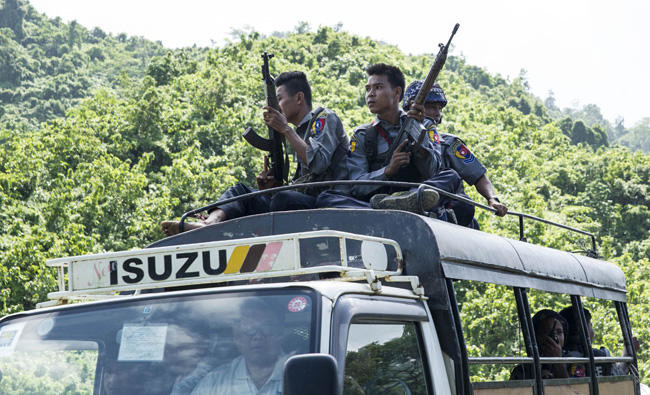
Bangladesh offers Myanmar military aid against Rohingya rebels
Bangladesh offers Myanmar military aid against Rohingya rebels

Latest updates


© 2026 SAUDI RESEARCH & PUBLISHING COMPANY, All Rights Reserved And subject to Terms of Use Agreement.