DHAKA: Thousands of Rohingya have crossed into Bangladesh since Myanmar announced a military build-up in Rakhine state earlier this month, community leaders said Wednesday.
Rakhine in northern Myanmar has been gripped by violence since October, when militants attacked police posts.
That sparked a bloody military crackdown that the UN believes may amount to ethnic cleansing of the Rohingya, a mainly Muslim minority living in Buddhist Myanmar.
On Aug. 12 authorities in Myanmar said hundreds of troops had moved into Rakhine as it ramps up counterinsurgency efforts there.
Rohingya leaders in Bangladesh told AFP that at least 3,500 had arrived since then, piling pressure onto already overcrowded refugee camps in the Cox's Bazaar area near the Naf river that divides the two countries.
That is despite stepped-up patrols by Bangladeshi border and coast guards, who said this week they had pushed back a boat carrying 31 Rohingya, including children.
"In the Balukhali camp alone, some 3,000 Rohingya arrived from their villages in Rakhine," said Abdul Khaleq, referring to the camp nearest the river, where most of the migrants stay when they first arrive.
Kamal Hossain, a Rohingya elder in another, camp, said nearly 700 families had arrived in Bangladesh in the past 11 days.
Many were sleeping in the open because there was no more space in the camps, he said.
Mohammad Omar, a 28-year-old Rohingya who had just arrived along with 40 relatives, said he had been attacked by local Buddhists who looted Rohingya homes in Rakhine.
Buddhist-majority Myanmar has long faced criticism for its treatment of the more than one million Rohingya who live in Rakhine, who are seen as interlopers from Bangladesh, denied citizenship and access to basic rights.
Dhaka estimates that nearly 400,000 Rohingya refugees are living in squalid refugee camps and makeshift settlements in Cox's Bazar.
They included more than 70,000 who arrived in the months that followed the crisis in October, many bringing stories of systematic rape, murder and arson at the hands of Myanmar soldiers.
But Rohingya are also increasingly unwelcome in Muslim-majority Bangladesh, where police often blame them for crimes such as drug trafficking.
Dhaka has floated the idea of relocating tens of thousands of Rohingya refugees to a remote, flood-prone island off its coast, despite opposition from rights groups.
On Wednesday the UN refugee agency said it was "deeply concerned" by the reports of a boat carrying Rohingya being turned back.
"UNHCR is deeply concerned by this incident, which as the coast guard reported, involved women and children who said they were fleeing violence," a UNHCR spokesman told AFP.
"In the current security context, the majority, if not all, of these people crossing from Myanmar into Bangladesh are believed to be fleeing insecurity," he said.


![]()
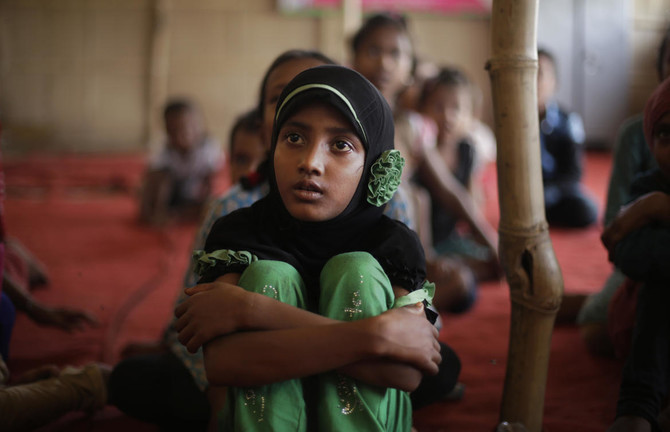
Thousands of Rohingya flee Myanmar for Bangladesh
Thousands of Rohingya flee Myanmar for Bangladesh


Latest updates


© 2026 SAUDI RESEARCH & PUBLISHING COMPANY, All Rights Reserved And subject to Terms of Use Agreement.