Turkey places 9 more journalists under arrest ‘over Gulen links’

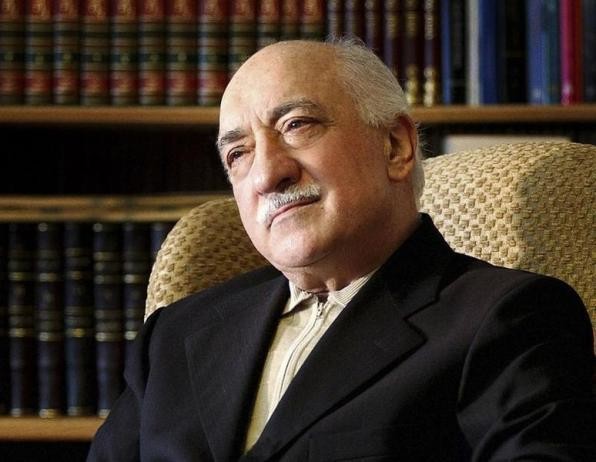
Turkish preacher Fethullah Gulen is pictured at his residence in Saylorsburg, Pennsylvania, on December 28, 2004. (File photo by Reuters)
Updated 17 August 2017
Follow

Turkey places 9 more journalists under arrest ‘over Gulen links’

ISTANBUL: An Istanbul court has placed under arrest nine journalists on suspicion of links to the alleged mastermind of the failed 2016 coup, the latest in a series of measures against Turkish media workers that have alarmed the West.
Turkish authorities had on August 10 issued arrest warrants for 35 media employees accused of using the Bylock messaging app allegedly used by US-based cleric Fethullah Gulen to mobilize followers in Turkey and of belonging to a “terror” group.
A total of 11 were detained at the time and late on Wednesday an Istanbul court placed nine under arrest ahead of trial and released two under judicial supervision, the state-run Anadolu news agency said.
Among the nine remanded in custody is the website editor at the leftist opposition Birgun daily Burak Ekici and the former news editor of the TV channel of Turkish football side Fenerbahce, Yasir Kaya.
Those released include a prominent former columnist for the Turkiye daily, Ahmet Sagirli. Anadolu said searches are continuing for the remaining 24 suspects, who are likely to have fled abroad.
The latest arrests come amid growing alarm over press freedom in Turkey under President Recep Tayyip Erdogan, in particular under the state of emergency imposed in the wake of the failed July 2016 coup and which remains in place.
Gulen, an Islamic preacher who lives in the US state of Pennsylvania, denies any link to the botched putsch.
Turkey ranks 155 on the latest Reporters Sans Frontieres (Reporters Without Borders) world press freedom index, below Belarus and the Democratic Republic of Congo.
According to the latest figures from the P24 press freedom website, there are 164 journalists behind bars in Turkey, most of whom were detained under the state of emergency.
In one of the highest profile cases, 17 staff from the Cumhuriyet daily — one of the few voices in the media in Turkey to oppose Erdogan — last month went on trial for aiding “terror” groups.
While most of the suspects in that case have been released from pre-trial detention, four Cumhuriyet journalists remain behind bars.
The crackdown has also affected foreign reporters and freelance French journalist Loup Bureau was detained last month on charges of links to a Kurdish militia Ankara regards as a terror group.


Iran says can fight intense war for months

Updated 3 sec ago
Follow

Iran says can fight intense war for months

  • Iran’s security chief accuses Trump administration of seeking to replicate a scenario similar to Venezuela
  • Analysts warn there is still no clear path to ending a conflict that could last a month or longer
TEHRAN: Iran’s Revolutionary Guards said Sunday that the country’s forces could fight an intense war for six months against the United States and Israel.
Israeli Prime Minister Benjamin Netanyahu has vowed to press on with the war against Iran “with all our force,” with a plan to eradicate the country’s leadership after joint US-Israeli raids killed supreme leader Ayatollah Ali Khamenei last week, sparking the regional conflict.
Despite the threat, the Revolutionary Guards said Sunday that the Islamic republic’s forces could wage an “intense war” for six months at the current speed of fighting.
Guards spokesman Ali Mohammad Naini said Iran had so far used “first and second generation” missiles, but will use “advanced and less-used long-range missiles” in the coming days.
‘Trapped’
The widening reach of the war and Iran’s ability to inflict damage and harm were underscored by US President Donald Trump attending the return of six American service members killed in a drone strike on a US base in Kuwait last Sunday.
Iran’s security chief Ali Larijani accused the Trump administration of seeking to replicate a scenario similar to Venezuela where it ousted leader Nicolas Maduro.
“Their perception was that it would be like Venezuela — they would strike, take control and it would be over — but now they are trapped,” he said in a pre-recorded interview broadcast on state TV on Saturday.
Iran’s hardline judiciary chief Gholamhossein Mohseni Ejei also warned Middle East neighbors which are “openly and covertly at the disposal of the enemy” that “the heavy attacks on these targets will continue.”
Iranian President Masoud Pezeshkian said Sunday that Tehran “will be forced to respond” if a neighboring country were to be used as a launchpad for any attack or invasion attempt.
Tehran had vowed to go after US assets in the region, and Saudi Arabia, Qatar, the United Arab Emirates and Kuwait on Sunday all reported new attacks.
No clear way out
Analysts warn there is still no clear path to ending a conflict that US and Israeli officials say could last a month or longer.
Trump has suggested Iran’s economy could be rebuilt if a leader “acceptable” to Washington replaces the late supreme leader, which Tehran has rejected.
China and Russia have largely stayed on the sidelines despite close ties with Tehran.
China’s top diplomat Wang Yi said on Sunday that the war in the Middle East should “never have happened.”
“This is a war that should never have happened,” he told a press conference in Beijing, adding that “a strong fist does not mean strong reason. The world cannot return to the law of the jungle.”