MANILA: The United States has been providing the Philippines with surveillance capabilities, training, information and aircraft to help it fight a monthslong siege of a southern city by pro-Daesh group militants, the top US diplomat said Monday as he prepared to meet the country’s polarizing president.
US Secretary of State Rex Tillerson, in Manila for a regional gathering, said the equipment includes a few Cessna aircraft and a few drones. He said they’ll help the Philippines battle “an enemy that fights in a way that most people have never had to deal with.”
“We think they are beginning to get that situation under control,” Tillerson told reporters. “But the real challenge is going to come with once they have the fighting brought to an end how to deal with the conditions on the ground to ensure it does not re-emerge.”
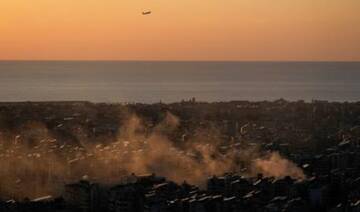
Nearly 700 people have died in the intense fighting, including 528 militants and 122 soldiers and policemen, since hundreds of black flag waving gunmen stormed into buildings and homes in the business district and outlying communities of mosque-studded Marawi, a center of Islamic faith in the southern third of the predominantly Roman Catholic nation.
Human rights groups have questioned President Donald Trump’s willingness to engage with Philippine President Rodrigo Duterte, who has been roundly criticized for a bloody war on illegal drugs that has killed thousands of suspects. But Tillerson argued there’s no contradiction presented by the US decision to help his country fight the militants, whose insurgency in the Philippines has stoked global fears about the Daesh group exporting violence into Southeast Asia and beyond.
“I see no conflict — no conflict at all in our helping them with that situation and our views of the human rights concerns we have with respect to how they carry out their counter narcotics activities,” Tillerson said.
Ahead of the meeting, the US said Tillerson indeed would discuss with Duterte human rights along with all other relevant issues. Duterte’s presidential spokesman, Ernesto Bella, said Monday that the topic would include discuss global terrorism threats, economic cooperation and security in Marawi, the city that has been under militant siege for more than two months.
“We also welcome the opportunity to address concerns such as human rights if and when raised,” Bella said in a statement. “We have always included this issue in our discussions and engagements with foreign governments, particularly Western democracies.”


US says aircraft to help Philippines fight pro-Daesh militants

US says aircraft to help Philippines fight pro-Daesh militants
Swedish intelligence warns of increased Middle East war fallout
- “The threat has increased primarily against American, Jewish, Israeli interests or opposition figures” Hallstrom told AFP
- Hallstrom also said the war in the Middle East could have “considerable impact” on European security
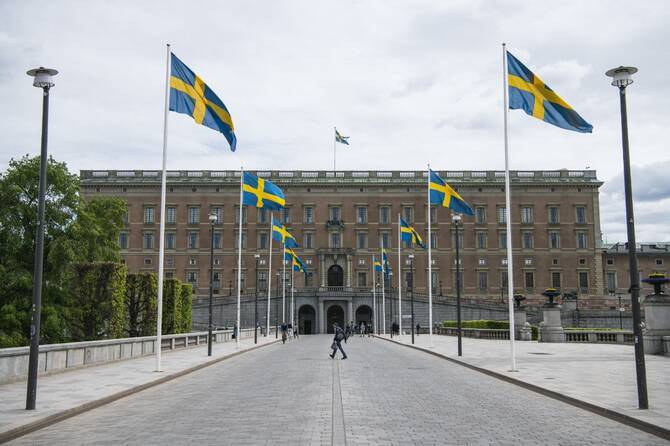
STOCKHOLM: A top Swedish intelligence official on Thursday warned of increased threats against American and Israeli interests, as well as Iranian dissidents, in Sweden because of the war in the Middle East.
The Scandinavian country’s security, which had already deteriorated after Russia’s invasion of Ukraine, has worsened since the US-Israeli strikes on Iran on Saturday unleashed a new war, according to Fredrik Hallstrom, head of operations for the Swedish Security Service (Sapo).
“The threat has increased primarily against American, Jewish, Israeli interests or opposition figures, rather than toward Sweden as a nation or country,” Hallstrom told AFP.
“I’m talking about opposition figures with such influence that they could actually either be perceived as a serious threat to the Iranian regime, or in fact be one,” he explained.
Hallstrom also said the war in the Middle East could have “considerable impact” on European security.
Police have taken measures to increase security around potential targets, such as embassies, he said.
Sapo has previously pointed to Iran, China and Russia as the main threats to the country.
It has accused Iran in particular of recruiting members of Swedish criminal gangs to commit “acts of violence” against Israeli and other interests in Sweden — a claim Iran denied.
Other risks highlighted by Sapo include increased intelligence activities in Sweden, surveillance and actions targeting Iranian dissidents in exile, as well as the acquisition of equipment, research and know-how that could contribute to the development of nuclear weapons.
“We know that Iran uses cyberattacks and hacks phones and computers in order to monitor others,” Hallstrom said.
He added that this monitoring could be potentially used to get individuals “in Sweden to provide information about other people, by exerting pressure.”