WASHINGTON: US Vice President Mike Pence angrily rejected a report Sunday that he is laying the groundwork for a possible 2020 run for the presidency, calling it “absurd” and “categorically false.”
The New York Times reported Sunday that the turmoil around the presidency of Donald Trump — including investigations into links between his presidential campaign and Russia — had prompted several top Republicans, including Pence, to begin “what amounts to a shadow campaign for 2020.”
It is extremely rare for politicians of a president’s party — let alone his own vice president — to begin preparing just six months into his first term for the possibility he will not run for a second.
A statement tweeted by Pence minced no words.
“Today’s article in the New York Times is disgraceful and offensive to me, my family and our entire team,” it said.
“The allegations in this article are categorically false and represent just the latest attempt by the media to divide this administration.”
Pence said he would focus all his efforts on seeing Trump re-elected, adding that “any suggestion otherwise is both laughable and absurd.”
Pence’s pushback had begun even earlier, with his chief of staff, Nick Ayers, tweeting that the Times article was a “total lie” and “#fakenews.”
The Times article suggested that Pence was the “pacesetter” among a group of Republican “political opportunists” preparing to move in if Trump draws blame for the party suffering serious losses in next year’s midterm elections.
The article said Pence had created “an independent power base, cementing his status as Mr. Trump’s heir apparent” and setting up a political fund-raising committee, or PAC, that has overshadowed Trump’s own PAC.
It suggested that the very appointment of Ayers as chief of staff — a man the Times described as a “sharp-elbowed political operative” — was a sign of Pence’s intentions.
Trump has reportedly chafed in the past at any suggestion that members of his administration are drawing greater attention to themselves.
But a senior Trump adviser, Kellyanne Conway, insisted on Sunday that Pence was a faithful and loyal right-hand man, with no eye on the top office.
Asked on ABC whether she had any concern that Pence was “setting up a shadow campaign,” she replied: “Zero concern. That is complete fiction. Complete fabrication.”


![]()
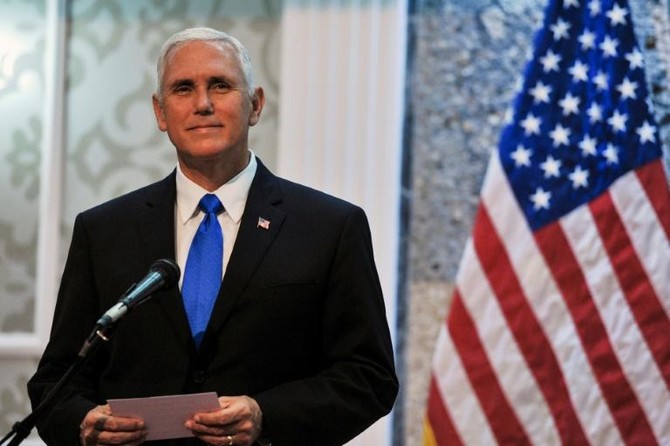

Angry Pence denies eye on 2020 presidential bid
Angry Pence denies eye on 2020 presidential bid
Abduction of Mexican mine workers raises doubts over touted security improvements
CONCORDIA: Deep in the coastal mountains above the sparkling Pacific resort of Mazatlan, towns spaced along a twisting road appear nearly deserted, the quiet broken only by the occasional passing truck.
It was near one of these towns, Panuco, that 10 employees of a Canadian-owned silver and gold mine were abducted in late January. The bodies of five were located nearby and five more await identification.
Most residents of these towns have fled out of fear as two factions of the Sinaloa Cartel have been locked in battle since September 2024, said Fermín Labrador, a 68-year-old from the nearby village of Chirimoyos. Others, he said, were “invited” to leave.
The abduction of the mine workers under still unclear circumstances has raised fears locally and more widely generated questions about the security improvements touted by President Claudia Sheinbaum. She signaled her more aggressive stance toward drug cartels in Sinaloa with captures and drug seizures after she took office in late 2024. It has been one year since she sent 10,000 National Guard troops to the northern border to try to head off US tariffs over the cartels’ fentanyl trafficking, much of which comes from Sinaloa.
In January, Sheinbaum held up a sharp decline in homicide rates last year as evidence that her security strategy was working.
“What these kinds of episodes do is demolish the federal government’s narrative that insists that little by little they are getting control of the situation,” said security analyst David Saucedo. He said Sheinbaum had tried to “manage the conflict” while the Sinaloa Cartel’s internal war spread and split the state by obliging people “to take a side with one of the two groups.”
Fleeting security
The mine workers’ disappearance in late January brought more troops into the mountains as they searched by air and on the ground for signs of them.
Mexico’s Security Secretary Omar García Harfuch came to coordinate the operation. Several arrests were made and from information gleaned from suspects, authorities found the clandestine graves.
But the increased security presence has not brought peace of mind to residents.
Roque Vargas, a human rights activist for people displaced by violence in the area, said that “all of the hubbub has scattered the organized crime guys” but he worries they could return. He and others are also concerned about being mistaken for bad guys and attacked by security forces when they leave their town, because it has happened elsewhere in the state.
“We’ve practically been abandoned,” he said.
Cartel infighting triggered violence
Sheinbaum took office in October 2024, when Sinaloa was entering a new spiral of violence following the abduction of Sinaloa Cartel leader Ismael “El Mayo” Zambada by a son of former cartel leader Joaquín “El Chapo” Guzmán. Zambada was handed over to US authorities and his faction of the cartel went to war with the faction led by Guzmán’s sons.
Initially, residents of the state capital, Culiacan, were caught in the crossfire, but the conflict eventually extended statewide. US President Donald Trump took office last year and designated the Sinaloa Cartel, among others, a foreign terrorist organization, upping the pressure on Sheinbaum’s administration to get tough with the cartels.
By last April, Vizsla Silver Corp., the Vancouver, Canada-based mine owner, announced it was halting activities at the mine because of security concerns in the area. The pause lasted a month.
García Harfuch said this month that the suspects arrested were part of the Sinaloa Cartel faction loyal to Guzmán’s sons, known as “los Chapitos,” and had mistaken the workers for belonging to the other faction. There has not been an explanation for how the confusion could have occurred since Vizsla said the workers were taken from their site.
Mines and crime
Mines, along with other businesses like avocado groves and pipelines carrying gasoline, have long attracted organized crime’s attention in Mexico as a source of extortion payments or to steal the extracted material.
Saucedo, who has researched cases in Guanajuato, Sinaloa and Sonora, said he has also seen cases where mines take advantage of armed groups to control mine opponents.
The Mexican government has said it has no reports that Vizsla was extorted. Sheinbaum said that her administration would talk with all mining companies in Mexico “to offer the support they require.”
Vizsla did not respond to questions emailed by The Associated Press, but has said in statements that its focus is on finding the remaining workers and supporting the affected families. Relatives of one of the workers declined to comment.
Search for the missing
In the community of El Verde, in the foothills that rise between the ocean and the mountains, Marisela Carrizales stood beside banners bearing the photographs of missing people. The road leading to a site where clandestine graves were discovered was blocked by a police car. The surrounding town was silent.
“I’m here waiting for answers,” said Carrizales, who belongs to one of the many search collectives that have spread all over Mexico to look for the missing. She has been looking for her son, Alejandro, for 5 ½ years and had come to El Verde with more than 20 others also looking for missing relatives to monitor authorities’ work and demand that they help them look in other places, too. “We have information that there are a lot more graves here … we have to come to look for them.”
It was here in the first week of February that authorities found a clandestine grave and then more in the days that followed. The Attorney General’s office said 10 bodies were found in one location, five of which have been identified as the missing mine workers. But the Sinaloa state prosecutor’s office also said additional remains were found in four other grave sites around the community.
There are many missing. In Mazatlan, a Mexican tourist was taken from a bar in October. In January, a businessman disappeared. In February, six other Mexican tourists were abducted from a ritzy part of the resort city. A woman and a girl who were part of that group were later found alive outside the city, but the men who were with them have not appeared.
While the government has strengthened security in Mazatlan ahead of carnival celebrations, back in the mountains, teachers, doctors or even buses are not coming to many of the communities out of fear, Vargas said.
Labrador, the man from Chirimoyos, said that when he is lucky, he borrows a friend’s motorcycle to go to his job in a highway toll booth. When he can’t borrow it, he has to walk more than 5 miles (8 kilometers) through the mountains, because the person in charge of local public transportation disappeared in December.
It was near one of these towns, Panuco, that 10 employees of a Canadian-owned silver and gold mine were abducted in late January. The bodies of five were located nearby and five more await identification.
Most residents of these towns have fled out of fear as two factions of the Sinaloa Cartel have been locked in battle since September 2024, said Fermín Labrador, a 68-year-old from the nearby village of Chirimoyos. Others, he said, were “invited” to leave.
The abduction of the mine workers under still unclear circumstances has raised fears locally and more widely generated questions about the security improvements touted by President Claudia Sheinbaum. She signaled her more aggressive stance toward drug cartels in Sinaloa with captures and drug seizures after she took office in late 2024. It has been one year since she sent 10,000 National Guard troops to the northern border to try to head off US tariffs over the cartels’ fentanyl trafficking, much of which comes from Sinaloa.
In January, Sheinbaum held up a sharp decline in homicide rates last year as evidence that her security strategy was working.
“What these kinds of episodes do is demolish the federal government’s narrative that insists that little by little they are getting control of the situation,” said security analyst David Saucedo. He said Sheinbaum had tried to “manage the conflict” while the Sinaloa Cartel’s internal war spread and split the state by obliging people “to take a side with one of the two groups.”
Fleeting security
The mine workers’ disappearance in late January brought more troops into the mountains as they searched by air and on the ground for signs of them.
Mexico’s Security Secretary Omar García Harfuch came to coordinate the operation. Several arrests were made and from information gleaned from suspects, authorities found the clandestine graves.
But the increased security presence has not brought peace of mind to residents.
Roque Vargas, a human rights activist for people displaced by violence in the area, said that “all of the hubbub has scattered the organized crime guys” but he worries they could return. He and others are also concerned about being mistaken for bad guys and attacked by security forces when they leave their town, because it has happened elsewhere in the state.
“We’ve practically been abandoned,” he said.
Cartel infighting triggered violence
Sheinbaum took office in October 2024, when Sinaloa was entering a new spiral of violence following the abduction of Sinaloa Cartel leader Ismael “El Mayo” Zambada by a son of former cartel leader Joaquín “El Chapo” Guzmán. Zambada was handed over to US authorities and his faction of the cartel went to war with the faction led by Guzmán’s sons.
Initially, residents of the state capital, Culiacan, were caught in the crossfire, but the conflict eventually extended statewide. US President Donald Trump took office last year and designated the Sinaloa Cartel, among others, a foreign terrorist organization, upping the pressure on Sheinbaum’s administration to get tough with the cartels.
By last April, Vizsla Silver Corp., the Vancouver, Canada-based mine owner, announced it was halting activities at the mine because of security concerns in the area. The pause lasted a month.
García Harfuch said this month that the suspects arrested were part of the Sinaloa Cartel faction loyal to Guzmán’s sons, known as “los Chapitos,” and had mistaken the workers for belonging to the other faction. There has not been an explanation for how the confusion could have occurred since Vizsla said the workers were taken from their site.
Mines and crime
Mines, along with other businesses like avocado groves and pipelines carrying gasoline, have long attracted organized crime’s attention in Mexico as a source of extortion payments or to steal the extracted material.
Saucedo, who has researched cases in Guanajuato, Sinaloa and Sonora, said he has also seen cases where mines take advantage of armed groups to control mine opponents.
The Mexican government has said it has no reports that Vizsla was extorted. Sheinbaum said that her administration would talk with all mining companies in Mexico “to offer the support they require.”
Vizsla did not respond to questions emailed by The Associated Press, but has said in statements that its focus is on finding the remaining workers and supporting the affected families. Relatives of one of the workers declined to comment.
Search for the missing
In the community of El Verde, in the foothills that rise between the ocean and the mountains, Marisela Carrizales stood beside banners bearing the photographs of missing people. The road leading to a site where clandestine graves were discovered was blocked by a police car. The surrounding town was silent.
“I’m here waiting for answers,” said Carrizales, who belongs to one of the many search collectives that have spread all over Mexico to look for the missing. She has been looking for her son, Alejandro, for 5 ½ years and had come to El Verde with more than 20 others also looking for missing relatives to monitor authorities’ work and demand that they help them look in other places, too. “We have information that there are a lot more graves here … we have to come to look for them.”
It was here in the first week of February that authorities found a clandestine grave and then more in the days that followed. The Attorney General’s office said 10 bodies were found in one location, five of which have been identified as the missing mine workers. But the Sinaloa state prosecutor’s office also said additional remains were found in four other grave sites around the community.
There are many missing. In Mazatlan, a Mexican tourist was taken from a bar in October. In January, a businessman disappeared. In February, six other Mexican tourists were abducted from a ritzy part of the resort city. A woman and a girl who were part of that group were later found alive outside the city, but the men who were with them have not appeared.
While the government has strengthened security in Mazatlan ahead of carnival celebrations, back in the mountains, teachers, doctors or even buses are not coming to many of the communities out of fear, Vargas said.
Labrador, the man from Chirimoyos, said that when he is lucky, he borrows a friend’s motorcycle to go to his job in a highway toll booth. When he can’t borrow it, he has to walk more than 5 miles (8 kilometers) through the mountains, because the person in charge of local public transportation disappeared in December.
Latest updates


Recommended



© 2026 SAUDI RESEARCH & PUBLISHING COMPANY, All Rights Reserved And subject to Terms of Use Agreement.