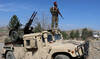
BEIRUT: Daesh militants attacked US-backed Syrian Democratic Forces (SDF) east of Raqqa on Friday, setting off clashes and abducting a number of people, the Syrian Observatory for Human Rights said.
It said the clashes had resulted in casualties among displaced people and SDF fighters but gave no further details. The targeted area, Al-Karama, hosts a camp for Syrians driven from their homes by the war. A Kurdish official confirmed the report but gave no more details.
The SDF is dominated by the Kurdish YPG militia and is the main partner for the US-led coalition against Daesh in Syria. It is currently battling the terrorists for control of Raqqa city. The SDF has reportedly captured half of the city.
Daesh has lost swathes of territory in Syria over the last year to separate campaigns waged by the SDF, Russian-backed forces of the Syrian regime, and Turkey-backed Syrian rebels.
Meanwhile, forces of the Syrian regime have reached the last Daesh-held town on the road to its besieged garrison in the east, a monitoring group said.
Regime forces are on the outskirts of Al-Sukhna, some 70 kilometers northeast of the famed ancient city of Palmyra, the group said.
The town is the last on the desert road to the eastern city of Deir Ezzor, where a regime garrison has held out under siege by Daesh since early 2015.
Al-Sukhna and the oil and gas fields in the surrounding countryside have been held by Daesh since 2015.
“Heavy fighting is ongoing between the two sides, with regime artillery and rocket fire,” Observatory director Rami Abdel Rahman said.
He said Russian warplanes were supporting the regime’s advance. Daesh commanders fled into the surrounding mountains as the regime forces neared the town, he added.
Since May, regime forces have been conducting a broad military campaign to recapture the vast desert that separates Damascus from Deir Ezzor and other towns along the Euphrates Valley.
Already defeated in its Iraqi bastion of Mosul, Daesh is facing multiple assaults in Syria.
With relative calm in southwest Syria since a cease-fire was reached in early July, civil defense services in rebel-held Deraa have shifted focus to clearing unexploded cluster bombs left by air strikes.
Men in light blue vests set up yellow tape around any of the small, silver winged cylinders found, alongside red signs marked with skeleton symbols reading, “Danger! Unexploded ammunition!”
A specialist civil defense team, trained last year in Jordan to clear mines, has dealt with about 100 cluster bombs in Deraa and nearby villages this week alone, a team member said.
After the tape and signs are set up, rescue service members pile bags of dirt around the cluster bomb and place their own blue-and-white explosive cylinder inside, a red wire trailing from it.
The team, in protective gear, hide behind mounds of soil or buildings. One man holding a trigger attached to the red wire warns his colleagues by radio. Then a shower of dirt and rubble erupts, leaving one fewer unexploded bomb on Deraa’s streets.
“We faced a lot of difficulties from air strikes and bombs in open areas,” Hasan Fashtaki, a member of the unexploded ordnance team, told Reuters by phone. “But now because of the cease-fire and calm in the area, we’re working freely,” he added.
Deraa is located in a “de-escalation zone” agreed by the US, Russia and Jordan as part of Washington’s first peacemaking effort in Syria under President Donald Trump after six years of civil war.
It has protected Deraa and surrounding areas from new bombardment, allowing the civil defense to focus on unexploded bombs, according to Fashtaki.
The team spent 20 days in Jordan in October training and learning to de-mine areas. Bombs have been concentrated in areas that suffered the heaviest bombardment including front lines and the southwestern village of Horan, Fashtaki said.
He did not know how many more unexploded bombs there were in the area or how long it will take to clear them.
“It could be that in two or three or four months time, we still would not have finished our work.”


![]()

Daesh attack targets SDF-held area in Syria
Daesh attack targets SDF-held area in Syria
Latest updates


© 2026 SAUDI RESEARCH & PUBLISHING COMPANY, All Rights Reserved And subject to Terms of Use Agreement.