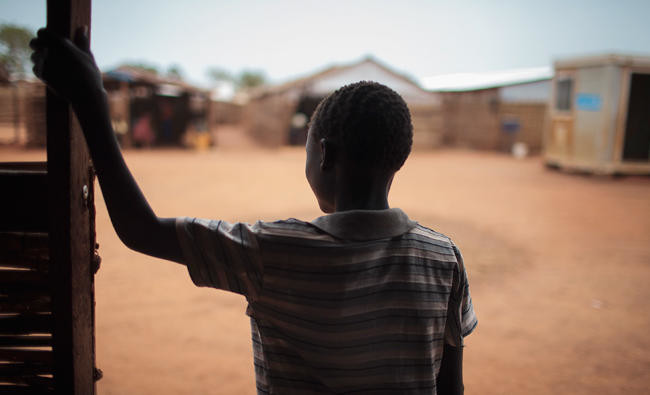
WAU, South Sudan: It has been five months since the shy, frail 13-year-old was snatched from his bed, drugged and raped in the middle of the night. The boy has not been able to say much since.
“I do not remember a lot,” Batista says, darting his eyes toward the dirt floor as he sits in a makeshift clinic in one of South Sudan’s displaced people’s camps in the town of Wau. The Associated Press is using only the boy’s first name to protect his identity.
Four years into South Sudan’s devastating civil war, the world’s youngest nation is reeling from sexual violence on a “massive scale,” a new Amnesty International report said.
Thousands of women, children and some men are suffering in silence, grappling with mental distress. Some now have HIV. Others were rendered impotent. The report is based on interviews with 168 victims of sexual violence in South Sudan and in refugee camps in neighboring Uganda, home to the world’s fastest-growing refugee crisis.
Some of the sexual assaults occur not during the fighting but among the millions of people sheltering from the conflict. The UN last year reported a 60 percent increase in gender-based violence in South Sudan, with 70 percent of women in UN camps in the capital, Juba, having been raped since the start of the civil war in December 2013.
“This is premeditated sexual violence. Women have been gang-raped, sexually assaulted with sticks and mutilated with knives,” said Muthoni Wanyeki, Amnesty’s regional director for East Africa. Victims are left with “debilitating and life-changing consequences.”
The new report interviewed 16 male victims, some who said they had been castrated or had their testicles pierced with needles.
“Some of the attacks appear designed to terrorize, degrade and shame the victims, and in some cases to stop men from rival political groups from procreating,” Wanyeki said.
The UN Commission on Human Rights in South Sudan and others say both government and opposition forces use rape as a weapon of war — a strategy made worse because of the country’s culture of stigma.
Amnesty International says many victims are targeted because of their ethnicity.
“They hide in the bush and jump out at you and rape you on the road,” said Bakhit Mario, who also shelters in the UN camp in Wau. The 22-year-old is part of the Fertit people, a name for several minority ethnic groups from the north.
She said friends and family have been raped by men who are Dinka, one of South Sudan’s largest ethnic groups and the one of President Salva Kiir.
“I see aborted babies in the camp’s bathrooms,” Mario says. She believes many are a result of unwanted pregnancies due to rape.
South Sudan’s government has condemned sexual assaults, promising that “the government is moving swiftly to protect civilians from such behavior by educating all armed forces and holding perpetrators accountable,” acting government spokesman Choul Laam told the AP.
But victims who have reported their attackers to authorities say they have seen little justice.


![]()
South Sudan reeling from sexual violence on massive scale: Report
South Sudan reeling from sexual violence on massive scale: Report
Latest updates


© 2026 SAUDI RESEARCH & PUBLISHING COMPANY, All Rights Reserved And subject to Terms of Use Agreement.