UAE credit demand stabilizes in the second quarter

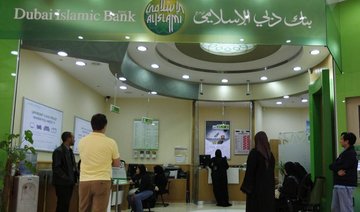
Demand for credit stabilized in the second quarter following a recovery during the previous three months, the UAE Central Bank said in a survey. (AP)
Updated 23 July 2017
Follow

UAE credit demand stabilizes in the second quarter

DUBAI: Demand for credit stabilized in the second quarter following a recovery during the previous three months, the UAE Central Bank said in a survey.
The quarterly Credit Sentiment Survey likewise noted that credit conditions in the UAE were healthy and the situation would remain the same in the short term.
Net business credit during the quarter ending June was at 7.5, unchanged from the previous quarter’s score. The number represents the weighted percentage of respondents reporting an increase in demand for loans minus those reporting a fall in demand.
The survey respondents said that the demand for business credit main was mainly fueled by those in the construction, transport storage and communication, property development, manufacturing, non-banking financial institutions and the retail and whole sectors seeking either conventional or large-scale loans.
Personal loans also slightly increased during the second quarter to a net balance measure of 1, although this was slower compared with the score of 3 during previous three months.
The Central Bank survey said that demand for personal loans such as credit cards, cars and houses mostly came from Dubai and the Northern Emirates, while the demand from Abu Dhabi borrowers decreased marginally.


Saudi Arabia signs 90 deals as Global Labor Market Conference conference ends 

Updated 10 sec ago
Follow

Saudi Arabia signs 90 deals as Global Labor Market Conference conference ends 

RIYADH: Saudi Arabia signed 90 agreements and memorandums of understanding aimed at supporting global labor markets and benefiting more than 6 million people as the Kingdom wrapped up a two-day gathering in Riyadh.

The third Global Labor Market Conference saw deals struck between government entities and private-sector partners, spanning skills development, digital transformation, flexible employment and sustainable workforce partnerships. Officials said the initiatives will have an impact both inside and outside Saudi Arabia. 

The event attracted more than 10,000 participants from over 100 countries, including 40 labor ministers and more than 200 international experts. Organized by the Ministry of Human Resources and Social Development, the event was held under the theme “Future in Progress.” 

Saudi Minister of Human Resources and Social Development Ahmed Al-Rajhi stated in a post on X that the conference concluded after two days of discussions focused on practical solutions for current and future labor market challenges. 

“We discussed the future of skills, the impact of artificial intelligence, building resilient and inclusive labor markets, and empowering talent,” he said, adding that the conference is designed as a continuous platform for year-round cooperation, with partnerships and knowledge exchange extending beyond the event itself. 

Al-Rajhi also chaired a high-level ministerial meeting which was also attended by the director general of the International Labor Organization, during which participants agreed on six measures to help shape the future of work. 

The conference saw the release of several reports, including an international guide titled “What Works for Work: A Guidebook to Proven and Promising Employment Solutions,” produced in collaboration with the World Bank.

Another report, “A Decade of Progress,” reviewed the transformation of Saudi Arabia’s labor market over the past 10 years, documenting achievements since the launch of Vision 2030. 

Other outcomes included the graduation of the first cohort of the Labor Market Academy, comprising 36 graduates from 34 countries, and the launch of a second cohort. 

The event also featured a policy hackathon focused on securing first jobs for new labor market entrants, while side events highlighted milestones such as a decade of the Musaned platform for domestic workers. 

The conference concluded by reaffirming Saudi Arabia’s role in shaping the future of work globally through innovation, partnerships and workforce empowerment. 

Saudi Arabia’s economic transformation is being significantly accelerated by its booming events industry, which has evolved into a primary driver of growth alongside traditional infrastructure and giga-projects.