BEIRUT: At least 15 Hezbollah militia fighters and one mediator have been killed in clashes with militants in Lebanon close to the border with Syria, it emerged on Saturday.
Hezbollah on Friday carried out a second day of operations against fighters attached to Jabhat Fateh Al-Sham (JFS), the militant group formerly known as Al-Nusra Front, which was aligned with Al-Qaeda.
The JFS members have taken refuge in Jaroud Arsal — a barren, mountainous area on the Lebanese-Syrian borders — since war broke out in Syria’s Qalamoun region.
Local citizens told Arab News that the intensity of the military operations, backed by Syrian regime warplanes, increased on Saturday morning after a lull on Friday night.
Hezbollah said that its fighters “took control of overlooking hills and heights, adding them to the area under the party’s control.”
Forces had earlier seized other areas in the southern part of Jaroud Arsal, Hezbollah said, according to Reuters.
According to Hezbollah-run media, at least 15 members were killed in the clashes, after five of its fighters were reportedly killed on Friday.
A security source quoted by Reuters said at least 43 militants had been killed, on top of at least 23 killed on Friday, the first day of clashes.
There are, however, no independently confirmed statistics about the results of the battle, and several inaccurate reports have been circulated.
A Lebanese mediator from Arsal, in charge of negotiations with JFS on behalf of local citizens, was also killed on Saturday.
Arsal’s former Deputy Mayor Ahmad Fliti, who was mediating talks between the two sides, was killed in a shell attack that targeted his car while returning to Arsal. His death was mourned by the Lebanese army, the Lebanese politician and leader of Lebanon’s Druze community Walid Jumblatt, and the Future Movement.
A Lebanese military source said that the Jaroud Arsal battle “could be protracted due to the region’s vast and difficult terrain.”


![]()
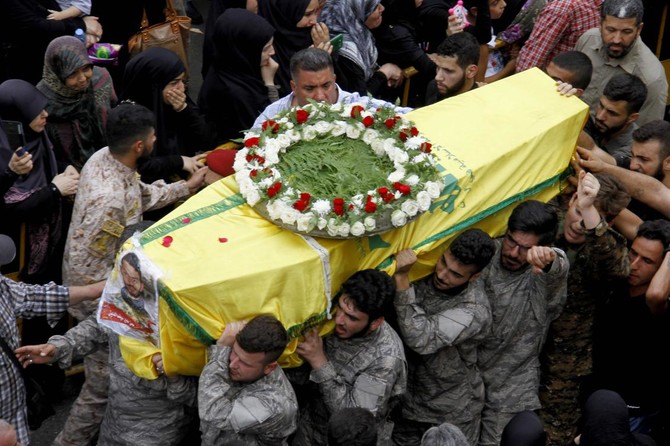
15 Hezbollah fighters, Lebanese mediator killed in clashes with militants
15 Hezbollah fighters, Lebanese mediator killed in clashes with militants
Latest updates


© 2026 SAUDI RESEARCH & PUBLISHING COMPANY, All Rights Reserved And subject to Terms of Use Agreement.