TEHRAN: Iran’s judiciary on Sunday announced the arrest of President Hassan Rouhani’s brother Hossein Fereydoun on financial crime charges, in a long-running feud between two of the country’s centers of power.
“Multiple investigations have been conducted regarding this person, also other people have been investigated, some of whom are in jail,” deputy judiciary chief Gholamhossein Mohseni Ejeie said in a televised press conference.
“Yesterday, bail was issued for him but because he failed to secure it he was referred to prison,” Ejeie said.
“If he secures bail, he will be released. But the case will take its course.”
The conservative-dominated judiciary has clashed with Rouhani, who has sought to ease social restrictions and release political prisoners.
News of the arrest comes a year after the head of the General Inspection Organization, Naser Seraj, first accused Fereydoun, who acts as a key adviser and gatekeeper to Rouhani, of financial violations.
The brothers do not share the same name because Rouhani changed his when he was younger to a word meaning “cleric.”
Conservatives have demanded that Fereydoun be put on trial, accusing him of receiving zero-interest loans and influencing the appointment of two bank directors.
One of the bank directors was later accused of involvement in a “large corruption scandal” by the intelligence services of the Revolutionary Guards, and the other was fired as part of a widespread scandal into exorbitant salaries at public institutions.
The attacks on Fereydoun began around the same time as the pay scandal last summer — both milked by conservatives to smear Rouhani in the build-up to the presidential election in May.
Voters still convincingly backed Rouhani’s policies of rebuilding ties with the West, though there were signs that the corruption allegations had eaten away at his support.
A report by the Audit Court found in October that executives at state-owned banks had earned as much as 622 million rials ($20,000) a month — compared with average public sector salaries of $400 — leading to hundreds of prosecutions and a new government salary cap.
There have been barbed exchanges between the presidency and the judiciary for months.
Rouhani has lashed out against perceived arbitrary arrests, telling a conference that was also attended by judiciary chief Ayatollah Sadegh Larijani: “We cannot summon or arrest people first and then look for proof.”
Larijani has repeatedly blasted Rouhani’s nuclear deal with world powers, which took effect in January 2016, as having brought too few economic benefits.
Ahead of the presidential election, Rouhani targeted the judiciary in a series of public speeches, arguing that an increased mandate would give him greater leverage to work for the release of opposition leaders Mir Hossein Mousavi and Mehdi Karroubi, who have been held under house arrest for their part in 2009 protests.
But Larijani made clear after Rouhani’s victory that nothing would change, saying: “Who are you to end the house arrest?“
“Some people are trying to provoke a populist movement to question the legal decisions of the country’s bodies,” he said.


![]()
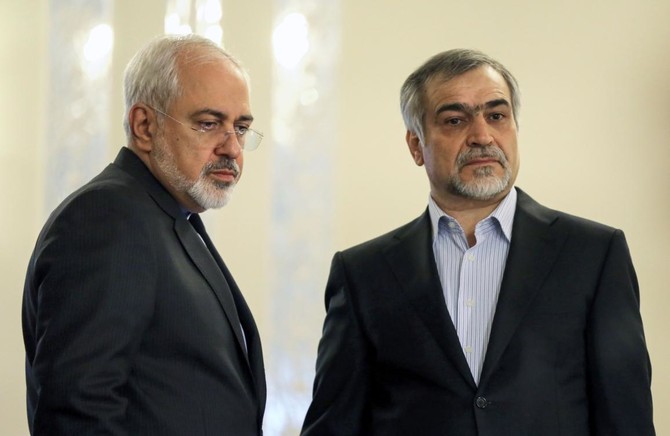
Iran president’s brother held on financial crime charges
Iran president’s brother held on financial crime charges
Latest updates


© 2026 SAUDI RESEARCH & PUBLISHING COMPANY, All Rights Reserved And subject to Terms of Use Agreement.