DUBAI: The London property scene has always been an attraction for Middle East investors, and one of the sights of the summer in wealthier parts of the city is groups of Arab visitors studying the postings in the city’s upmarket real estate office windows.
But recently, since the Brexit vote and other problems the capital has faced, there have been some concerns that houses and apartments in the traditional areas might not be as desirable, nor such a sound investment.
A recent UK-wide survey found that the value of upmarket London real estate was growing at the weakest rate in five years, and less than the rest of the country.
Mayfair, the “village” in London’s swanky West End, has been a traditional draw for the wealthy Gulf visitor. Great restaurants, hotels, upmarket shopping and the open green spaces of nearby Hyde Park all combine to give it an edge over other parts of the British capital.
It is said the area only really comes alive in the months of July and August, when visitors from the Gulf take up residence in the fabulously expensive properties they own, but which are shuttered for several months of the year.
“Arabs have always loved Mayfair, but now I sense they are looking for a new kind of property there, which developers are beginning to provide for them,” said Charles Lloyd, head of office for the upmarket real estate agent Savills in Mayfair and nearby St. James’s.
Three-story townhouses in one of the sophisticated streets between Park Lane and Regent Street, Mayfair’s borders, have been traditionally popular among Gulf Arab property investors. These properties — often pinned with “blue plaques,” which honor famous former residents — were like gold dust for many years and could command prices well above $20 million.
But tastes change, said estate agent Lloyd. Not only are Gulf buyers looking again at the Mayfair region, after a flirtation with the attractions of Knightsbridge and Kensington, but they are looking at properties perhaps more reminiscent of home — medium-rise luxury accommodation that can provide the full London experience while offering the top services and facilities.
Several of these kinds of developments are being planned in Mayfair, especially in what Lloyd calls the “jewel in the crown” — Grosvenor Square — where the US Embassy building is to be developed into a luxury hotel.
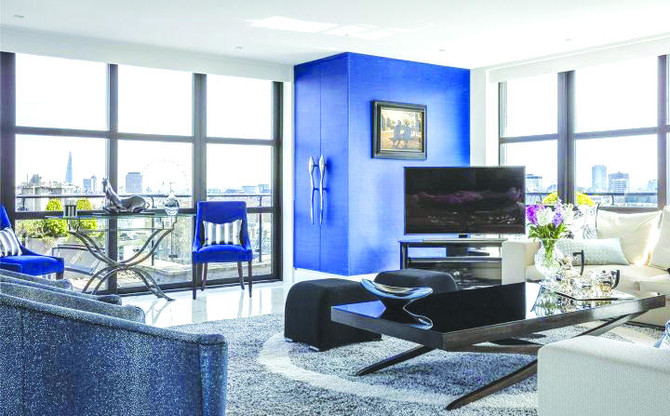
There is one property on the books of Savills at the moment that adds up to the “perfect penthouse,” Lloyd said: A four-bedroom apartment over two floors on the sixth and seventh floors of a block in Curzon Street, in the heart of the “village.”
Apartments are rather better value than town houses, so for the Curzon Street property any buyer would get some change — but not very much — out of £12 million ($15.5 million). The two underground parking places are a valuable part of the package.
But will it be a sound investment? A report from mortgage company Nationwide showed that property prices in the capital experienced only modest growth this spring, at just 1.2 percent between April and June. That seems to confirm a trend that has been evident for some time in the West End.
“There is still life in the market, but we can see now that it peaked at the end of 2014,” said Lloyd.
That was when the government introduced a new “stamp duty” tax on high-end properties. The effect of the Brexit vote a year ago also led to wobbles in the market, but was mostly offset by the fall in the value of sterling since then, Lloyd said.
He estimated properties in his high-end “village” were some 10 percent cheaper than they were two years ago.
“But Arabs still love London. I would estimate buyers from the Middle East form about 25 percent of our total foreign customers, which is the biggest part of the business. The Indian market is also booming for us, about the same proportion as from the Gulf.”
As regard to the problems of Brexit and security that have affected the city in recent weeks, Lloyd said: “London has always been a long-term attractive investment for foreign buyers, who see the city as a ‘safe haven’ and I don’t think that will change anytime soon.”


![]()
Arab property investors still appreciate UK capital’s classy ‘village’
Arab property investors still appreciate UK capital’s classy ‘village’

Latest updates


Recommended


© 2026 SAUDI RESEARCH & PUBLISHING COMPANY, All Rights Reserved And subject to Terms of Use Agreement.