KSA, UAE, Egypt, Bahrain show legality of measures against Qatar at WTO meeting

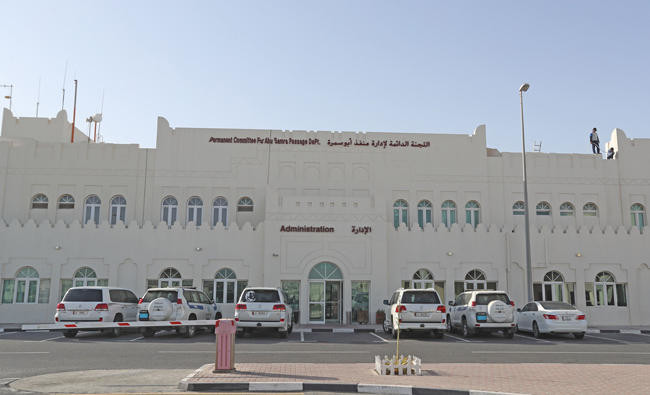
A general view of the Qatari side of the Abu Samrah border crossing with Saudi Arabia on June 23, 2017. Saudi Arabia, the UAE, Egypt and Bahrain have informed the World Trade Organization (WTO) of the legality of severing diplomatic and consulate ties with Qatar. (AFP / KARIM JAAFAR)
Updated 03 July 2017
Follow

KSA, UAE, Egypt, Bahrain show legality of measures against Qatar at WTO meeting

RIYADH: Saudi Arabia, the UAE, Egypt and Bahrain have informed the World Trade Organization (WTO) of the legality of severing diplomatic and consulate ties with Qatar, the Saudi Press Agency (SPA) reported.
The four countries, which voiced their stance on the sidelines of a WTO meeting in Geneva, said they were practicing their sovereign rights guaranteed by international law and protecting their national security.
The Saudi Ministry of Commerce and Investment said the aim was to show the conformity of the decision by the four countries with WTO systems.
In a joint statement that was read at the meeting, the countries said their measures conform with Article 21 of the General Agreement on Trade in Goods, which states that in emergencies, member countries can take measures deemed necessary to protect their interests and national security.
Article 14 of the Services Agreement and Article 73 of the Intellectual Property Agreement also allow member countries to take measures to protect their national security and stability against violations.


Crown prince sponsors launch of world-class Arabic calligraphy center in Madinah

Updated 23 December 2025
Follow

Crown prince sponsors launch of world-class Arabic calligraphy center in Madinah

  • The Prince Mohammed bin Salman Global Center for Arabic Calligraphy was inaugurated by Prince Salman bin Sultan bin Abdulaziz

RIYADH: A new center for Arabic calligraphy under the patronage of Crown Prince Mohammed bin Salman officially opened in Madinah on Monday.

The Prince Mohammed bin Salman Global Center for Arabic Calligraphy was inaugurated by Prince Salman bin Sultan bin Abdulaziz, governor of Madinah region.

He was joined by Culture Minister Prince Badr bin Abdullah bin Farhan, touring the new facility’s exhibition spaces and receiving briefings on cultural programming and the center’s achievements.

They also viewed collections highlighting Arabic calligraphy’s artistic and historical importance.

Speaking at the opening, Prince Badr said: “From this land of enlightenment and scholarship, we proudly launch a global platform dedicated to Arabic calligraphy as an invaluable cultural asset.”

He went on to credit the crown prince’s “generous and boundless support” for the cultural sector.

The minister said that the center demonstrated to the world the legacy of Arabic calligraphy while underscoring Saudi Arabia’s commitment to safeguarding its cultural identity and heritage.

According to Prince Badr, the facility represents an ambitious vision to elevate Arabic calligraphy as both a universal communication tool and an integral element of Arab heritage, art, architecture and design.

The center further aims to enhance the Kingdom’s cultural identity and strengthen its international presence, targeting calligraphers, emerging talents, visual artists, Islamic arts researchers, educational and cultural institutions, as well as art and heritage enthusiasts worldwide.

It will deliver specialized programs including research and archival services, calligraphy instruction, academic grants, a permanent museum, touring exhibitions, an international calligraphy association and a business incubator supporting calligraphy enterprises.

Additional offerings feature artist residency programs, expert-led workshops, and standardized curriculum development, complemented by international educational partnerships aimed at heritage conservation and expanding global appreciation for this time-honored art form.

The center’s establishment in Madinah carries particular significance, given the city’s historical role as the cradle of Arabic calligraphy and its association with transcribing the Qur’an and preserving Islamic knowledge.