COTONOU: Sadiatou used to be a well-off trader of traditional cloth at the market in Benin’s economic hub of Cotonou, but now sells school equipment from the doorstep of her home.
In 2010 she sank more than 5 million CFA francs ($8,700) into an investment scheme that promised a quick profit.
“It’s a deposit I should never have made,” she told AFP. “My business took a hit and my health as well. I’ve been depressed for a long time.
“I was counting on the savings I’d make to expand my business. But it was useless. All my money has gone.”
Seven years after what was described as the biggest financial scandal in Benin’s history was revealed, 20 people this week went on trial.
Sadiatou is one of nearly 150,000 people that the International Monetary Fund (IMF) estimates were defrauded of more than 150 billion CFA francs in the Investment Consultancy and Computing Services (ICC Services) case.
Some estimates, however, say as many as 300,000 people were lured into parting with their hard-earned or borrowed cash and life-savings on the promise of 150 to 200 percent per quarter returns.
Despite repeated warnings about investing in so-called pyramid or Ponzi schemes, such scams are becoming commonplace throughout Africa.
Frank Engelsman, who heads the Amsterdam- and Paris-based Ultrascan, which specializes in detecting international financial fraud, says such schemes are booming.
“First, because the infrastructure in big cities of Africa is improving rapidly, both phone as well as Internet infrastructure — and that’s what these fraudsters need.
“Second, because in those cities... police are not trained to handle Internet international communication crimes that always cross a border between the fraudster and the victim.”
In Gabon, a business run by a Pentecostal church pastor, Yves David Mapakou, allegedly swindled up to 30,000 French and Gabonese clients by promising profits on investments.
A complaint was lodged in Paris in August last year.
Africa’s most populous nation Nigeria remains the undisputed champion of fraud, having assiduously developed “419” scams over the years — a reference to the relevant section of the criminal code.
Victims from around the world have been duped into handing over billions of dollars through a barrage of unsolicited e-mail appeals and job offers as well as promises of marriage.
Engelsman said this type of fraud has “spread from Nigeria to neighboring countries” in West Africa, taking advantage of the lack of capacity of law enforcement agencies to investigate.
“Like most bad things like crime, they tend to spread when not put to a halt, widen their scope to improve effect/income.” he added.
Development can even play a part.
“It’s easier when the infrastructure is good, in countries where also the chamber of commerce is registering companies easily and bank accounts are opened, based on one or more registrations,” he added.
The Ponzi scheme in Benin — likened to the one run by Bernie Madoff in the US that saw the financier jailed — involved paying initial investors with the money of new clients.
Textile worker Aline Aklassato said she had “no reason at all not to believe” the scheme would not work.
“Colleagues and friends had made deposits and received dividends,” she added.
“I got dividends myself for two months of 300,000 CFA francs before the difficulties started.”


![]()
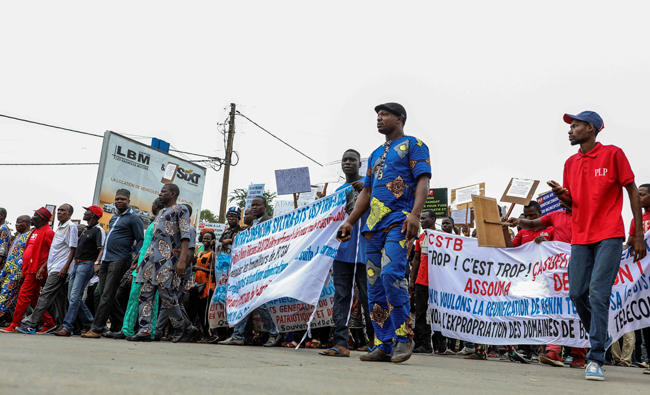
Benin, a Ponzi scheme and a long wait for answers
Benin, a Ponzi scheme and a long wait for answers
Latest updates


© 2026 SAUDI RESEARCH & PUBLISHING COMPANY, All Rights Reserved And subject to Terms of Use Agreement.