DUBAI: A top UAE official said Saturday the Arab countries isolating Qatar do not seek to force out the country’s leadership but are willing to cut ties if it does not agree to their demands.
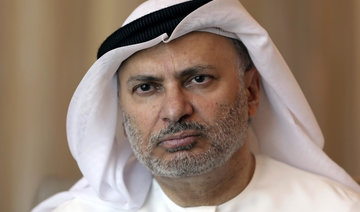
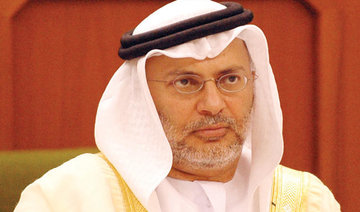
Anwar Gargash, Emirati minister of state for foreign affairs, told reporters in Dubai that his country and its allies, Saudi Arabia, Egypt and Bahrain, do not want “regime change” in Qatar, but a “behavioral change.”
The four countries presented a 13-point list of demands to Qatar through mediator Kuwait on Thursday and gave it 10 days to comply. Qatar said it is reviewing the ultimatum, which includes demands to shut Al-Jazeera, cut ties with radical groups including the Muslim Brotherhood, and curb relations with Iran.
Qatar’s neighbors insisted the list of demands was their bottom line, not a starting point for negotiations. The Arab countries signaled that if Qatar refuses to comply by the deadline, they will continue to restrict its access to land, sea and air routes indefinitely amid mounting economic pressure on the Arabian Gulf nation.
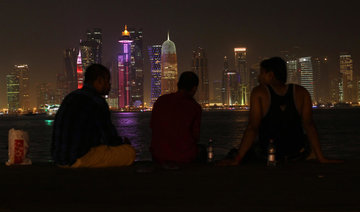
The four Arab states cut ties with Qatar over allegations that it funds terrorism — an accusation Doha rejects but that US President Donald Trump has echoed. The move has left Qatar under a de facto blockade by its neighbors.
Gargash said if Qatar did not accept the ultimatum, “the alternative is not escalation, the alternative is parting of ways, because it is very difficult for us to maintain a collective grouping.”
He said diplomacy remained a priority, but added that mediation efforts to resolve the dispute had been undermined by the public disclosure of the demands.
“The mediators’ ability to shuttle between the parties and try and reach a common ground has been compromised by this leak,” he said. “Their success is very dependent on their ability to move but not in the public space.”
The demands are apparently aimed at dismantling Qatar’s two-decade-old interventionist foreign policy, which has incensed its Arab neighbors.
Gargash said if Qatar fails to comply within the 10-day timeline set out in the ultimatum, it would be isolated, but he did not make clear what more could be done since the four Arab nations have already cut diplomatic relations with Doha and severed most commercial ties.
Qatar said the list of demands impinged on its sovereignty and failed to meet US expectations they be “reasonable.”
In Qatar’s first response to the demands, government communications director Sheikh Saif bin Ahmed Al-Thani said on Saturday that they went far beyond the four governments’ stated aim of combating terrorism.
“This blockade is not aimed at fighting terrorism but at impinging on Qatar’s sovereignty and interfering in its foreign policy,” Sheikh Saif said.
He recalled that US Secretary of State Rex Tillerson had said on Wednesday that Washington wanted a clear list of grievances that was “reasonable and actionable.” This list “does not meet those standards,” he said.
Tillerson has sought to mediate but the White House has been more hands-off, describing the diplomatic crisis as a “family issue.”
“The British foreign secretary asked that the demands be ‘measured and realistic’. This list does not satisfy that criteria,” Sheikh Saif said.
Al-Jazeera, one of the largest news organizations in the world, responded to the demands by saying it “deplores” calls for it to be taken off air.