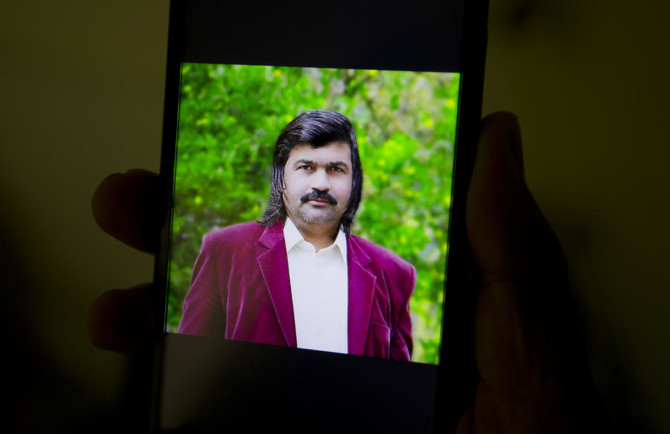
PAKISTAN: Bakhsheesh Elahi was waiting for the morning bus when a lone gunman on a motorcycle pulled up beside him and shot him dead. Rana Tanveer had just taken his family to safety after radical Islamists spray-painted death threats on his door, when a car smashed into his motorcycle and sped away.
Taha Siddiqui answered his phone to hear a menacing voice from a government agency telling him he needed to come in for questioning, without saying why.
The three men are journalists in Pakistan, considered one of the most dangerous places in the world for this profession. But even by Pakistan’s standards, things have gotten worse, according to journalists, Pakistani and international human rights activists, and advocacy groups.
In addition to attacks from militants or criminals, Pakistani journalists are also facing threats from government agencies or the military itself.
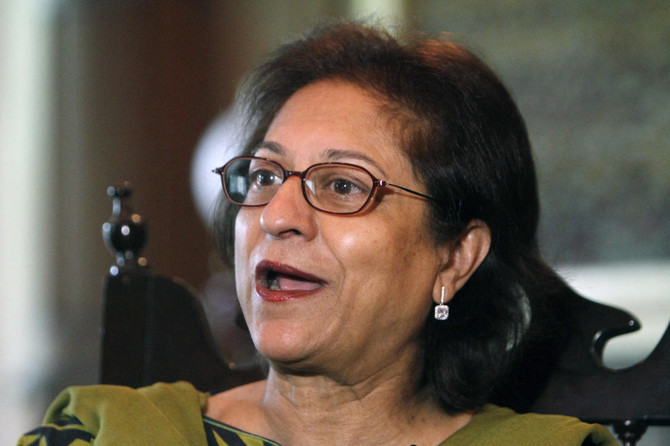
“Journalists are not threatened from one side alone, they are threatened by drug mafia, they are threatened by political gangs. They are also threatened by religious extremists,” said Asma Jehangir, a human rights lawyer and the director of Human Rights Commission of Pakistan. “They are threatened by the military. They are also threatened by people who are deeply (involved) in corruption, but when it comes to the extremist elements, governments are very reluctant to move because they themselves are afraid of them.”
Elahi, a determined investigative reporter in northwestern Pakistan’s Haripur, is just the latest example. The father of five, including a daughter born just 20 days earlier, was killed on June 11 while waiting for a bus a few hundred meters from his home.
Local journalists turned Elahi’s funeral into a protest, carrying his body through the streets and stopping traffic to demand that the killers be brought to justice, according to Zakir Hussain Tandi, president of the Haripur Press Club.
But impunity and a lack of prosecution has characterized many of the attacks on journalists in Pakistan. Elahi, who was bureau chief of an Urdu language newspaper and sister television station, was the fourth journalist killed in Haripur district in the last three years. All but one of the murders has gone unsolved.
The Committee to Protect Journalists (CPJ) says 60 journalists and 10 media workers have been killed in Pakistan since 1992.
Elahi’s Facebook page featured his relentless reporting against political corruption. One of the country’s largest television news channels to feature one of his stories.
“We think his death is probably related to journalism,” said Tandi of the press club. “Lots of people didn’t like his investigations, the drug mafia, corrupt politicians, car thieves. He wrote about them all.”
Pakistani journalists and social media activists have been detained, often by intelligence agencies, tortured according to some who were released, and threatened with blasphemy charges, which carry the death penalty and routinely incite mobs of radical extremists to violence.
Last week, a social media activist was sentenced to death for allegedly posting an item deemed insulting to Islam.
That sentence “sends a threatening message to all ... causing fear and leading to self-censorship,” Steven Butler, Asia director of the CPJ, said in an e-mail. “It’s clear that authorities — including investigative authorities, prosecutors, and the military — are keeping a close eye on journalists and ready to act when red lines are crossed.”
Last month, Interior Minister Chaudhry Nisar Ali Khan ordered a crackdown on “those ridiculing the Pakistan Army on social media (to protect) the prestige, reputation and goodwill” of the armed forces.
On May 18, Taha Siddiqui, Pakistan’s correspondent for France 24 TV, received a threatening call from someone claiming to represent the counter-terrorism wing of the Federal Investigation Agency , ordering him to come in for questioning. Siddiqui, who is also bureau chief of the World Is One News website, is an outspoken critic of Pakistan’s military and intelligence agencies.
“My work is in the public domain,” Siddiqui asked. “What does counter-terrorism have to do with journalism, with free speech?“
Siddiqui phoned colleagues for advice and stopped answering his door. He eventually spoke to Jehangir, the human rights lawyer, who advised him to file a petition demanding to know why he was being investigated. Siddiqui, who didn’t go in for questioning, has already made at least one court appearance and was told by the FIA that he was being investigated because of his critical stories about the military.
On May 30, Rana Tanveer, a correspondent for the English-language daily newspaper, The Express Tribune, found death threats spray painted on his home in eastern Lahore saying he would die for writing stories about the plight of minorities in Pakistan — particularly Ahmedis, reviled by mainstream Muslims who label them as heretics because they believe in a messiah who arrived after the Prophet Muhammad.
Pakistan has officially declared them non-Muslims, making it a crime for Ahmedis to identify themselves as Muslims. Dozens are facing charges.
“That was shocking for me,” Tanveer said of the spray-painted threats. He went to the police, which didn’t register a case but instead advised him against filing a formal complaint, saying it would enrage the radicals who had threatened him.
Tanveer has received several such threats over the years; even his landlord had been warned against renting to him because of his coverage of religious minorities
On June 9, Tanveer was riding his motorcycle after meeting a colleague from the Pakistan Union of Journalists to decide how to deal with the threats when a speeding car slammed into him and sent him crashing to the pavement. He suffered a fractured leg and believes it was no accident.
Today, he is in hiding with his family, unprotected by police and unsure when he can return to his job.
Jehangir said she believes the government crackdown is being done at least partially at the behest of Pakistan’s military.
“They think that the image of Pakistan is being destroyed by the word getting out of here,” she said. “Now, if you stop picking up people, stop torturing people, the image will improve, but don’t shoot the messenger.”


![]()
![]()
Journalists in Pakistan under fire from many sides
Journalists in Pakistan under fire from many sides
Latest updates


© 2026 SAUDI RESEARCH & PUBLISHING COMPANY, All Rights Reserved And subject to Terms of Use Agreement.