PHNOM PENH: An Australian nurse denied running an illegal surrogacy service in Cambodia when her trial began Tuesday, the first case of its kind in the country that recently banned the practice.
Tammy Davis-Charles, 49, was arrested in late November with two Cambodians and accused of recruiting foreign couples and Cambodian surrogate mothers to a clinic in the capital Phnom Penh.
The detentions came just two weeks after Cambodia moved to outlaw the surrogacy industry, which critics say exploits poor women, after a similar ban in neighboring Thailand pushed the business across its borders.
The trio were also charged with faking documents to obtain birth certificates for the newborns.
In court on Tuesday Davis-Charles said she played no part in arranging surrogacies.
Instead she said her role was limited to providing medical care to a total of 23 surrogate mothers who carried babies for 18 Australian and five American couples.
“They find the clinic” by themselves, she said of the would-be foreign parents, adding that she was also not involved in the recruitment of Cambodian surrogates.
The nurse said she received $8,000 from each couple while surrogates received around $10,000.
All of the infants were born and moved out of Cambodia before her arrest, she added.
Davis-Charles, who is from Melbourne, told the court she left Thailand more than a year ago after Bangkok outlawed commercial surrogacy and moved to Cambodia, which at the time lacked regulations on the industry.
Thailand for years hosted a thriving yet largely unregulated international surrogacy industry that was particularly popular with same-sex couples.
But several scandals in 2014 — including tussles over custody — spurred the government to bar foreigners from using Thai surrogates.
Surrogacy consultants say Laos, a poor and opaque communist country to the north, has since emerged as the next frontier for the “rent a womb” business in the wake of the recent bans by Cambodia, Thailand, Nepal and India.
A number of Laos-linked surrogacy agencies and IVF clinics have cropped up in recent months, according to consultancy group Families Through Surrogacy. A Thai man was recently arrested for smuggling frozen sperm between the two countries.
Some offer to carry out the embryo transfer in Laos and then provide pregnancy care for the surrogate in Thailand, a wealthier country with vastly superior medical facilities.


![]()
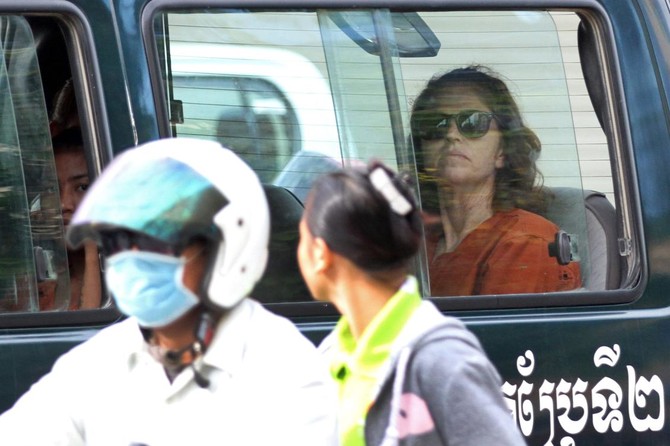

Australian nurse denies running illegal surrogacy in Cambodia
Australian nurse denies running illegal surrogacy in Cambodia
Argentine lawmakers approve historic labor reform promoted by President Javier Milei
BUENOS AIRES: Argentine President Javier Milei scored a crucial victory in congress Friday with the approval of a sweeping labor reform aimed at radically altering labor relations in the South American country.
With 42 votes in favor, 28 against and two abstentions, the Senate passed the government-backed initiative into law. The reform seeks to modernize labor relations, lower labor costs and limit the historical power of unions.
“Historic! We have a labor modernization,” Milei said after the overhaul was approved.
Shortly before the debate began in Argentina’s upper house, clashes broke out between police and protesters participating in a demonstration organized by unions, opposition political groups and left-wing social organizations outside the Parliament building to oppose the reform. At least three people were arrested.
The bill, which grants employers greater flexibility in matters of hiring, firing, severance and collective bargaining, has drawn fierce opposition from critics who argue it would roll back measures that protect workers from abuse and Argentina’s notoriously frequent economic shocks.
“It makes me incredibly angry. Passing a law is one thing, but implementing it is another,” said Ariel Somer, a 48-year-old railway worker protesting near Congress. “In Argentina, progress only happens when workers organize. We will find ways to resist.”
Supported by allies of the ruling La Libertad Avanza party, the initiative’s approval would provide Milei with a major legislative victory. He could then showcase these profound economic reforms during his Sunday address at the opening of the ordinary sessions of Congress.
The legislation won initial support from the Senate last week, but must go back for a final vote before becoming law. The government was forced to amend a clause that halves salaries for workers on leave because of injury or illness unrelated to work, after an outcry from opposition lawmakers.
The Senate on Friday may either accept the amendment — marking the final passage of the law — or insist on the original text to reinstate the article. The former outcome is widely anticipated.
The legislative process has been fraught with tension between the governing party and the opposition. The friction boiled over last week during the bill’s debate in the lower house of Congress, as the General Confederation of Labor — Argentina’s largest trade union group — launched a 24-hour nationwide strike, while demonstrators from various leftist groups clashed with police outside Congress.
Milei considers the changes to Argentina’s half-century-old labor code crucial to his efforts to lure foreign investment, increase productivity and boost job creation in a country where about two in five workers are employed off the books.
Unions argue that the law will weaken the workers’ protections that have defined Argentina since the rise of Peronism, the country’s dominant populist political movement, in the 1940s.
Roughly 40 percent of Argentina’s 13 million registered workers belong to labor unions, according to union estimates, and many are closely allied with Peronism.
With 42 votes in favor, 28 against and two abstentions, the Senate passed the government-backed initiative into law. The reform seeks to modernize labor relations, lower labor costs and limit the historical power of unions.
“Historic! We have a labor modernization,” Milei said after the overhaul was approved.
Shortly before the debate began in Argentina’s upper house, clashes broke out between police and protesters participating in a demonstration organized by unions, opposition political groups and left-wing social organizations outside the Parliament building to oppose the reform. At least three people were arrested.
The bill, which grants employers greater flexibility in matters of hiring, firing, severance and collective bargaining, has drawn fierce opposition from critics who argue it would roll back measures that protect workers from abuse and Argentina’s notoriously frequent economic shocks.
“It makes me incredibly angry. Passing a law is one thing, but implementing it is another,” said Ariel Somer, a 48-year-old railway worker protesting near Congress. “In Argentina, progress only happens when workers organize. We will find ways to resist.”
Supported by allies of the ruling La Libertad Avanza party, the initiative’s approval would provide Milei with a major legislative victory. He could then showcase these profound economic reforms during his Sunday address at the opening of the ordinary sessions of Congress.
The legislation won initial support from the Senate last week, but must go back for a final vote before becoming law. The government was forced to amend a clause that halves salaries for workers on leave because of injury or illness unrelated to work, after an outcry from opposition lawmakers.
The Senate on Friday may either accept the amendment — marking the final passage of the law — or insist on the original text to reinstate the article. The former outcome is widely anticipated.
The legislative process has been fraught with tension between the governing party and the opposition. The friction boiled over last week during the bill’s debate in the lower house of Congress, as the General Confederation of Labor — Argentina’s largest trade union group — launched a 24-hour nationwide strike, while demonstrators from various leftist groups clashed with police outside Congress.
Milei considers the changes to Argentina’s half-century-old labor code crucial to his efforts to lure foreign investment, increase productivity and boost job creation in a country where about two in five workers are employed off the books.
Unions argue that the law will weaken the workers’ protections that have defined Argentina since the rise of Peronism, the country’s dominant populist political movement, in the 1940s.
Roughly 40 percent of Argentina’s 13 million registered workers belong to labor unions, according to union estimates, and many are closely allied with Peronism.
Latest updates


© 2026 SAUDI RESEARCH & PUBLISHING COMPANY, All Rights Reserved And subject to Terms of Use Agreement.