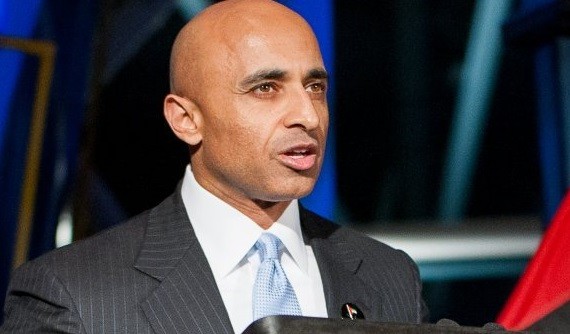
JEDDAH: The publication of leaked emails belonging to Yousef Al-Otaiba, the UAE ambassador to the US, by a website with links to Iran has been widely criticized and mocked on social media.
Al-Otaiba’s email account was apparently hacked, with the perpetrators offering the emails to a raft of news outlets. All but one website — The Intercept — apparently turned down a direct invitation to publish the content.
Commentators have pointed out that this is because there is no “smoking gun” in the emails — and that all they reveal is an envoy who has Arab interests at heart and is working hard to curb Tehran’s damaging influence in the region.
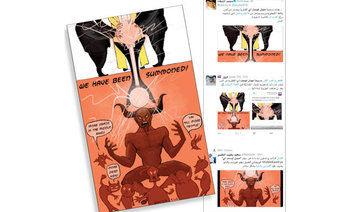
An Arabic hashtag that translates as “Al-Otaiba’s email speaks for me” was associated with the massive flood of tweets supportive of Al-Otaiba. Saudi users said that what was written in the hacked emails, such as the messages of support for the Kingdom’s ambitious Vision 2030 reform plan and criticism of countries that support extremism, was in fact a sign of honest and genuine brotherly feelings and concerns.
Mohammed Al-Sulami, head of the Riyadh-based Arabian Gulf Center of Iranian Studies, reiterated this in a tweet. He said he had attended several events in Washington where Al-Otaiba and his wife strongly defended the Kingdom and showed their support for it.
The UAE ambassador’s father, the renowned poet Mana Al-Otaiba, tweeted: “I’m a proud father.” He added in a screen-grabbed text: “Since his childhood I knew that he would be a great man… the son who works hard and aims high, has great respect and loyalty to his beloved country, the UAE, and to his family.”
A cursory look at what was revealed in the emails shows that there is nothing out of the ordinary, diplomatic sources said.
“The absence of a smoking gun… categorized as a matter of national interest is possibly why many US news outlets declined to run the story, apart from the fact that Otaiba’s email has been hacked,” an Arab diplomat in Washington, who opted not to be named, told Arab News.
According to various sources, the mysterious hackers had approached different news sites offering a sample of the emails, which allegedly show how the UAE is using influence to tarnish the image of other countries. Renowned news platform The Daily Beast ridiculed the contents of the leaks.
“Whatever the leak is meant to accomplish — a distraction, perhaps, from weightier issues involving President Donald Trump and Russia — its contents fall short of the explosive revelations hinted at in the cover letter… they include notes from an symposium on Islamic extremism, a proposed agenda for an upcoming meeting with the hawkish Foundation for Defense of Democracies, and a note on the UAE’s move to impose a tax on sugary soft drinks,” elaborated The Daily Beast.
The Arab diplomat told Arab News: “What is interesting is how The Intercept, of all US websites, was the first to run the leaks and how quickly the Qatar-based Al-Jazeera carried them after that, distancing themselves and pretending to quote American sources.”
Qatar has been at the receiving end of massive international criticism for the past fortnight following what Doha insists are fake statements made in support of Iran, Hamas and Hezbollah by the tiny Gulf state’s emir, Sheikh Tamim bin Hamad Al-Thani.
The Intercept is little known among Arabic speakers and outside certain circles in the West. However, its editorial line and tactics have raised questions in the US since it was launched in February 2014.
It is owned by a company called First Look Media, funded by Iranian-American billionaire Pierre Omidyar, the founder of the eBay auction site. The news site was launched by journalists Glenn Greenwald and Laura Poitras — best known for their roles in the series of reports concerning the documents disclosed by Edward Snowden — and Jeremy Scahill.
The Intercept claims to give “its journalists the editorial freedom and legal support they need to pursue investigations that expose corruption and injustice wherever they find it and hold the powerful accountable.”
Despite this professed agenda, it is nonetheless said to have a pro-Iranian stance based on its archive of stories, suggesting an uneven balance in terms of which powers it chooses to hold “accountable.”
While many of its stories are anti-Saudi, the same cannot be said with regard to its archive on Iran. In one lengthy story from 2016 entitled “US media condemns Iran’s ‘aggression’ in intercepting US naval ships — in Iranian waters,” Greenwald goes to great lengths to defend Tehran’s naval actions.
“It goes without saying that every country has the right to patrol and defend its territorial waters and to intercept other nations’ military boats that enter without permission,” he wrote. “But somehow, the US media instantly converted the invasion of Iranian waters by US ships into an act of aggression by Iran.”
Another article on Iran, from 2015, was headlined “Benjamin Netanyahu’s long history of crying wolf about Iran’s nuclear weapons.”
The Intercept’s questionable editorial agenda was grounds for the resignation of some journalists such as renowned Washington-based investigative reporter Ken Silverstein. After nearly 14 months working at The Intercept, Silverstein went on record to criticize his time at the Iranian-American businessman’s venture.
Silverstein announced his resignation from The Intercept in a series of Facebook posts in which he called his former employers a “pathetic joke.” Expressing anger and disillusionment with the company, Silverstein stated: “I am one of many employees who was hired under what were essentially false pretenses; we were told we would be given all the financial and other support we needed to do independent, important journalism, but instead found ourselves blocked at every step of the way by management’s incompetence and bad faith.”