CAIRO: Egypt removed the security chief of a province south of Cairo where Daesh militants last week killed 29 Christians traveling to a remote monastery in the desert, an acknowledgment of the lapses by authorities in dealing with the attack.
According to an Interior Ministry statement late on Monday, Maj-Gen. Faisal Dewidar was transferred from his post and was assigned the position of deputy director of the security forces. It is not clear if the position is in Minya.
Dewidar’s transfer was ratified as part of a wider reshuffle in the police that included 13 other Interior Ministry officials who were removed from their posts and appointed elsewhere.
The attack on Coptic Christians last Friday, on the eve of the start of Ramadan, has shocked many in Egypt. It was the fourth assault targeting Christians since December — attacks that have been claimed by Daesh and that have killed more than 100 people in all.
In the Minya attack, masked gunmen ambushed a bus carrying the Copts to St. Samuel the Confessor monastery, about 220 km south of Cairo, unleashing mayhem. Later, survivors of the attack recounted moments of horror, with children hiding under their seats to escape gunfire.
Egypt responded to the attack by launching a series of airstrikes that targeted what it said were militant bases in eastern Libya in which assailants in the Minya attack were trained.
The independent Cairo daily Al-Masry Al-Youm reported on Tuesday that an investigation has found there were no security forces on the stretch of the desert road leading to the Minya monastery or on nearby roads, allowing the assailants to easily escape.
In April, Daesh bombed two churches in the northern cities of Tanta and Alexandria as Coptic Christians were celebrating Palm Sunday. President Abdel Fattah El-Sisi declared a three-month state of emergency afterward.
Daesh has vowed to step up attacks on Coptic Christians, who account for about 10 percent of Egypt’s 93 million people.


![]()
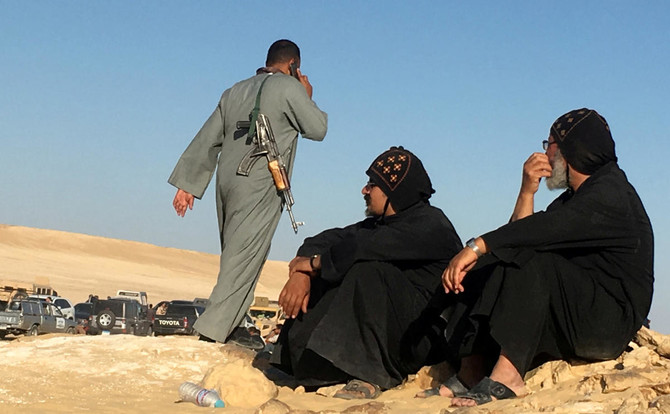
Egypt removes local security chief after Christians attacked
Egypt removes local security chief after Christians attacked
Latest updates



© 2026 SAUDI RESEARCH & PUBLISHING COMPANY, All Rights Reserved And subject to Terms of Use Agreement.