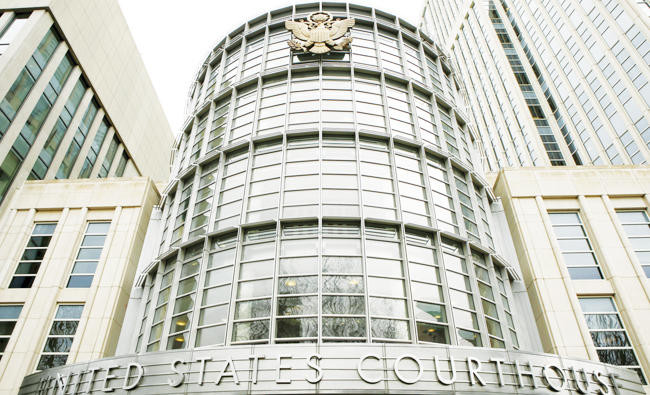
JEDDAH: A Lebanese man, accused of trying to use his ties to Hezbollah as part of a scheme to launder drug money, pleaded guilty on Friday in a Brooklyn, New York, federal court to a US money laundering and conspiracy charge.
US prosecutors said Joseph Asmar, 43, of Beirut, entered his plea at a hearing before US District Judge Eric Vitaliano.
Asmar was arrested in Paris in October 2015, and was extradited to the US 14 months later. He also faced a money laundering charge.
Aaron Altman, a lawyer for Asmar, said in an e-mail: “Joseph Asmar has taken responsibility for his actions and is anxious to move forward with his life. More than anything, he misses his family and prays that they will be reunited in the near future.” Hezbollah is a Shiite militia that the US Department of State has designated a foreign terrorist organization. Human rights organizations have accused Hezbollah, along with Bashar Assad’s men, of carrying out crimes against humanity.
Asmar was charged following what prosecutors said was a two-year sting operation in which he and a Lebanese businesswoman, Iman Kobeissi, had meetings with an undercover US Drug Enforcement Administration agent posing as a trafficker.
Prosecutors said Asmar claimed to be an attorney who boasted that his connections in European and Middle Eastern banks enabled him to launder money, and that he could use his Hezbollah connections to provide security for drug shipments.
Undercover agents provided $400,000 in alleged drug proceeds to Asmar and his co-conspirators, who laundered the money in exchange for a commission, prosecutors said.
Asmar faces up to 20 years in prison. A sentencing date has not been set. Kobeissi’s case is still pending.
The US federal court’s decison was welcomed by Dr. Hamdan Al-Shehri, a Riyadh-based Saudi political analyst and international relations scholar, who described it as a step in the right direction.”This is Hezbollah’s modus operandi,” he told Arab News from Riyadh on Sunday. “They have been using drug money to finance their terror operations.”
He claims that in Lebanon, Hezbollah cultivates hashish and then smuggles it into different countries in order to make money.
“They have factories in South America, in Colombia and Venezuela to process this stuff,” he said. Al-Shehri said Hezbollah operatives find it easy to procure passports in South America in order to facilitate their entry into the US and other countries where they launder drug money. “(Joseph Asmar’s conviction) proves what was known about Hezbollah terror operations,” he said.
He said since the South American countries have good ties with Iran, “they leverage those connections to their advantage in carrying out their dirty work.”He appealed to the international community, especially the US, to continue to follow Hezbollah’s money trail in order to stop their terrorist operations.
“We need to drain the swamp with a view to stopping their terrorist activities,” he said. “This case will hopefully lead to more exposes and reveal all cartels linked with Hezbollah.”
— With input from Reuters