TRIPOLI: Nearly 80 migrants were rescued off Libya’s coast after clinging to their sinking boat for two days, though the bodies of seven people who did not survive were also recovered, officials said.
The 77 migrants, including a woman and one child, were rescued on Thursday off the coastal city of Zawiya in western Libya, Libyan coast guard and International Organization for Migration (IOM) officials said.
“Seven bodies were recovered near the boat,” said Tripoli coast guard spokesman Ayoub Qassem. “According to survivors they stayed for two days holding their boat (which became unseaworthy due to overloading) until they were rescued.”
“Some of them are suffering from burns as a result of remaining in the sea and under the sun for a long time. They were given a medical treatment after they were taken on board a coast guard boat.”
Some 2,300 migrants were pulled from rubber and wooden boats in international waters between Libya and Italy on Thursday, the Italian coast guard said.
The vast majority of migrants attempting to reach Europe by boat try to cross from Libya to Italy. Smugglers send them out in flimsy boats with little fuel, and most are picked up by international vessels after leaving Libyan waters.
More than 50,000 have made it to Italy so far this year, and numbers have surged over the past 10 days. Nearly 6,350 have been intercepted and turned back by the Libyan coast guard in 2017, and over 1,440 have died trying to cross, according to the IOM. At least 34 migrants, many of them young children, drowned on Wednesday.
As non-governmental organizations (NGOs) have boosted rescue operations in the Mediterranean they have repeatedly clashed with Libya’s coast guard.
On Tuesday, several NGOs said the Libyan coast guard had boarded a migrant boat, robbing the migrants and firing shots into the air. More than 60 people fell into the water in the ensuing panic, though no one was hurt, they said.
Qassem denied that the coast guard had fired at or over the migrants, or put them in danger.


Migrants who clung to boat rescued off Libya, 7 bodies found
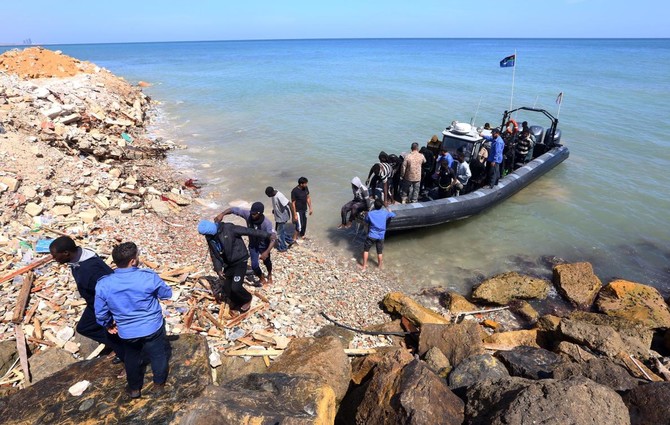
Migrants who clung to boat rescued off Libya, 7 bodies found

Iran war unsettles India’s packaged water makers as bottles, caps get pricey
- Higher polymer prices hurt bottled water industry
- Industry worth $5 billion has big multinational players like Pepsi, Coca-Cola
NEW DELHI: The Iran war is rattling India’s $5 billion packaged water market just ahead of the sweltering summer season.
One of the world’s fastest growing bottled water markets is seeing some manufacturers hike prices for distributors, as supply disruptions linked to the war fuel higher costs in everything from plastic bottles to caps, labels and cardboard boxes.
Though retail prices are yet to feel the heat and bigger companies are absorbing the pain, about 2,000 smaller bottled water makers have increased rates for their resellers by around 1 rupee per bottle, a 5 percent hike, which will rise by a further 10 percent in coming days, according to the Federation of All India Packaged Drinking Water Manufacturers’ Association.
Consumers usually pay less than 20 rupees, or around 20 US cents, for a one-liter bottle.
“There is chaos and within the next 4-5 days, this will start impacting customer prices,” said Apurva Doshi, the federation’s secretary general.
Rising oil prices have increased the cost of polymer, which is made from crude oil and is a key material for the industry’s plastic bottles. The cost of material used in making plastic bottles has risen by 50 percent to 170 rupees per kilogram, while the price of the caps has more than doubled to 0.45 rupees apiece. Even corrugated boxes, labels and adhesive tape are costing much more, industry letters showed.
Clean water is a privilege in the country of 1.4 billion people where researchers say 70 percent of the groundwater is contaminated, leaving people reliant on bottled water. Companies including Bisleri, Coca-Cola’s Kinley, Pepsi’s Aquafina, billionaire Mukesh Ambani’s Reliance and Tata all compete for a share of the $5 billion market. The companies did not respond to Reuters request for comment.
PREMIUM WATER FACES HEAT TOO
Within the broad bottled water market, natural mineral water is a $400 million business in India and a new, fast-growing wellness product for India’s wealthy.
The premium water segment accounted for 8 percent of the bottled water market last year in India, compared to just 1 percent in 2021, Euromonitor says.
Aava, which sells mineral water sourced from the foothills of the Aravalli mountains, has increased prices of its water bottles by 18 percent for resellers, Shiroy Mehta, CEO of the company, told Reuters.
“Most manufacturers are absorbing 40-50 percent of the cost to ensure that they don’t lose clients. It’s a poor situation for the beverage industry ahead of the summer season,” he said.
The mass market, however, is dominated by companies that produce “drinking water” to be sold in 1-liter bottles to customers. Clear Premium Water, a brand of India’s Energy Beverages, said in a notice to its distributors there had been an “unprecedented and continuous surge” in prices of key raw materials used in packaging and production.
“It is no longer possible for us to absorb the escalating costs while maintaining existing product prices,” the notice said.


