

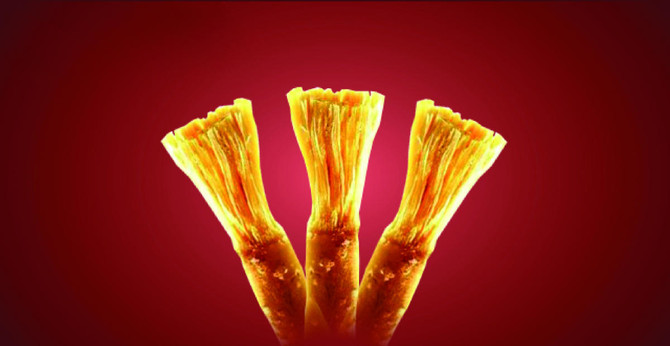
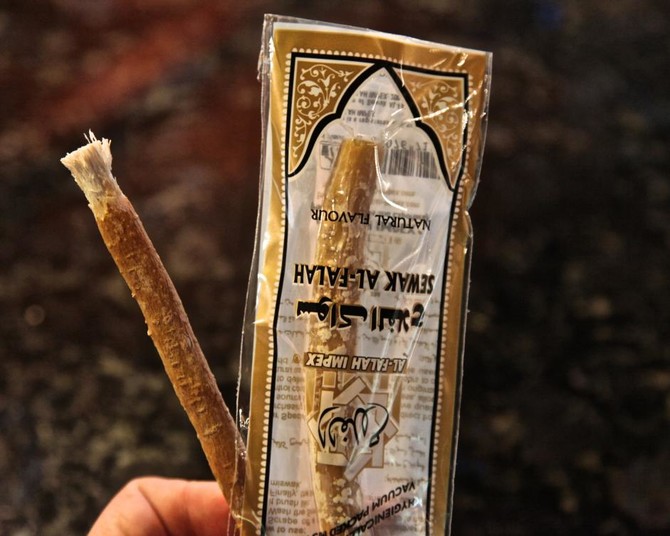
RIYADH: Using miswak, the twig used by a majority of people in Muslim countries to brush their teeth, is alien to most people in the West. Although it might sound outdated to use twigs from different trees to clean one’s mouth and teeth, studies conducted on miswak have proved otherwise, inferring that the miswak is better than toothpaste for preventing mouth and dental diseases.
The miswak, referred to at times as a chewing stick, is also an alternative form of medicine, according to some research findings. The twig’s usage has been highly recommended in Islam, and Muslims across the world practice it. In Saudi Arabia, the use of sticks or twigs from the Salvadora persica trees, known as arak in Arabic, are common.
In several parts of the Arab world, these trees are indigenous to arid regions and planting them reduces desertification in areas where no other vegetation or plants can be grown. This also helps local communities in several countries in the Middle East to develop a sustainable income while preserving an important part of their cultural heritage.
Miswaks can be taken from many trees except for those that are poisonous or harmful, such as the pomegranate and myrtle trees.
But users prefer the roots and branches from bitter-tasting palm, olive or arak trees. Arak trees are commonly found and are grown in Saudi Arabia, Sudan, southern Egypt, Chad and eastern parts of India. In parts of the Muslim world where the arak tree is not found, other trees are used for the purpose of cleaning the teeth and the tongue. Strips of bark are used in Morocco and branches of the Neem tree are often used in India for cleaning mouth.
Dr. Salam Siddiqui, a local dentist, said that “the repeated process of chewing sticks releases fresh sap and silica, which acts as an abrasive material to remove stains and clean teeth.”
He said that “the beneficial effects of miswak for oral hygiene and dental health are equal to, if not greater than, those who use toothbrushes and paste.”
According to research conducted by the Riyadh-based King Saud University (KSU), a total of 19 natural substances were found in miswak that benefit dental health. According to research, the miswak contains a number of natural antiseptics that kill harmful micro-organisms in the mouth, tannic acids that protect gums from disease, and aromatic oils that increase salivation.
The study said that “the miswak’s bristles are parallel to the handle rather than perpendicular, and can reach more easily between the teeth, where a conventional toothbrush often fails to reach.” The KSU’s research has been supported and substantiated by other research conducted by Abdul Al-Sharif of the Ministry of Agriculture. According to Al-Sharif, miswaks have antiseptics and other ingredients to fight mouth ulcers.
In addition to the substances that prevent cavities, gum bleeding, mouth cancer and putrefaction, miswaks have another ingredient that strengthens the gum and prevents teeth from coloring or decaying. He said that the two studies have proven that miswaks release a substance that soothes toothaches. Its use also improves appetite and regulate peristaltic movements of the gastrointestinal tract, he added.
Saleem Choudhary, a miswak seller in Riyadh, said: “Miswak sales have gone up in Ramadan, especially in Makkah and Madinah, where sales have increased by nearly 400 percent.
“There is a big market for miswaks in Saudi Arabia and users can find these sticks nowadays in every nook and corner of the city, on pavements, or even in stores that sell books and cassettes,” said Choudhary.


