MEXICO CITY: The auto industries of the US, Canada and Mexico agree there should be no changes to rules of origin in the North American Free Trade Agreement (NAFTA), the president of the Mexican automakers’ association said on Monday.
Under the trade deal between the US, Mexico and Canada, rules of origin stipulate that products must meet minimum regional, or NAFTA-wide, content requirements to be tariff-free.
“Our position is that the trade agreement has been a success and we should not be touching something as important as the rules of origin,” Eduardo Solis, president of Mexican automakers’ industry group AMIA, told Reuters in an interview.
NAFTA’s rules of origin, said Solis, have been key in creating value and integrating the auto industry in North America.
“In terms of access to markets and rules of origin, what we have is a shared position,” said Solis.
Mexico boasts plants owned by global automakers.
The administration of US President Donald Trump on Thursday triggered a 90-day consultation period with Congress, industries and the American public that would allow talks over NAFTA, one of the world’s biggest trading blocs, to begin by Aug. 16.
Authorities and businesses in Mexico have been bracing for the looming renegotiation, as Trump has insisted that a new pact must be more beneficial to American workers and companies.
Solis said it was important to not become overconfident before the actual negotiations kick off.
“We need to remain cautious and at the same time prepare the data that shows why NAFTA has been a success for the three nations,” said Solis.
Mexico’s booming auto sector has been a clear beneficiary of NAFTA as a wide range of international automakers have made Latin America’s second-biggest economy a key export hub, attracted by cheap labor costs and free-trade accords with dozens of nations.


‘N. American carmakers want rules of origin in NAFTA left untouched’
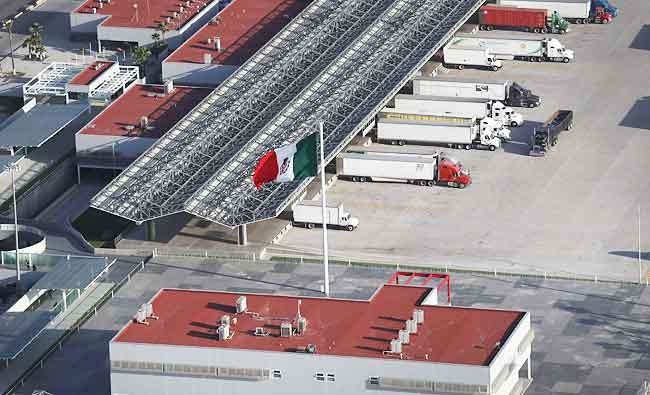
‘N. American carmakers want rules of origin in NAFTA left untouched’

Arab Cities Culture and Creative Industries Index launched
- UNESCO official says the index ‘strengthens the evidence base on culture and creative industries in the Arab region’
- It is planned as an advanced policy-enabling tool designed to position culture and creative industries as core components of future governance models
DUBAI: The Mohammed bin Rashid School of Government launched the 2026 edition of the Arab Cities Culture and Creative Industries Index on Wednesday.
Building on UNESCO’s frameworks to quantify the contributions that culture and creativity make to urban development in the Arab region, the index is the first regionally grounded and evidence-based framework.
Ernesto Ottone Ramirez, UNESCO’s assistant director-general for culture; Hala Badri, director-general of Dubai Culture; and Ali Al-Marri, MBRSG’s executive president, attended a special panel at the World Governments Summit in Dubai, during which the index was announced.
Welcoming the launch of the Index, Ramirez said: “It strengthens the evidence base on culture and creative industries in the Arab region, providing reliable, comparable, and policy-relevant figures.
“Such data is essential to guide public investment, inform decision-making, support inclusive cultural policies, and monitor culture’s contribution to sustainable development.”
The launch marks a definitive transition from ambition-led strategies to data-informed cultural policymaking, according to Al-Marri, who said: “By positioning culture as a core component of governance and a productive economic sector with measurable impact, we provide Arab cities with the tools to benchmark their creative ecosystems against global standards while respecting our unique regional context.”
According to a media release, the index is planned as an advanced policy-enabling tool designed to position culture and creative industries as core components of future governance models, marking a significant paradigm shift in which culture is recognized not merely as a social asset but as a strategic pillar of economic resilience, innovation, and inclusive growth.
Badri emphasized that the launch of the index represents an important step in highlighting culture’s role in advancing societies and positioning the cultural and creative industries as key contributors to the emirate’s knowledge- and innovation-driven economy.


