WASHINGTON: The United States is on a collision course with its NATO ally Turkey, pushing ahead with arming Syrian Kurds after deciding the immediate objective of defeating Islamic State militants outweighs the potential damage to a partnership vital to U.S. interests in the volatile Middle East.
The Turks are fiercely opposed to the U.S. plans, seeing the Kurdish fighters as terrorists. And when Turkish President Recep Tayyip Erdogan visits the White House this week, the most he and President Donald Trump may be able to do is agree to disagree, and move on.
"The Turks see this as a crisis in the relationship," said Jonathan Schanzer at the Washington-based Foundation for Defense of Democracies.
The challenge is hardly new. Long before Trump took office, U.S. presidents have grappled with the fragility of partnering with Turkey's government and the Kurds to carry out a Middle East agenda.
Past administrations have sought a delicate balance. Too exuberant in its support for the Kurds, and the U.S. risks pushing ally Turkey toward U.S. geopolitical rivals like Russia or emboldening the Kurds to try to create an independent state — a scenario that would destabilize multiple countries in the region. Too little cooperation with the Kurds risks squandering a battlefield ally with proven effectiveness against extremist threats and who has staunchly supported Washington.
Trump has made his priorities clear.
His administration is arming Syrian Kurdish fighters as part of an effort to recapture the Syrian city of Raqqa, the Islamic State group's self-declared capital. Coupled with the U.S.-backed fight in the Iraqi city of Mosul, Raqqa is seen as a key step toward liberating the remaining territory the militants hold.
Turkey has been pressuring the U.S. to drop support for the Kurdish militants in Syria for years and doesn't want them spearheading the Raqqa effort. Turkey considers the Syrian Kurdish group, known as the YPG, a terrorist group because of its ties to the outlawed Kurdish Workers' Party inside Turkey. The United States, the European Union and Turkey all agree the YPG is a terrorist organization.
The Turks fear any weapons the U.S. provides the Syrian Kurds could well end up with their ethnic brethren in Turkey, who've fought violently as part of a separatist insurgency for more than three decades. As a nod to Turkey's concerns, the Pentagon has promised tight monitoring of all weapons and greater intelligence sharing to help the Turks better watch over their frontiers. Kurds are an ethnic group predominantly concentrated along the borders of four countries — Turkey, Syria, Iraq and Iran.
But a face-to-face confrontation on the matter between Trump and Erdogan seems inevitable.
Erdogan and other top Turkish officials have pressed for the U.S. to reverse its strategy, however low the prospects of Trump changing his mind. As a result, experts see Erdogan using the meeting to confront Trump on a host of other Turkish grievances. Those include extraditing the Pennsylvania-based cleric, Fethullah Gulen, whom Erdogan blames for fomenting a failed coup last summer, and dropping U.S. charges against Reza Zarrab, a Turkish businessman accused of money-laundering and violating U.S. sanctions in Iran.
"I see this trip as a new milestone in Turkey-U.S. relations," Erdogan said, as he prepared to fly to Washington.
The U.S., too, has a wish list for Turkey. Washington is concerned by rising anti-Americanism in Turkey that Erdogan's government has tolerated since the July coup attempt. The U.S. also has pressed unsuccessfully for the release of Andrew Brunson, an American pastor, and other detained U.S. citizens.
Trump also has much at stake. His willingness to partner with authoritarian rulers and overlook their shortcomings on democracy and human rights have alarmed U.S. lawmakers of both parties. Trump's premise has been that he is focusing on deal-making. That puts added pressure on him to get results.
Trump has gone out of his way to foster a good relationship with Erdogan. After a national referendum last month that strengthened Erdogan's presidential powers, European leaders and rights advocates criticized Turkey for moving closer toward autocratic rule. Trump congratulated Erdogan.
Now, the American leader may try to cash in.
"Trump has prioritized protecting U.S. national security interests over lecturing allies on democratic values or human rights," said James Phillips, a senior research fellow for Middle Eastern affairs at the Heritage Foundation. "I don't think the president will lose any sleep if he is criticized for meeting with President Erdogan, as long as it pays dividends for advancing his foreign policy agenda."
But Erdogan may not be amenable to accepting the U.S. military support for the Kurds in a quid pro quo. Last month, the Turkish military bombed Kurdish forces in Syria and Iraq, in one case with American forces only about six miles (10 kilometers) away. His government has insisted it may attack Syrian Kurdish fighters again. The U.S., whose forces are sometimes embedded with the Kurds, has much to fear.
Barack Aydin of the Washington-based Kurdish Policy Research Center, said the key ought to be a broader peace process between Erdogan's government and Kurdish opponents in Turkey, which would eliminate these problems.
"That would be a very good start," Aydin said.


Erdogan visits Trump, amid much friction between US, Turkey
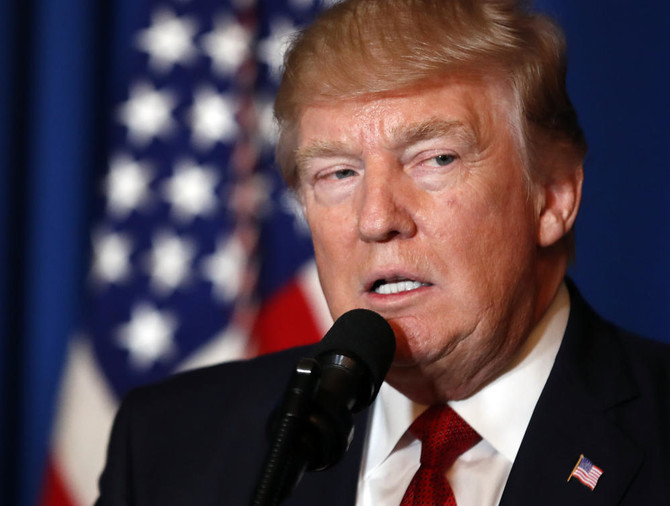
Erdogan visits Trump, amid much friction between US, Turkey

Jordan’s king, UK’s PM discuss Gaza, regional stability
- King Abdullah urges support for Syria’s efforts to protect its security, stability, sovereignty
- King also meets UK’s chief of defense staff during London visit
LONDON: The UK’s Prime Minister Keir Starmer met King Abdullah II of Jordan to discuss ways to support regional stability in the Gaza Strip and the West Bank, Downing Street said on Tuesday.
The meeting was also attended by Crown Prince Hussein and focused on the continuing need to advocate for increased access for humanitarian aid into Gaza.
It also aimed at supporting reforms within the Palestinian Authority to facilitate the ceasefire and help implement the US-led peace plan.
The parties praised the strong relationship between the UK and Jordan, especially in defense cooperation.
The king reaffirmed Jordan’s opposition to Israeli actions aimed at establishing settlements and asserting sovereignty over the occupied West Bank, according to the Jordan News Agency.
He emphasized the importance of implementing the US-backed agreement to end the war in Gaza. He also urged support for the efforts of the Syrian Arab Republic to protect its security, stability, and sovereignty, Petra added.
Deputy Prime Minister and Foreign Minister Ayman Safadi, the Director of His Majesty’s Office Alaa Batayneh, and Jordan’s Ambassador to the UK Manar Dabbas were also present at the meeting.
The king met on Monday in London Air Chief Marshal Richard Knighton, the UK’s chief of the defense staff. Their discussion centered on enhancing defense cooperation between Jordan and the UK. Maj. Gen. Yousef Huneiti, the chairman of Jordan’s joint chiefs of staff, also attended this meeting.
The king had met former British officials and members of Parliament prior to meeting Knighton. Discussions addressed the UK’s role in supporting efforts to restore stability within the region, alongside developments in Jerusalem, Gaza, Syria, and Iran.