TUNIS: Several thousand Tunisians marched through central Tunis on Saturday to protest against a bill that would grant amnesty to businessmen accused of corruption when autocrat Zine El-Abidine Ben Ali was in power.
Critics of the Economic Reconciliation bill say it is a step back from the spirit of Tunisia’s 2011 revolution to oust Ben Ali but government officials say it is a way get the businessmen to inject some of their ill-gotten cash back into the economy.
The draft law allows businessmen to reveal stolen funds and repay them. No exact figures exist for the amount of graft during Ben Ali times but based on past investigations, officials say some $3 billion could be returned initially under the law.
Waving flags and banners saying “No to forgiveness” and “Enough Corruption,” about 5,000 people accompanied by opposition party leaders and activists marched through the capital’s central Avenue Habib Bourguiba.
Six years after the uprising against Ben Ali, Tunisia is praised as a model of democratic transition but it is still struggling with the corruption, economic malaise and youth frustrations that helped trigger the revolt.
For many critics the law — which has been stuck in parliament for two years since President Beji Caid Essebsi proposed it — is simply an amnesty for criminals and a way to rehabilitate Ben Ali allies back into Tunisian society.
“We’re here to say to Essebsi and his cohorts that the law will fall in the street like in all democracies,” Popular Front opposition leader Ammar Amroussia told Reuters. “He wants to pass this corrupt law, but these protests show that we say no.”
Essebsi, himself a former Ben Ali official, sent the law to parliament in 2015 though the bill was delayed after criticism it benefited business elites tied to the government. It is now being debated in committee and then goes to a plenary session.
Despite a consensus between secular and Islamist parties that helped keep Tunisian stable after the uprising, the bill has divided Tunisians between those who want to close the door on the past and those who say they cannot tolerate corruption.
Protests against the law, and others in the south of Tunisia this month over jobs, come at a sensitive time for Prime Minister Youssef Chahed who is struggling to pass austerity measures and public spending reforms to help economic growth.
Despite its democratic progress, free elections and new constitution, Tunisia still faces social unrest among many young unemployed who feel their revolution against official abuses and corruption has not delivered economic opportunities.
“Today we are saying the defenders of the revolution are still here,” said protester Sabra Chrifa, wearing a T-Shirt with the slogan “No Forgiveness.” “We can’t accept something that whitewashes corruption like this.”


![]()
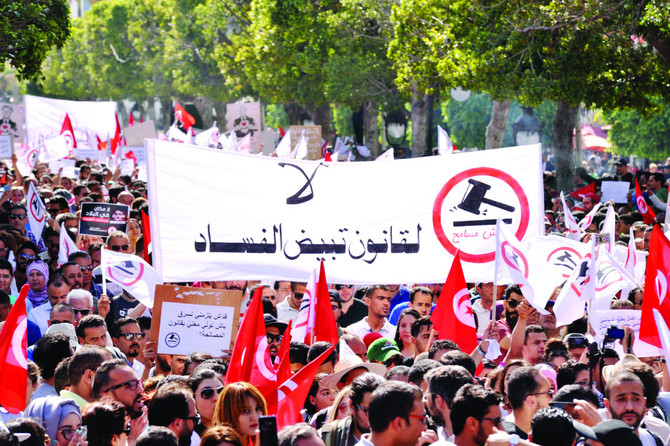
Tunisians protest over corruption amnesty bill
Tunisians protest over corruption amnesty bill
Latest updates




Recommended


© 2026 SAUDI RESEARCH & PUBLISHING COMPANY, All Rights Reserved And subject to Terms of Use Agreement.