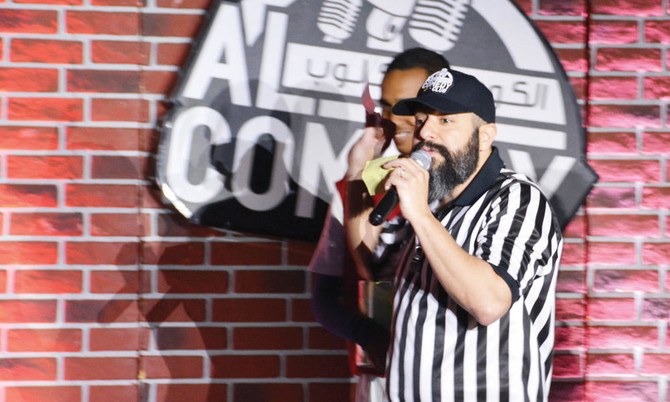
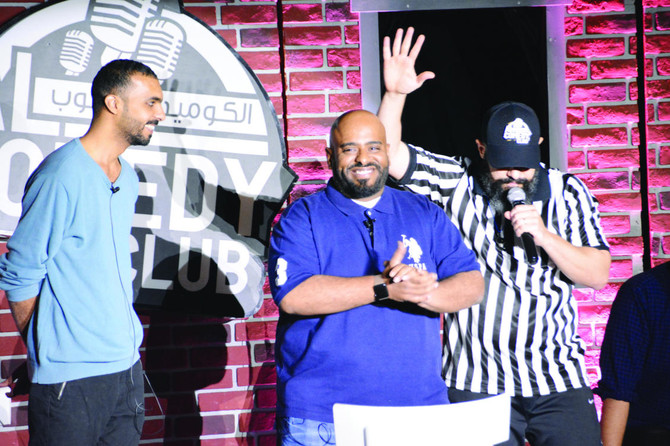
The Alcomedy Club started early 2012 when a group of comedy “fanatics” decided to take their passion to the next level and start a Saudi comedy club in their hometown Jeddah.
Khaled Omar, creative architect of the club, said that he joined the club back in 2014. “It was a dream that came true,” he said.
None of the members knew each other before the club.
“We were complete strangers to each other before and the club brought us together,” Omar said.
The club used to be named “Jeddah Comedy Club,” but was later changed for brand reasons to “Alcomedy Club.”
Despite the fact that a considerable segment of Jeddah-based residents are English-speaking, the comedy shows, sketches and plays are all performed in Arabic. “We had shy attempts, if I can say, of English-speaking comedians who used to perform English gigs in the past.”
Omar said the club is more focused on local content and local audience.
“Not that we are not interested in an English audience, but they already have this type of entertainment in their compounds, embassies and consulates. As you may know, stand-up comedies started in English. If we go back in 2007 or 2006 in the Italian Club and the American Embassy and other several places, they had English stand-ups. So, we might go English in the future.”
The Saudi sense of humor is quite well known regionally thanks to comedy TV series that are usually featured in the holy month of Ramadan, such as “Tash Ma Tash” and “WiFi.”
Alcomedy Club members are trying to introduce their own comedy live to Saudis, who usually watch such performances on the small screen.
“We introduced Arabic stand-up comedy before anyone would consider the idea,” he said. “If you ask any comedian to do an Arabic routine or gig back in 2007/2008, they would say ‘I don’t think so, it’s more difficult.’ ”
When the club started in 2012, people reacted “amazingly” and were quite impressed by these talents. The audience thought it was “phenomenal” to have Arabic stand-up, especially after years of English-speaking comedy.
What really helped the club in their popularity among Saudi-based audiences is the ongoing dose of laughter and popcorn. The club produces regular shows, where they have a comedy night every Thursday throughout the year.
“I don’t recall any show where we didn’t have full-house nights ever since we started,” Omar said.
The cozy theater of the Saudi Arabian Society for Culture and Arts (SASCA), where the Alcomedy Club shows are always held, accommodates up to 200 people per show.
Alcomedy Club is also involved in different events and activities upon request, where their participation ranges from throwing a couple of gigs to organizing entire events that have comedy themes. “We have two types of contracts, where you only get the talent/comedian or the whole package,” Omar told Arab News. “We have bills to pay,” he added laughing.
Omar said that the ticket price reflects the average cost of entertainment here in Saudi Arabia. “If you’re going out on the weekends, SR150/SR200 is the average spending, including snacks and food. In our club, you’re paying SR125 plus free snacks and stuff and some money left for you to get food on your way back. So our prices are average. Not cheap, but not expensive either.”
According to club’s creative architect, 20 to 30 percent of the audience is made up of regular attendees.
“Now, of course, we don’t have the same 30 percent every show, but they rotate from a show to another. We have around 1,800 to 2,000 regular fans who almost never miss a show and then the other 80 percent of them are new visitors.”
The members have a monthly schedule of routines/gigs to use throughout the month in four shows: Two stand-up nights, one improv night and a sketches night where they preform comedy plays. The club’s management does not interfere in the comedian’s material but set up some rules.
“There are three topics – social taboos – the comedians shouldn’t come close to: religion, sex and politics,” Omar said.
A fourth topic has been recently added to the list of taboos: racism. “Racism is, unfortunately, growing in a very scary way in the past three years, to be honest, and the Saudi government is very strict about it so we have received a letter not to talk about it, especially that we are performing on a government stage so we have to follow the rules,” said Omar.
The Jeddah-based club is no longer for Jeddawis only, as the club is planning to expand their shows across the Kingdom’s regions starting in Riyadh by August or September.
Khaled Omar is aspiring to have daily shows in the future instead of weekly nights. “Hopefully, Alcomedy Club will be all over the place five years from now.”
The audience can also get the chance to enjoy music at the end of the show by some local talents featured in the club’s nights. “We also feature some magic tricks on stage performed by magicians, where we find them a 10-minute slot to showcase their talents.”
Most people do not know that Alcomedy Club members all used to have regular professions before joining the club – the Club’s founder Yasser was a marketing vice president at a large company, Muhammed Ali used to work for a designing company. The club’s DJ was an electronic engineer. They dropped out of the corporate world to follow their passion.
Omar used to work in King Abdullah Sports City and is not getting as much income as he used to get from his previous job.
“I don’t regret leaving my job for a second,” Omar said. “It’s never about the money. It’s about living your life – life is short and you’re living it once. You get money to buy happiness and we’re getting it in the club.”
Alcomedy Club consists of 23 individuals who are professional full-time comedians who have exclusive contracts with the club, where they can’t work with any other comedy clubs. “We also have around 30 to 40 people who we have a memorandum of understanding with, where they can keep their own businesses apart from the club,” Omar added.
The club has also featured over 150 comedians who appeared on the club’s stage once or twice. “We have auditioned over 2,000 people to 4,000 during the past five years,” he said.
Local Comedians Magnificent Alliance (LCMA) is another comedy club that has emerged apart from the Alcomedy Club, which is also set to be a weekly show held Tuesdays, for men only.


![]()
![]()
![]()
![]()
![]()
![]()
![]()

Alcomedy Club: For humor with a Saudi twist



Alcomedy Club: For humor with a Saudi twist


Latest updates



Recommended


© 2026 SAUDI RESEARCH & PUBLISHING COMPANY, All Rights Reserved And subject to Terms of Use Agreement.