NEW DELHI: Three men who were transporting buffaloes in their truck to a slaughterhouse were attacked by vigilantes in the heart of Indian capital New Delhi, the police said on Sunday.
The latest attack comes amidst a wave of rising tensions over cow slaughter in Hindu-majority India, where the animal is considered sacred and its slaughter is a punishable offense in many states.
There have been a spate of attacks in the recent months by ‘cow protection’ vigilante groups, who roam some highways inspecting livestock trucks for any trace of the animal.
A Muslim man died in one such attack earlier this month after the truck carrying cows was attacked by one such vigilante group in western Rajasthan state.
“This incident has nothing to do with any cow protection (group) but is linked to an animal rights’ group which has been working in Delhi for long,” Ramil Baniya, deputy commissioner of police told journalists.
“Around 14 buffaloes were being taken for slaughter when the team of animal rights’ activists intercepted and stopped them, and they had some scuffle and arguments,” Baniya added.
The police have since launched two investigations, one over the alleged illegalities in transportation of buffaloes and the other over attack on cattle truck.
In 2015 a Muslim man was lynched by his neighbors over rumors that he had slaughtered a cow. Police later said the meat was mutton.
Last month a hotel manager was beaten by a mob and his restaurant sealed in Jaipur after Hindu vigilantes accused him of serving beef.
Critics say the vigilantes have been emboldened by the election in 2014 of Prime Minister Narendra Modi’s Hindu nationalist Bharatiya Janata Party.
Last year Modi criticized the cow-protection vigilantes and urged a crackdown against groups using religion as a cover for committing crimes.


![]()
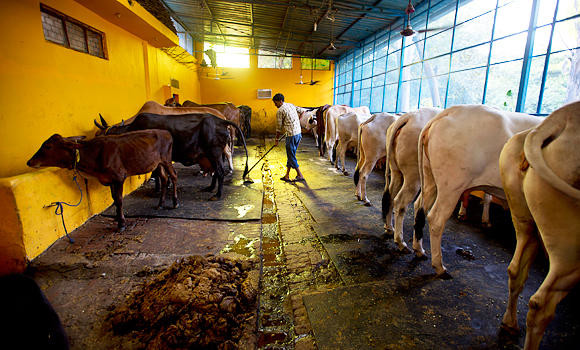

Three men attacked in Indian capital for transporting cattle
Three men attacked in Indian capital for transporting cattle
Taiwan to send team to assess US rare earth deposits
TAIPEI: Taiwan plans to send officials to assess US rare earths deposits with a goal to have such minerals refined on the island, Economy Minister Kung Ming-hsin said on Wednesday.
President Donald Trump’s administration has stepped up efforts to secure US supplies of critical minerals after China rattled senior officials and global markets last year by withholding rare earths required by American automakers and other industrial manufacturers.
Trump last week launched a US strategic stockpile of critical minerals, called Project Vault, backed by $10 billion in seed funding from the US Export-Import Bank and $2 billion in private funding.
While semiconductor powerhouse Taiwan is not formally part of that scheme, it has previously held talks with the United States on how it can help, given Taipei’s concerns about over-reliance on a China-centric supply chain.
China views Taiwan as its own territory and has stepped up its military threats.
Speaking to reporters in Taipei, Kung said the ministry’s Geological Survey and Mining Management Agency would go to the United States to assess rare earths deposits there.
“Specifically, what rare-earth elements they contain and whether they are suitable. In other words, whether those are the rare earths we actually need. So we still need to investigate,” he said.
Given Taiwan does not mine such elements itself, it can instead play a role in refining the materials from other countries, Kung added.
“The technology is not an issue; the next step is scaling up,” he said.
Taiwan consumes 1,500 metric tons of rare earth annually, a figure projected to rise to 2,000 metric tons given economic growth, Kung added.
“Our goal is to expand production capacity to meet half of our demand by then, strengthening the supply chain.
President Donald Trump’s administration has stepped up efforts to secure US supplies of critical minerals after China rattled senior officials and global markets last year by withholding rare earths required by American automakers and other industrial manufacturers.
Trump last week launched a US strategic stockpile of critical minerals, called Project Vault, backed by $10 billion in seed funding from the US Export-Import Bank and $2 billion in private funding.
While semiconductor powerhouse Taiwan is not formally part of that scheme, it has previously held talks with the United States on how it can help, given Taipei’s concerns about over-reliance on a China-centric supply chain.
China views Taiwan as its own territory and has stepped up its military threats.
Speaking to reporters in Taipei, Kung said the ministry’s Geological Survey and Mining Management Agency would go to the United States to assess rare earths deposits there.
“Specifically, what rare-earth elements they contain and whether they are suitable. In other words, whether those are the rare earths we actually need. So we still need to investigate,” he said.
Given Taiwan does not mine such elements itself, it can instead play a role in refining the materials from other countries, Kung added.
“The technology is not an issue; the next step is scaling up,” he said.
Taiwan consumes 1,500 metric tons of rare earth annually, a figure projected to rise to 2,000 metric tons given economic growth, Kung added.
“Our goal is to expand production capacity to meet half of our demand by then, strengthening the supply chain.
Latest updates


Recommended


© 2026 SAUDI RESEARCH & PUBLISHING COMPANY, All Rights Reserved And subject to Terms of Use Agreement.