WASHINGTON: CIA Director Mike Pompeo on Thursday called WikiLeaks a “hostile intelligence service,” using his first public speech as spy agency chief to denounce leakers who have plagued US intelligence.
Pompeo, in an address at the Center for Strategic and International Studies think tank, called WikiLeaks founder Julian Assange “a fraud” and “a coward.”
“It is time to call out WikiLeaks for what it really is, a non-state hostile intelligence service often abetted by state actors like Russia,” Pompeo said.
He said Russia’s GRU military intelligence service used Wikileaks to distribute material hacked from Democratic National Committee computers during the 2016 US presidential election.
US intelligence agencies have concluded that Russia stole the e-mails and took other actions to tilt the election in favor of eventual winner Donald Trump, a Republican, against Democratic candidate Hillary Clinton.
Pompeo and President Donald Trump, who chose him to head the CIA, have not always been so critical of WikiLeaks. During a campaign rally last October, Trump praised the group for releasing hacked e-mails from the DNC by saying, “I love WikiLeaks.”
In July, Pompeo, than a Republican member of the House of Representatives, mentioned it in a Twitter post referring to claims that the DNC had slanted the candidate-selection process to favor Clinton. “Need further proof that the fix was in from Pres. Obama on down? BUSTED: 19,252 Emails from DNC Leaked by Wikileaks.”
WikiLeaks has published secret documents from the US government and others and says its mission is to fight government secrecy and promote transparency. Pompeo said it has “encouraged its followers to find jobs at CIA in order to obtain intelligence.”
Assange has been holed up in the Ecuadorean Embassy in London since 2012, after taking refuge there to avoid extradition to Sweden over allegations of rape, which he denies.
Two of Assange’s lawyers and a Wikileaks spokesman did not immediately respond to requests for comment on Pompeo’s remarks.
Pompeo’s speech on Thursday follows a series of damaging leaks of highly sensitive CIA and National Security Agency material.
In March, WikiLeaks published thousands of pages of internal CIA discussions that revealed hacking techniques the agency had used against iPhones, Android devices and other targets.
Pompeo also had harsh words for Edward Snowden, the former National Security Administration contractor who downloaded thousands of documents revealing some of the electronic eavesdropping agency’s most sensitive programs and shared them with journalists.
“More than a thousand foreign targets, people, groups, organizations, more than a thousand of them changed or tried to change how they communicated as a result of the Snowden disclosures,” Pompeo said. “That number is staggering.”
US intelligence agencies have struggled to deal with “insider threats” — their own employees or contractors who steal classified materials and, in some cases, publicize them.
In response to a question, Pompeo disputed Russia’s account of a chemical weapons attack in Syria that prompted retaliatory cruise missile strikes by Trump last week.
Moscow has said that Syrian rebels, rather than the Syrian government, were responsible.
“None of the (accounts) have an ounce of truth in them,” Pompeo said, calling Russian President Vladimir Putin “a man for whom veracity doesn’t translate into English.”


CIA chief calls WikiLeaks a ‘hostile intelligence service’
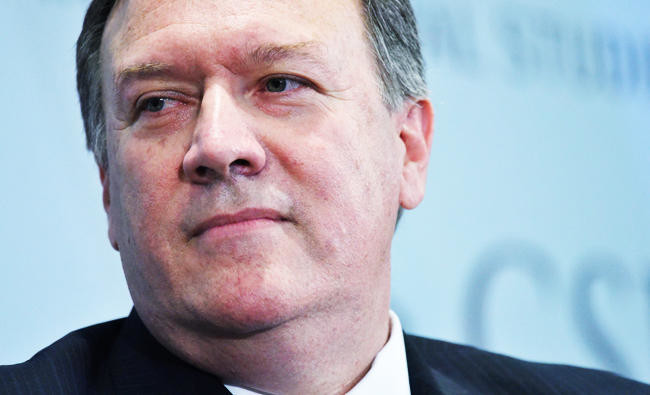
CIA chief calls WikiLeaks a ‘hostile intelligence service’

In Bangladesh’s mangrove forest, villagers brave tigers to collect rare honey
- Honey is gathered from wild bee colonies deep in the Sundarbans
- Producers made a debut at the biggest food fair in Jeddah this month
DHAKA: When the harvest begins, Mizanur Rahman gathers a few hundred men and sets out into the mangrove forest along the Bay of Bengal, where for months they climb trees to collect by hand a wild natural honey whose unique properties are only starting to attract global attention.
The honey is collected from wild bee colonies deep within the Sundarbans, the world’s largest mangrove reserve spanning parts of India and southwestern Bangladesh.
“Honey collection from this forest is mostly done in the Bangladesh part,” Rahman said. “All plants, trees, and the overall environment of this forest are natural. There is no human touch.”
Sundarban honey comes from an ecosystem where trees grow and bloom naturally, without the use of fertilizers or pesticides. Its collectors, known as mawalis, begin work in March for about three and a half months.
Rahman estimates there are about 4,000 mawalis in the local community. To enter the forest, they require special passes from the forest department.
“It’s a very risky job for the people who enter the forest,” he told Arab News. “It’s the only honey in the world where collectors risk their lives in the den of the mighty Bengal tiger to gather it. Sometimes, they also face the danger of poisonous snake bites.”
During the season, his team reaches up to 1,200 members who together manage to collect about 400 tons of honey.
“One hundred small boats start sailing together, each carrying eight to 10 people,” Rahman said. “Despite the dangers, it is a matter of pride to be part of these challenging tasks.”
Collected from a humid environment, Sundarban honey is thinner than other types. Its greenish-amber shade comes from the nectar of mangrove flowers, and the taste is less sweet than most commercial honeys, with a subtle citrus-like tanginess. The scent is mild.
Being raw and unprocessed, the honey retains more enzymes, antioxidants, and pollen.
“Some people can feel acidity similar to orange juice,” Rahman said. “It has a unique taste. If someone tastes this honey once, she or he will definitely love to taste it again and again.”
Well known locally in Bangladesh and parts of eastern India, where it has been harvested and consumed for generations, Sundarban honey is only starting to gain attention in organic and specialty food markets.
Earlier this month, it debuted at AgroFood Jeddah, Saudi Arabia’s leading international exhibition for the agriculture, food, and agritech industries.
The organic honey from the Sundarbans received an encouraging reception, according to Mohammed Saleh Uddin Bhuyan, chief category officer at Ghorer Bazar, one of the companies participating in the expo.
“We have been receiving good responses from the local buyers,” he said. “Saudi Arabia is a very promising market for us.”
Bangladeshi authorities recognize the honey’s export potential but also the fact that production still needs to be standardized to enter global markets.
Mahmudul Hasan, director of Bangladesh’s Export Promotion Bureau, told Arab News that there are plans to promote the organic practices behind the honey during future food fairs in the Gulf region.
“There is huge export potential for our mangrove honey in the Gulf countries, as Arab consumers are fond of honey. They just need to be assured of the quality in the production process,” he said.
“Our mangrove honey is undoubtedly an organic product. It has unique value, but the world is not very aware of it yet.”


