WASHINGTON: CIA Director Mike Pompeo on Thursday called WikiLeaks a “hostile intelligence service,” using his first public speech as spy agency chief to denounce leakers who have plagued US intelligence.
Pompeo, in an address at the Center for Strategic and International Studies think tank, called WikiLeaks founder Julian Assange “a fraud” and “a coward.”
“It is time to call out WikiLeaks for what it really is, a non-state hostile intelligence service often abetted by state actors like Russia,” Pompeo said.
He said Russia’s GRU military intelligence service used Wikileaks to distribute material hacked from Democratic National Committee computers during the 2016 US presidential election.
US intelligence agencies have concluded that Russia stole the e-mails and took other actions to tilt the election in favor of eventual winner Donald Trump, a Republican, against Democratic candidate Hillary Clinton.
Pompeo and President Donald Trump, who chose him to head the CIA, have not always been so critical of WikiLeaks. During a campaign rally last October, Trump praised the group for releasing hacked e-mails from the DNC by saying, “I love WikiLeaks.”
In July, Pompeo, than a Republican member of the House of Representatives, mentioned it in a Twitter post referring to claims that the DNC had slanted the candidate-selection process to favor Clinton. “Need further proof that the fix was in from Pres. Obama on down? BUSTED: 19,252 Emails from DNC Leaked by Wikileaks.”
WikiLeaks has published secret documents from the US government and others and says its mission is to fight government secrecy and promote transparency. Pompeo said it has “encouraged its followers to find jobs at CIA in order to obtain intelligence.”
Assange has been holed up in the Ecuadorean Embassy in London since 2012, after taking refuge there to avoid extradition to Sweden over allegations of rape, which he denies.
Two of Assange’s lawyers and a Wikileaks spokesman did not immediately respond to requests for comment on Pompeo’s remarks.
Pompeo’s speech on Thursday follows a series of damaging leaks of highly sensitive CIA and National Security Agency material.
In March, WikiLeaks published thousands of pages of internal CIA discussions that revealed hacking techniques the agency had used against iPhones, Android devices and other targets.
Pompeo also had harsh words for Edward Snowden, the former National Security Administration contractor who downloaded thousands of documents revealing some of the electronic eavesdropping agency’s most sensitive programs and shared them with journalists.
“More than a thousand foreign targets, people, groups, organizations, more than a thousand of them changed or tried to change how they communicated as a result of the Snowden disclosures,” Pompeo said. “That number is staggering.”
US intelligence agencies have struggled to deal with “insider threats” — their own employees or contractors who steal classified materials and, in some cases, publicize them.
In response to a question, Pompeo disputed Russia’s account of a chemical weapons attack in Syria that prompted retaliatory cruise missile strikes by Trump last week.
Moscow has said that Syrian rebels, rather than the Syrian government, were responsible.
“None of the (accounts) have an ounce of truth in them,” Pompeo said, calling Russian President Vladimir Putin “a man for whom veracity doesn’t translate into English.”


![]()
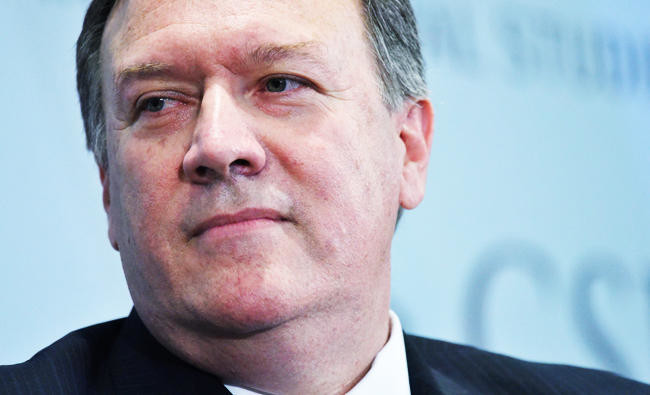
CIA chief calls WikiLeaks a ‘hostile intelligence service’
CIA chief calls WikiLeaks a ‘hostile intelligence service’
Latest updates



Recommended


© 2026 SAUDI RESEARCH & PUBLISHING COMPANY, All Rights Reserved And subject to Terms of Use Agreement.