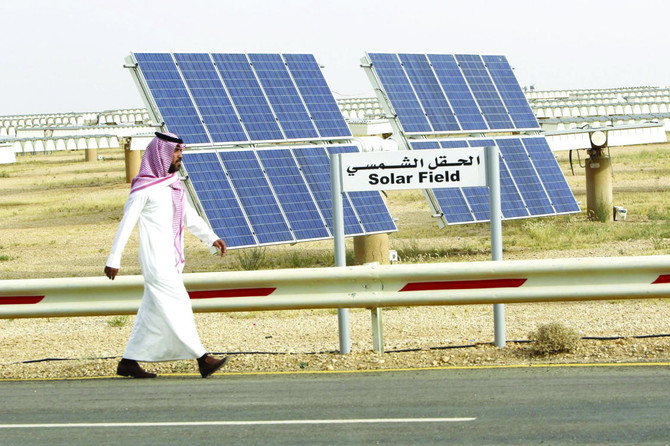
LONDON/FRANKFURT: Saudi Arabia’s renewable energy market is set for growth, supported by an abundant solar resource, land availability, an A-rated sovereign credit, and strong economic and strategic logic, said a report issued by Moody’s Investors Service.
“The government of Saudi Arabia’s plans are motivated by a desire to diversify the energy mix and take advantage of the compelling economics of renewables, especially solar, in the country,” said Christopher Bredholt, a Moody’s vice president and senior analyst.
According to the report, electricity demand is increasing due to economic and demographic growth, and highly energy-intensive industrialization programs.
As government finances come under pressure in the low oil price environment, the Kingdom is seeking to reduce subsidies for oil consumption and encourage clean generation technologies, it added.
The report said that the Saudi renewable plans would help reduce the share of the public sector in the economy and leverage project finance opportunities for lenders — both sukuk and non-sukuk.
However, credit challenges include a relatively untested regulatory framework for renewables; the lack of total cost recovery for the state utility Saudi Electricity Company (SEC); operating in the desert environment, which can impair plant efficiency; and a relatively undeveloped local supply chain given the lack of installed renewables capacity.
In February 2017, the government opened an auction for 700 megawatts (MW) of renewable energy capacity, a step toward meeting its strategic targets of generating 9.5 gigawatts (GW) by 2030.
Renewable energy activity in Saudi Arabia to date has been fairly minimal and the market is likely to develop only gradually as market participants get acquainted with new procurement procedures and the supply chain adjusts its expectations.
Trust Certificates
Moody’s Investors Service also assigned a provisional program rating of (P)A1 to the global Trust Certificate Issuance Program established by the Saudi government.
KSA Sukuk Limited, a special purpose vehicle incorporated in the Cayman Islands and wholly owned by the Saudi government, will issue Trust Certificates under the program. The payment obligations associated with these certificates are direct obligations of the government, and the program rating mirrors the government’s long-term issuer rating of A1.
Moody’s expects to assign definitive rating(s) to Trust Certificates issued under the program upon closing of the issuance and review of the terms of the final transaction documents. Moody’s also notes that its program rating does not express an opinion on the structure’s compliance with Shariah law.


![]()
Low oil, electricity demand drives Saudi Arabia’s renewables plans: Moody’s
Low oil, electricity demand drives Saudi Arabia’s renewables plans: Moody’s
Latest updates


© 2026 SAUDI RESEARCH & PUBLISHING COMPANY, All Rights Reserved And subject to Terms of Use Agreement.