Twitter makes room for more characters in tweets

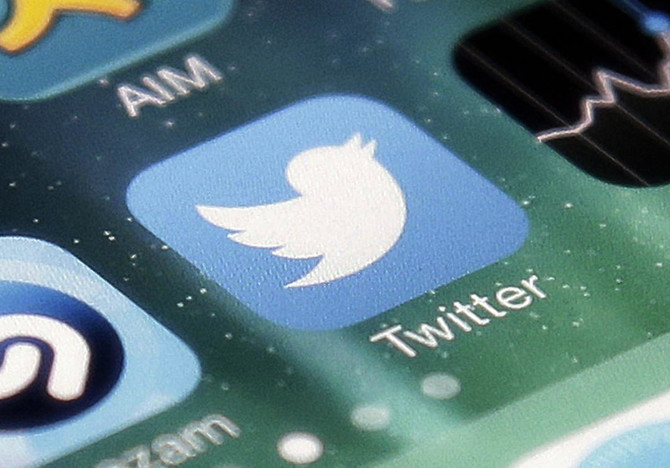
Twitter's 140-character limit was based on mobile-phone text messaging constraints at the time the service launched in 2006. (AP)
Updated 03 April 2017
Follow

Twitter makes room for more characters in tweets

SAN FRANCISCO: Twitter has begun rolling out changes to let people pack more into tweets, subtracting from the character count names of those being replied to in posts.
The latest software modification at the one-to-many messaging service comes about a year after Twitter set out to relax a 140-character limit set due to mobile phone text messaging constraints in place when Twitter launched in 2006.
Twitter first announced plans to relax the limit a year ago, as part of an effort to bring in more members and make the platform easier to use.
“Remember how we told you we were working on ways to let you to express more with 140 characters?” Twitter product manager Sasank Reddy said in an online post.
“Now, when you reply to someone or a group, those @usernames won’t count toward your tweet’s 140 characters.”
Providing more room in tweets is seen as a way to encourage more use and sharing of pictures, videos and links.
The move is part of a push by Twitter to increase its user base and engagement, which have sputtered to the chagrin of investors.
“Our work isn’t finished,” Reddy said.
“We’ll continue to think about how we can improve conversations and make Twitter easier to use.”
Twitter faces competition from Facebook and Instagram, and a trend of people opting to share content in video or picture formats instead of text.


BBC slammed for ‘shameful’ cut to ‘free Palestine’ comment at BAFTA Awards

Updated 23 February 2026
Follow

BBC slammed for ‘shameful’ cut to ‘free Palestine’ comment at BAFTA Awards

  • Broadcaster removes from broadcast part of filmmaker Akinola Davies Jr.’s acceptance speech at the British Academy Film Awards
  • Amnesty UK praises filmmaker for speaking up for those ‘facing and fleeing from persecution and mass atrocities’

LONDON: The BBC was accused on Monday of a “shameful” decision after it cut part of an acceptance speech at the previous night’s British Academy Film Awards in which a filmmaker uttered the phrase “free Palestine.”

British-Nigerian director and co-writer Akinola Davies Jr. and his brother, co-writer Wale Davies were collecting the award for outstanding debut by a British writer, director or producer for their film “My Father’s Shadow” when the former made the comment.

The BBC chose not to include the final part of his speech when it broadcast the BAFTAs ceremony later in the evening. However, the corporation did broadcast an inadvertent racist slur shouted by a person with Tourette syndrome while Black actors Michael B. Jordan and Delroy Lindo were presenting an award.

Akinola thanked industry figures and family for their support as he accepted the award, before dedicating it to “all those whose parents migrated to obtain a better life for their children.”

In the final part of his speech, cut by the BBC, he said: “To the economic migrant, the conflict migrant, those under occupation, dictatorship, persecution and those experiencing genocide, you matter and your stories matter more than ever.

“Your dreams are an act of resistance. To those watching at home, archive your loved ones, archive your stories yesterday, today and forever. For Nigeria, for London, Congo, Sudan, free Palestine. Thank you.”

The BBC, which broadcast the ceremony with a two-hour time delay, said the cut was made for timing reasons.

A spokesperson told Deadline: “The live event is three hours, and it has to be reduced to two hours for its on-air slot. The same happened to other speeches made during the night, and all edits were made to ensure the program was delivered to time. All winners’ speeches will be available to watch via BAFTA’s YouTube Channel.”

Human rights campaign group Amnesty UK described the decision by the BBC to cut part of the speech as “shameful.”

It added: “Thank you Akinola Davies Jr. for using your platform to speak out for the rights of migrants and people facing and fleeing from persecution and mass atrocities, from the Congo to Sudan to Palestine.”

In June last year, the BBC was at the center of a row after it broadcast a Glastonbury Festival performance by the duo Bob Vylan, during which the lead singer chanted “death to the IDF” in protest against the Israeli Defense Forces’ assault on Gaza.