BERLIN: Britain remains a key ally even though it is leaving the EU, the German government said Wednesday, while warning of tough negotiations ahead.
Calling for swift clarity as British Prime Minister Theresa May triggered the exit process, Berlin also cautioned that uncertainty unleashed by the talks could be “poison” to both citizens and commerce.
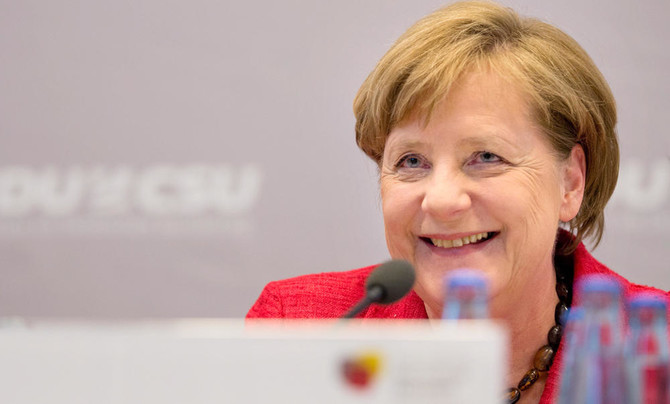
“We must not forget that the UK is still a partner, in NATO and in Europe,” Chancellor Angela Merkel’s spokeswoman Ulrike Demmer told journalists, adding that London’s Brexit notification would offer clues on how Britain planned to handle the divorce process.
“On this basis, the 27 member states and EU institutions will define their interests and aims,” Demmer said, adding that Berlin was “well prepared” for the coming negotiations.
Foreign Minister Sigmar Gabriel acknowledged that the talks would “certainly not be easy for both sides.” Although the split may generate “bad feelings,” he said that should not form the basis of Britain’s future relationship with the EU’s remaining 27 members.
“The sentence often used in private divorces, ‘let’s stay friends,’ rings true in this case,” said Gabriel.
“Britain remains our neighbor, like the European Union is for Britain. We need each other. We should do everything to maintain a good and friendly relationship in the future,” he added. At the same time, a Foreign Ministry source also pointed out that “a close friend is still somewhat different from remaining part of the family of 27.”
“That is hopefully also clear to the Britons,” said the source, adding that both sides are aware that “Britain’s decision to separate from the EU at a time when the old order seems to be breaking apart ... is reckless.”
Underlining what is at stake, Foreign Ministry spokesman Martin Schaefer emphasized that “uncertainty is poison for the people -- the EU citizens, Germans who live in Britain and what their future status would be, likewise for British citizens living in the European Union.”
“Perhaps it’s even more poisonous for economic trade and investment relations,” he added, questioning if London “really understood what kind of impact there could be for the British economy when all these questions have to be addressed,” and noting the “damn tight” two-year negotiation period.
“We are proud of the clear, unanimous stance of the EU 27, that they stood their ground that there would be no pre-negotiations,” he added.
“They begin now.
Next steps
Here are the key steps ahead:
• European Council President Donald Tusk will issue draft “negotiating guidelines” on Friday. He is due to give a press conference with Maltese Prime Minister Joseph Muscat on Friday in Valletta. These are overall political red lines for the next two years and will be circulated to the capitals of the 27 remaining EU countries. Diplomats known as sherpas make further preparations and then ministers will finalize the guidelines in late April.
• EU 27 leaders will hold a special Brexit Summit in Brussels, without Britain, to rubber-stamp the negotiating guidelines.
• A day or two later, the European Commission negotiator Michel Barnier will issue an initial “Recommendation to Open Negotiations” with his suggestions for how the talks should go.
• The EU 27’s European affairs ministers — the so-called General Affairs Council — will meet in May to draw up detailed “Negotiating Directives” that will bind Barnier during the talks. The ministers already have a scheduled meeting on May 16 but could meet sooner for Brexit. The guidelines will include the three “divorce” issues the EU wants to deal with before talks on any future trade deal: Britain’s exit bill, the rights of EU citizens in Britain and vice versa, and the flashpoint border in Northern Ireland.
• EU ministers will formally give Barnier the mandate to start negotiations so that formal Britain-EU talks actually begin, nearly a year after Britain voted to leave. Informal talks however could begin earlier to work out practical issues such as what language the talks will be held in — Barnier is French — and the timetable
“There’s nothing to stop us talking about procedure before we get the mandate as long as we are not actually negotiating,” one diplomat told AFP.
• The EU says it will only discuss the leaving bill, citizens rights and Northern Ireland at first. It will only move on to a trade deal once they are sorted out.
• Barnier has set October 2018 as the latest feasible date for a draft Brexit deal to give it time to be approved by the British Parliament, by EU leaders and by the European Parliament, which will have the final say.
• The European Parliament will hold a crucial binding vote on the Brexit deal. National parliaments may also vote on it.
• Britain will formally leave the EU two years after the notification of Article 50. Whether that happens with a new trade deal included, a transitional arrangement while one is sorted out, or no trade deal remains to be seen.
• Even if Britain does manage to make a deal with the EU, the accord is likely to be partial or transitional.
A full deal for the future relationship will probably take years — up to seven years according to Tusk, or even a decade, according to reported comments by Britain’s former ambassador to the EU.

UK still partner in NATO, Europe: Berlin
Macron to visit top-secret sub base as some Europeans worry about US nuclear guarantees
PARIS: They lurk in the oceans, a last resort to pulverize attackers with nuclear fire should France’s commander in chief ever make that terrible call.
French President Emmanuel Macron, the person with the power to unleash France’s nuclear arsenal, will on Monday update French thinking on the potential use of warheads carried on submarines and planes, if it ever came to that. This in the context of concerns in Europe that Russian war-making could spread beyond Ukraine, and uncertainty about US President Donald Trump ‘s steadfastness as an ally.
For decades, Europe has lived under a protective umbrella of US nuclear weapons, stationed on the continent since the mid-1950s to deter the former Soviet Union and now Russia. Lately, however, some European politicians and defense analysts are questioning whether Washington can still be relied upon to use such force if needed.
As the only nuclear-armed member of the 27-nation European Union, the questions are particularly pertinent for France.
Possible revisions to France’s nuclear deterrence policy, sure to be carefully calibrated and scrutinized by allies and potential enemies alike, could be among the most consequential decisions that Macron makes in his remaining 14 months as president, before elections to choose his successor in 2027.
That Macron feels a need to bare France’s nuclear teeth, in what will be the commander in chief’s second keynote speech laying out the country’s deterrence posture since his election in 2017, speaks to his concerns, voiced multiple times, about geopolitical and defense-technology shifts that threaten the security of France and its allies.
Those voicing doubts about Washington’s reliability include Rasmus Jarlov, chair of the Danish parliament’s Defense Committee.
“If things got really serious, I very much doubt that Trump would risk American cities to protect European cities,” he said in an interview with The Associated Press. “We don’t know but it seems very risky to rely on the American protection.”
He and others are turning to France for reassurance. In the longer term, Jarlov argues that other European nations also need to arm themselves with nuclear weapons — an almost unfathomable prospect when US protection seemed absolute in European minds.
“The Nordic countries have the capacity. We have uranium, we have nuclear scientists. We can develop nuclear weapons,” he said. “Realistically, it will take a lot of time. So in the short term, we are looking to France.”
Adjusting to geopolitical risks
The world has changed dramatically since Macron’s first policy-making nuclear speech in 2020, with new uncertainties shoving old certainties aside.
The full-scale Russian invasion of Ukraine, now entering its fifth year, brought war to the EU’s door and repeated threats of possible nuclear use from Russian President Vladimir Putin.
China is expanding its nuclear arsenal. So, too, is North Korea’s nuclear-armed military. In October, Trump spoke about US intentions to resume nuclear tests for the first time since 1992, although US Energy Secretary Chris Wright later said that such tests would not include nuclear explosions.
Russia revised its deterrence policy in 2024, lowering its bar for possible retaliation with nuclear weapons. The United Kingdom has announced plans to buy nuclear-capable US-made F-35A fighter jets, restoring a capacity to deliver nuclear airstrikes that it phased out in the 1990s, leaving it with just submarine-based nuclear missiles.
The chosen site for Macron’s speech on Monday — the Île Longue base for France’s four nuclear-armed submarines — will drive home that French presidents also have nuclear muscle at their disposal in an increasingly unstable world. They each can carry 16 M51 intercontinental ballistic missiles armed with multiple warheads.
“There are high expectations from the allies and partners, and maybe also the adversaries, about how the French nuclear doctrine could evolve,” said Héloïse Fayet, a nuclear deterrence specialist at the French Institute of International Relations, a Paris think tank.
Speaking in an AP interview, Fayet said she’s hoping for “real changes.”
“Maybe something about a greater and a clearer French commitment to the protection of allies, thanks to the French nuclear weapons,” she said.
France’s nuclear force
Macron said in 2020 that France has fewer than 300 warheads — a number that has remained stable since former President Nicolas Sarkozy announced a modest reduction to that level in 2008.
Macron said the force is sufficient to inflict “absolutely unacceptable damage” on the “political, economic, military nerve centers” of any country that threatens the “vital interests” of France, “whatever they may be.”
Nuclear specialists will be watching for any hint from Macron that he no longer considers the French stockpile to be sufficient and that it might need to grow.
The language of deterrence is generally shrouded by deliberate ambiguity, to keep potential enemies guessing about the red lines that could trigger a nuclear response. Officials from Macron’s office, speaking on condition of anonymity to discuss the nuclear policy changes that Macron might make, were extremely guarded in their wording, not least because deterrence is a strictly presidential prerogative.
“There will no doubt be some shifts, fairly substantial developments,” one of the officials said.
Protecting Europe
Again with careful wording, Macron in 2020 said the “vital interests” that France could defend with nuclear force don’t end at its borders but also have “a European dimension.”
Some European nations have taken up an offer Macron made then to discuss France’s nuclear deterrence and even associate European partners in French nuclear exercises.
German Chancellor Friedrich Merz says he’s had “initial talks” with Macron about nuclear deterrence and has publicly theorized about German Air Force planes possibly being used to carry French nuclear bombs.
European nations engaging with France are seeking “a second life insurance” against any possibility of US nuclear protection being withdrawn, says Etienne Marcuz, a French nuclear defense specialist at the Paris-based Foundation for Strategic Research think tank.
“The United States are unpredictable — have become unpredictable — because of the Trump 2 administration,” he said. “That has legitimately raised the question of whether the United States would truly be prepared to protect Europe, and above all, whether they would be willing to deploy their nuclear forces in defense of Europe.”
French President Emmanuel Macron, the person with the power to unleash France’s nuclear arsenal, will on Monday update French thinking on the potential use of warheads carried on submarines and planes, if it ever came to that. This in the context of concerns in Europe that Russian war-making could spread beyond Ukraine, and uncertainty about US President Donald Trump ‘s steadfastness as an ally.
For decades, Europe has lived under a protective umbrella of US nuclear weapons, stationed on the continent since the mid-1950s to deter the former Soviet Union and now Russia. Lately, however, some European politicians and defense analysts are questioning whether Washington can still be relied upon to use such force if needed.
As the only nuclear-armed member of the 27-nation European Union, the questions are particularly pertinent for France.
Possible revisions to France’s nuclear deterrence policy, sure to be carefully calibrated and scrutinized by allies and potential enemies alike, could be among the most consequential decisions that Macron makes in his remaining 14 months as president, before elections to choose his successor in 2027.
That Macron feels a need to bare France’s nuclear teeth, in what will be the commander in chief’s second keynote speech laying out the country’s deterrence posture since his election in 2017, speaks to his concerns, voiced multiple times, about geopolitical and defense-technology shifts that threaten the security of France and its allies.
Those voicing doubts about Washington’s reliability include Rasmus Jarlov, chair of the Danish parliament’s Defense Committee.
“If things got really serious, I very much doubt that Trump would risk American cities to protect European cities,” he said in an interview with The Associated Press. “We don’t know but it seems very risky to rely on the American protection.”
He and others are turning to France for reassurance. In the longer term, Jarlov argues that other European nations also need to arm themselves with nuclear weapons — an almost unfathomable prospect when US protection seemed absolute in European minds.
“The Nordic countries have the capacity. We have uranium, we have nuclear scientists. We can develop nuclear weapons,” he said. “Realistically, it will take a lot of time. So in the short term, we are looking to France.”
Adjusting to geopolitical risks
The world has changed dramatically since Macron’s first policy-making nuclear speech in 2020, with new uncertainties shoving old certainties aside.
The full-scale Russian invasion of Ukraine, now entering its fifth year, brought war to the EU’s door and repeated threats of possible nuclear use from Russian President Vladimir Putin.
China is expanding its nuclear arsenal. So, too, is North Korea’s nuclear-armed military. In October, Trump spoke about US intentions to resume nuclear tests for the first time since 1992, although US Energy Secretary Chris Wright later said that such tests would not include nuclear explosions.
Russia revised its deterrence policy in 2024, lowering its bar for possible retaliation with nuclear weapons. The United Kingdom has announced plans to buy nuclear-capable US-made F-35A fighter jets, restoring a capacity to deliver nuclear airstrikes that it phased out in the 1990s, leaving it with just submarine-based nuclear missiles.
The chosen site for Macron’s speech on Monday — the Île Longue base for France’s four nuclear-armed submarines — will drive home that French presidents also have nuclear muscle at their disposal in an increasingly unstable world. They each can carry 16 M51 intercontinental ballistic missiles armed with multiple warheads.
“There are high expectations from the allies and partners, and maybe also the adversaries, about how the French nuclear doctrine could evolve,” said Héloïse Fayet, a nuclear deterrence specialist at the French Institute of International Relations, a Paris think tank.
Speaking in an AP interview, Fayet said she’s hoping for “real changes.”
“Maybe something about a greater and a clearer French commitment to the protection of allies, thanks to the French nuclear weapons,” she said.
France’s nuclear force
Macron said in 2020 that France has fewer than 300 warheads — a number that has remained stable since former President Nicolas Sarkozy announced a modest reduction to that level in 2008.
Macron said the force is sufficient to inflict “absolutely unacceptable damage” on the “political, economic, military nerve centers” of any country that threatens the “vital interests” of France, “whatever they may be.”
Nuclear specialists will be watching for any hint from Macron that he no longer considers the French stockpile to be sufficient and that it might need to grow.
The language of deterrence is generally shrouded by deliberate ambiguity, to keep potential enemies guessing about the red lines that could trigger a nuclear response. Officials from Macron’s office, speaking on condition of anonymity to discuss the nuclear policy changes that Macron might make, were extremely guarded in their wording, not least because deterrence is a strictly presidential prerogative.
“There will no doubt be some shifts, fairly substantial developments,” one of the officials said.
Protecting Europe
Again with careful wording, Macron in 2020 said the “vital interests” that France could defend with nuclear force don’t end at its borders but also have “a European dimension.”
Some European nations have taken up an offer Macron made then to discuss France’s nuclear deterrence and even associate European partners in French nuclear exercises.
German Chancellor Friedrich Merz says he’s had “initial talks” with Macron about nuclear deterrence and has publicly theorized about German Air Force planes possibly being used to carry French nuclear bombs.
European nations engaging with France are seeking “a second life insurance” against any possibility of US nuclear protection being withdrawn, says Etienne Marcuz, a French nuclear defense specialist at the Paris-based Foundation for Strategic Research think tank.
“The United States are unpredictable — have become unpredictable — because of the Trump 2 administration,” he said. “That has legitimately raised the question of whether the United States would truly be prepared to protect Europe, and above all, whether they would be willing to deploy their nuclear forces in defense of Europe.”
© 2026 SAUDI RESEARCH & PUBLISHING COMPANY, All Rights Reserved And subject to Terms of Use Agreement.