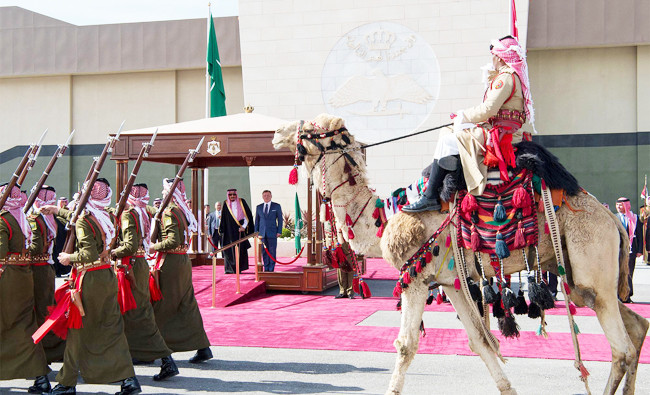
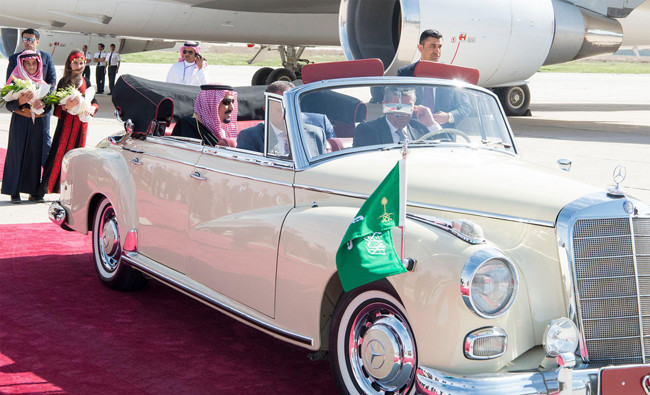
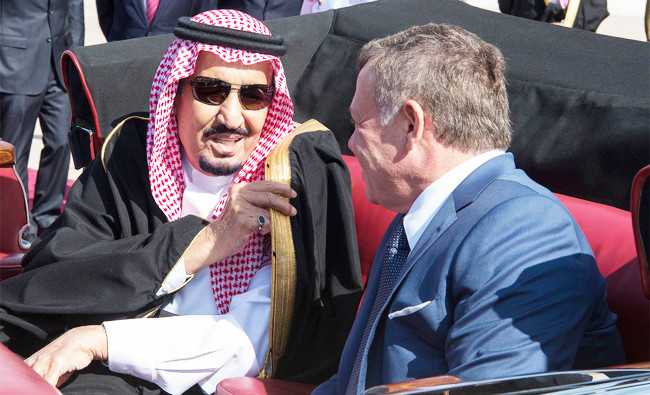
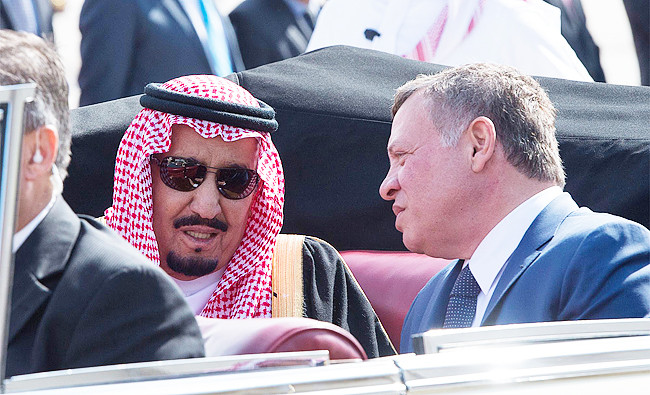
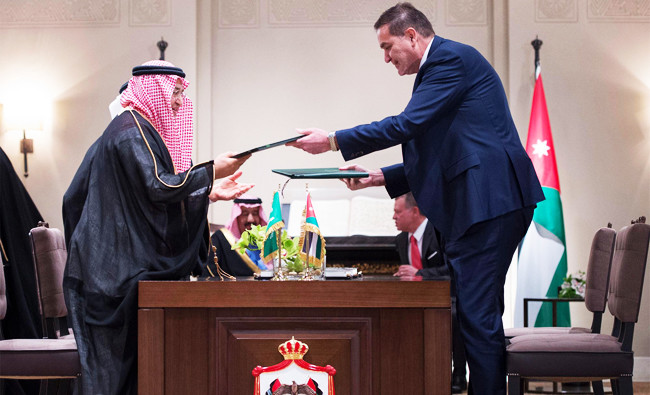
AMMAN: Saudi King Salman and Jordan’s King Abdallah on Monday attended the signing ceremony of a number of agreements, memoranda of understanding (MoU) and joint investment deals worth billions of dollars.
The agreements, signed by government officials from the two sides, include establishing a Saudi-Jordanian investment company valued at some $3 billion, an MoU in postal services offered to Haj and Umrah pilgrims between Saudi Post and its Jordanian counterpart and an agreement on environmental protection. Also signed were agreements on an executive program in the cultural field, a social executive program, an MoU in the health care sector and an MoU in the housing sector. Also included were signings for an investment protection agreement and a SR393.75 million ($105 million) loan agreement to rehabilitate and maintain the Jordanian desert highway that links Amman with the southern city of Aqaba.
The two sides also signed an MoU to study the feasibility of building two reactors operated by integrated-unit technology in Jordan to produce desalinated water and electricity.
The Saudi Press Agency (SPA) and Jordan’s Petra news agency signed a joint cooperation MoU that will enable them to exchange expertise.
Several agreements and MoUs were signed with the Jordanian medical private sector to establish a medical treatment and rehabilitation center in Riyadh, and a project to build and operate a solar station with a capacity to produce 50 megawatts near the eastern Jordanian border.
Earlier, Mohammad Momani, Jordan’s minister of state for media affairs and government spokesman, stressed strong bilateral ties and joint visions on various political, economic and social issues of mutual concern.
“The Saudi-Jordanian Coordination Council, which is headed by Prince Mohammed bin Salman, deputy crown prince and minister of defense, and Jordanian Prime Minister Hani Al-Mulqi, has been created as part of joint coordination in all aspects,” Momani said in a statement on Monday. “We will invest in King Salman’s visit to further boost the currently distinguished ties.”
In statements to Arab News, Reem Badran of Saudi-Jordanian Business Council (SJBC) said Saudi investments in Jordan amount to more than $14 billion, including more than 850 investment projects.
“The Saudi Development Fund has contributed to funding development projects in Jordan by managing and overseeing the Saudi share as part of the GCC (Gulf Cooperation Council) $5 billion 2012-2016 grant, which was given during the GCC meeting in 2011,” she said.
“So far, around $1.154 billion has been spent on different development projects intended to improve the living conditions of the population.”
Jordan’s former minister of state for media affairs, Samih Maaytah, told Arab News on Monday that Saudi Arabia plays an important role not only in the Arab world but also internationally.
Maaytah added: “Over the past year, officials from both countries have been meeting frequently in preparation for this important visit. The Jordanian leadership is keen to keep coordination at all levels with Saudi Arabia at its best, considering that the two countries have common grounds and interests when it comes to the crises that have been hitting our region since 2011.”


![]()
![]()
![]()
![]()
![]()
![]()
![]()
![]()
![]()
![]()
![]()
![]()
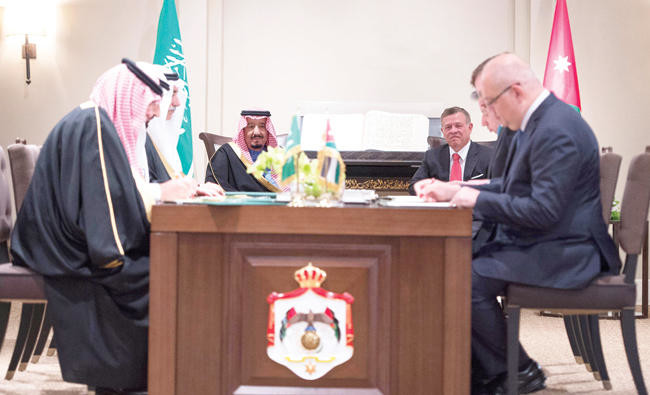
King Salman, King Abdallah witness signing of key pacts in Amman
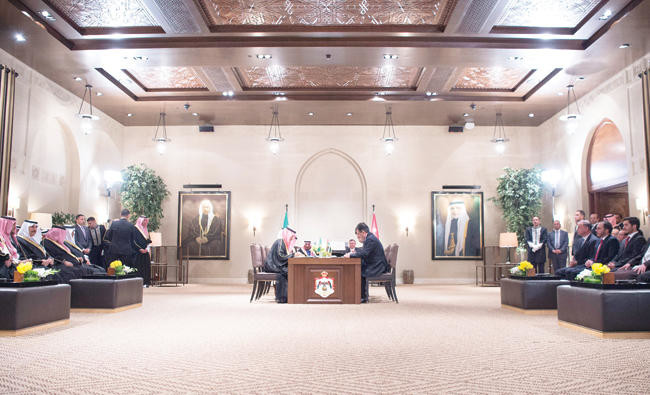
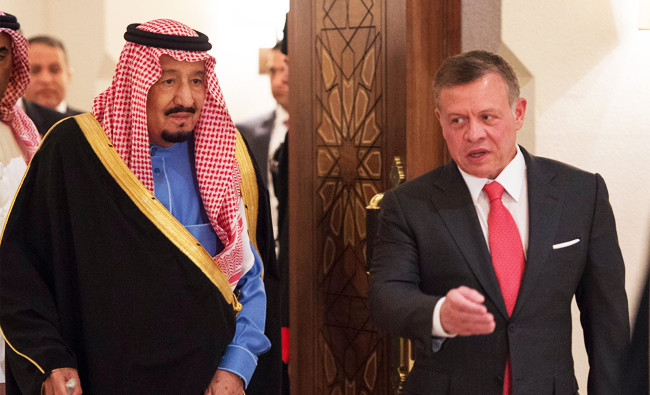
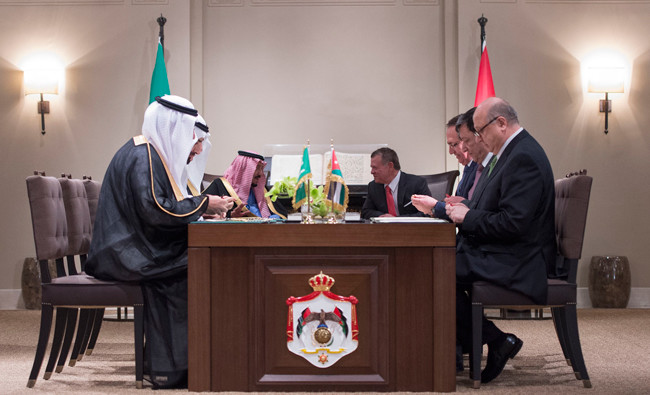



King Salman, King Abdallah witness signing of key pacts in Amman


Latest updates


© 2026 SAUDI RESEARCH & PUBLISHING COMPANY, All Rights Reserved And subject to Terms of Use Agreement.