GENEVA, Switzerland: The Assad regime came under fire from two UN bodies on Tuesday, one of which accused Syria’s air force of deliberately bombing water sources in December and another saying Syria has become a “torture chamber.”
In a report, the UN Independent International Commission of Inquiry on Syria said that the deliberate act of bombing water sources, which cut off water for 5.5 million people in and around the Syria’s capital Damascus, amounted to a “war crime”.
The commission said it had found no evidence of deliberate contamination of the water supply or demolition by armed groups, as the Syrian government maintained at the time.
Meanwhile, the top UN human rights official called for the release of tens of thousands of detainees held in Syria’s prisons and said that bringing perpetrators of crimes including torture to court was vital for reaching a lasting peace.
“Today in a sense the entire country has become a torture-chamber; a place of savage horror and absolute injustice,” UN High Commissioner for Human Rights Zeid Ra’ad Al-Hussein told the UN Human Rights Council.
“Ensuring accountability, establishing the truth and providing reparations must happen if the Syrian people are ever to find reconciliation and peace. This cannot be negotiable,” he told the Geneva forum at the start of a session on Syria.
He appealed to the warring sides to halt torture and executions and to free detainees or at least provide basic information: “names and localities of those in detention and the place of burial of those who have died.”
He lamented the fact that efforts to end “this senseless carnage” had been repeatedly vetoed, an apparent reference to Russia and China’s decisions to veto UN Security Council resolutions on several occasions since the war began.
Zeid noted that the conflict, which has raged for six years, began when security officials detained and tortured a group of children who had daubed anti-government graffiti on a school wall in Daraa.
(Reporting by Stephanie Nebehay and Tom Miles)


![]()
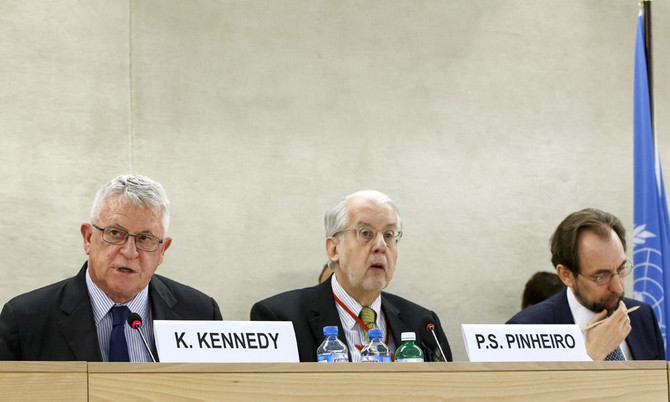
Assad regime bombed Damascus water supply, turned Syria into a ‘torture chamber’ — UN officials
Assad regime bombed Damascus water supply, turned Syria into a ‘torture chamber’ — UN officials




Latest updates




Recommended


© 2026 SAUDI RESEARCH & PUBLISHING COMPANY, All Rights Reserved And subject to Terms of Use Agreement.