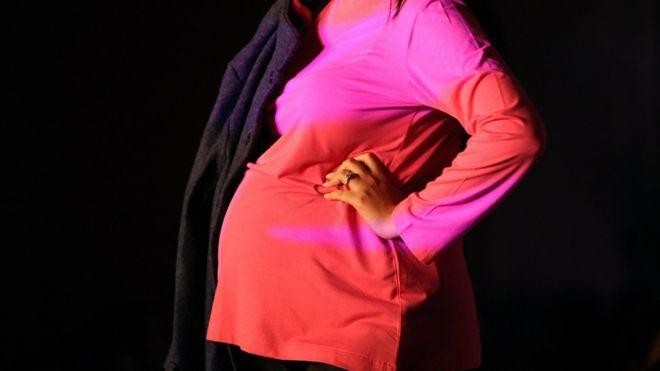
NEW DELHI: India will more than double maternity leave, allow work from home and require employers to have crèches to improve maternal and child health and boost a declining female workforce.
A bill approved by parliament late on Thursday increases fully paid leave to 26 weeks from 12 weeks, provides leave for adoptive mothers for 12 weeks, and facilitates a work from home option for nursing mothers.
It also mandates organizations with more than 50 employees to provide crèche facilities and allow the mother at least four crèche visits daily to look after and feed her child.
“The maternity bill is a historic step as it puts us in the top countries in the world that care for new mothers,” Maneka Gandhi, minister for women and children, said on Friday.
“With 26 weeks to care for their newborns, both mother and child will be healthier,” she said in a video on the ministry’s Facebook page.
India has high rates of child malnutrition, yet only 55 percent of mothers exclusively breastfeed for the first six months, compared with 70 percent in neighboring Nepal and 76 percent in Sri Lanka.
Female participation in the workforce in India has been declining in recent years, with only 22 percent of women in working in the formal economy, well below the global average of 47 percent, according to UN Women.
Extending maternity leave will encourage more women to return to work and help close the gender gap in the labor market, gender experts say, as many women reluctantly drop out of work because they need more time for their newborns.
“Women should not have to choose between becoming a mother and keeping their job, and the amendment of the Maternity Bill is a landmark step in this direction,” said Poonam Muttreja, executive director of Population Foundation of India.
The move puts India among the most generous countries globally in terms of the amount of maternity leave afforded to women. Canada allows for 50 weeks, while Norway gives 46 weeks.
The government says the law will benefit 1.8 million women in the formal sector, but activists point out around 90 percent of the India’s female workforce is in the unorganized sector, and remains unprotected and at risk of labor exploitation.
The law, due to come into force after the president’s assent, will apply to all workplaces with 10 or more employees. (Reporting by Nita Bhalla @nitabhalla, Editing by Astrid Zweynert. Please credit the Thomson Reuters Foundation, the charitable arm of Thomson Reuters, that covers humanitarian news, women’s rights, trafficking, property rights, climate change and resilience.


India more than doubles maternity leave to boost child health, female workforce
India more than doubles maternity leave to boost child health, female workforce


Afghan government says Pakistan strikes Kabul and border provinces
- A Pakistani security official, speaking on condition of anonymity, confirmed that Pakistan struck overnight
- Islamabad last month launched a wave of air strikes on its neighbor, an operation it says is targeting militancy
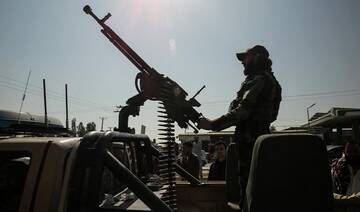
KABUL: Afghan authorities said on Friday that Pakistan had carried out new strikes on Kabul and border provinces, killing four people in the capital.
A Pakistani security official, speaking on condition of anonymity, confirmed that Pakistan struck overnight, adding their forces targeted the Pakistani Taliban militant group, known as TTP.
Islamabad last month launched a wave of air strikes on its neighbor, an operation it says is targeting militancy following growing attacks in Pakistan.
But the Taliban government has denied any involvement or the use of Afghan territory for militancy.
Khalil Zadran, the spokesman for Kabul police, said four people had been killed and 15 wounded in the bombardment that hit homes in the capital, with women and children among the victims.
Taliban government spokesman Zabihullah Mujahid posted on X that Pakistani strikes also hit the southern province of Kandahar, as well as eastern Paktia and Paktika, which border Pakistan.
In Kandahar, which is home to the administration’s supreme leader Hibatullah Akhundzada, air strikes hit a fuel depot for airline Kam Air, near the airport.
This company supplies fuel to civilian airlines and United Nations aircraft.
Pakistan insists it has not killed any civilians in the conflict. Casualty claims from both sides are difficult to verify independently.
Afghan and Pakistani forces have also clashed repeatedly at the border in recent weeks, hampering trade and forcing nearby residents to leave their homes.
‘Open war’
The United Nations’ mission in Afghanistan (UNAMA) has said that 56 civilians have been killed in Afghanistan, including 24 children, by Pakistani military operations between February 26 and March 5.
About 115,000 people were forced to leave their homes, according to the UN refugee agency.
Fighting between the two countries intensified on February 26, when Afghanistan launched an offensive along the frontier, in retaliation for earlier Pakistani air strikes targeting the TTP.
Pakistan then declared “open war” against the Taliban authorities, bombing the capital, Kabul, on February 27.
Since then, clashes have increased in border regions, including overnight Wednesday to Thursday that the Afghan authorities said killed four members of the same family in Khost province.
The Taliban government said on Thursday that four members of the same family, including two children, were killed by Pakistani artillery and mortar fire in eastern Afghanistan.
Seven people had been killed in Afghanistan since Tuesday as a result of cross-border clashes between the two sides, according to the authorities in Kabul.
Deputy government spokesman Hamdullah Fitrat said the latest deaths happened early Thursday in the village of Sadqo in Khost province, accusing Pakistan of deliberately targeting civilian homes and nomads’ tents.