NEW DELHI: India will more than double maternity leave, allow work from home and require employers to have crèches to improve maternal and child health and boost a declining female workforce.
A bill approved by parliament late on Thursday increases fully paid leave to 26 weeks from 12 weeks, provides leave for adoptive mothers for 12 weeks, and facilitates a work from home option for nursing mothers.
It also mandates organizations with more than 50 employees to provide crèche facilities and allow the mother at least four crèche visits daily to look after and feed her child.
“The maternity bill is a historic step as it puts us in the top countries in the world that care for new mothers,” Maneka Gandhi, minister for women and children, said on Friday.
“With 26 weeks to care for their newborns, both mother and child will be healthier,” she said in a video on the ministry’s Facebook page.
India has high rates of child malnutrition, yet only 55 percent of mothers exclusively breastfeed for the first six months, compared with 70 percent in neighboring Nepal and 76 percent in Sri Lanka.
Female participation in the workforce in India has been declining in recent years, with only 22 percent of women in working in the formal economy, well below the global average of 47 percent, according to UN Women.
Extending maternity leave will encourage more women to return to work and help close the gender gap in the labor market, gender experts say, as many women reluctantly drop out of work because they need more time for their newborns.
“Women should not have to choose between becoming a mother and keeping their job, and the amendment of the Maternity Bill is a landmark step in this direction,” said Poonam Muttreja, executive director of Population Foundation of India.
The move puts India among the most generous countries globally in terms of the amount of maternity leave afforded to women. Canada allows for 50 weeks, while Norway gives 46 weeks.
The government says the law will benefit 1.8 million women in the formal sector, but activists point out around 90 percent of the India’s female workforce is in the unorganized sector, and remains unprotected and at risk of labor exploitation.
The law, due to come into force after the president’s assent, will apply to all workplaces with 10 or more employees. (Reporting by Nita Bhalla @nitabhalla, Editing by Astrid Zweynert. Please credit the Thomson Reuters Foundation, the charitable arm of Thomson Reuters, that covers humanitarian news, women’s rights, trafficking, property rights, climate change and resilience.


![]()
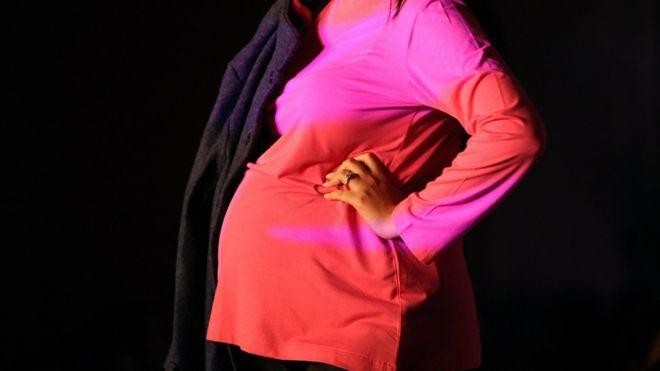

India more than doubles maternity leave to boost child health, female workforce
India more than doubles maternity leave to boost child health, female workforce

Trump praises new Honduras leader after talks in US
- Nasry Asfura was sworn in last week after winning November elections with Donald Trump’s backing
- US president threatened to cut aid to Honduras if his ‘friend’ was defeated
WASHINGTON: US President Donald Trump on Saturday praised Honduran counterpart Nasry Asfura, whom he endorsed on the campaign trail, following a meeting at his Mar-a-Lago resort.
Asfura, a conservative businessman and former mayor of Honduran capital Tegucigalpa, was sworn in last week after winning November elections with Trump’s backing.
Trump had threatened to cut aid to Central America’s poorest country if his “friend” was defeated.
“I had a very important meeting with my friend, and the President of Honduras, Nasry ‘Tito’ Asfura,” Trump wrote on his Truth Social platform.
“Once I gave him my strong Endorsement, he won his Election! Tito and I share many of the same America First Values. We have a close partnership on Security.”
He said the pair discussed investment and trade between the two nations.
Asfura is set to speak to media about the talks Sunday.
The Honduran presidency released a photo of the two leaders smiling and giving a thumbs up.
Asfura already met with US Secretary of State Marco Rubio on January 12, after which the two countries announced plans for a free trade deal.
His win gave Trump another ally in Latin America after conservatives campaigning heavily on crime and corruption replaced leftists in Chile, Bolivia, Peru and Argentina.
Trump has been pressuring countries in Washington’s backyard to choose between close ties with Washington or Beijing.
Asfura, who succeeded left-wing leader Xiomara Castro, has said he is considering switching diplomatic ties from China to the self-ruled island of Taiwan.
On the eve of the Honduran election, Trump in a surprise move pardoned former president Juan Orlando Hernandez, from Asfura’s party, who was serving a 45-year prison sentence in the US for drug trafficking.
Hernandez was convicted of helping to smuggle 400 tonnes of cocaine into the United States.
Trump’s decision to pardon him, even as US forces were blowing up alleged drug boats in the Caribbean and tightening the noose on Venezuela’s Nicolas Maduro, whom Washington accuses of drug trafficking, drew heavy criticism.
Asfura, a conservative businessman and former mayor of Honduran capital Tegucigalpa, was sworn in last week after winning November elections with Trump’s backing.
Trump had threatened to cut aid to Central America’s poorest country if his “friend” was defeated.
“I had a very important meeting with my friend, and the President of Honduras, Nasry ‘Tito’ Asfura,” Trump wrote on his Truth Social platform.
“Once I gave him my strong Endorsement, he won his Election! Tito and I share many of the same America First Values. We have a close partnership on Security.”
He said the pair discussed investment and trade between the two nations.
Asfura is set to speak to media about the talks Sunday.
The Honduran presidency released a photo of the two leaders smiling and giving a thumbs up.
Asfura already met with US Secretary of State Marco Rubio on January 12, after which the two countries announced plans for a free trade deal.
His win gave Trump another ally in Latin America after conservatives campaigning heavily on crime and corruption replaced leftists in Chile, Bolivia, Peru and Argentina.
Trump has been pressuring countries in Washington’s backyard to choose between close ties with Washington or Beijing.
Asfura, who succeeded left-wing leader Xiomara Castro, has said he is considering switching diplomatic ties from China to the self-ruled island of Taiwan.
On the eve of the Honduran election, Trump in a surprise move pardoned former president Juan Orlando Hernandez, from Asfura’s party, who was serving a 45-year prison sentence in the US for drug trafficking.
Hernandez was convicted of helping to smuggle 400 tonnes of cocaine into the United States.
Trump’s decision to pardon him, even as US forces were blowing up alleged drug boats in the Caribbean and tightening the noose on Venezuela’s Nicolas Maduro, whom Washington accuses of drug trafficking, drew heavy criticism.
Latest updates


Recommended


© 2026 SAUDI RESEARCH & PUBLISHING COMPANY, All Rights Reserved And subject to Terms of Use Agreement.