Qatar Airways chief says will not take any Airbus A320neos in 2017

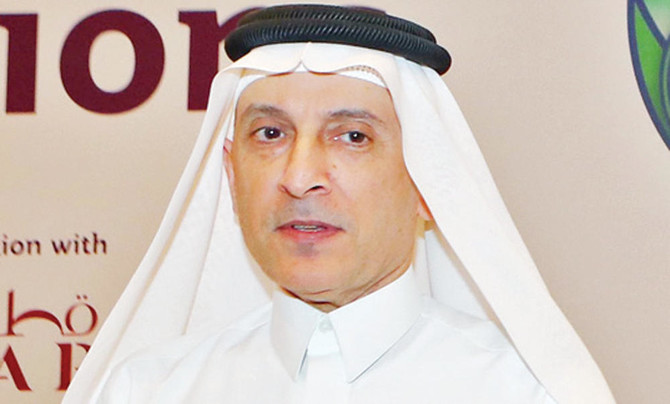
CEO of Qatar Airways, Akbar Al-Baker. (AFP)
Updated 09 March 2017
Follow

Qatar Airways chief says will not take any Airbus A320neos in 2017

BERLIN: Qatar Airways will not take delivery of any Airbus A320neo aircraft this year as it looks to change its order to larger A321neos, Chief Executive Akbar Al-Baker said on Wednesday.
The Gulf carrier has refused to take delivery of Airbus A320neos since December 2015, initially after performance issues with the aircraft’s new engines.
“I have to scream at Airbus to get my planes faster. I am nearly eight destinations behind schedule because of delays in aircraft deliveries. I hope this will be resolved during this year,” Al-Baker told reporters at the ITB travel fair in Berlin.
Qatar Airways is around 10 aircraft short on deliveries from Airbus at present, including A320neos and wide body A350s, he said.
The Gulf carrier wants to change its order for 50 A320neo family jets, which includes A319, A320 and A321 versions, to take only the larger A321neos, which would likely be powered by CFM engines.
Asked to comment, an Airbus spokesman said: “We are working with our customers to deliver aircraft to their full satisfaction.”
Al-Baker said that unlike rivals, Qatar Airways was not reducing capacity growth or delaying plane orders, saying Qatar Airways had always been “prudent” in how it deploys capacity.
Rival Gulf carrier Emirates said in January it was undertaking a “modest restructuring,” a month after Airbus said it had reached an agreement with the airline to postpone deliveries of 12 A380 planes over two years.
Seeking to extend its reach Qatar Airways has been buying stakes in other airlines, and Al-Baker said India was next on Qatar’s list, once it has finalized a deal with Italian carrier Meridiana.
Al-Baker said he wanted to set up a full-service Indian carrier to fly domestic routes with around 100 narrowbody planes, now that the country had opened up the airline industry to foreign investors.
Under current rules foreign airlines are still restricted to holding a maximum stake of 49 percent in Indian carriers, but other foreign investors may own up to 100 percent.
Qatar’s sovereign wealth fund QIA could own the carrier, and Qatar Airways would then take a stake, Al-Baker said. “We work in partnership. They may use us to run the airline,” he said.
Qatar Airways has previously talked of investing in Indigo, but missed out on taking a stake in its IPO.
Al-Baker said taking a stake in an existing carrier was off the table now, but that Qatar Airways was talking to two Indian carriers to code-share with them.


Free trade negotiations between GCC, India mark new phase of partnership, says sec-gen

Updated 24 February 2026
Follow

Free trade negotiations between GCC, India mark new phase of partnership, says sec-gen

RIYADH: The Gulf Cooperation Council’s secretary-general affirmed that the negotiations for a free trade agreement between the GCC and India, and the signing of the joint statement, represents a new phase of strategic partnership.

Jasem Mohamed Al-Budaiwi said that this contributes to enhancing close cooperation and strengthening economic and trade ties, according to the Saudi Press Agency.

This came during the signing ceremony of the joint statement on launching the free trade agreement negotiations between the Al-Budaiwi and India’s Minister of Commerce and Industry, Piyush Goyal, which took place in New Delhi, on Tuesday.

During the signing ceremony, Al-Budaiwi said that the Terms of Reference, signed on Feb. 5, provide a comprehensive and clear framework for these negotiations. The two nations agreed to discuss enhancing cooperation in vital strategic areas, including trade in goods, customs procedures, and services.

Additionally, the framework covers Sanitary and Phytosanitary measures, intellectual property rights, cooperation on Micro, Small, and Medium Enterprises, along with other topics of mutual interest. This reflects the comprehensive nature of the agreement and its ability to keep pace with the future economy.

Al-Budaiwi expressed hope that these negotiations would lead to a comprehensive and ambitious free trade agreement that works to remove customs and non-customs barriers, enhance the flow of quality investments in both directions, and achieve further liberalization in trade and investment cooperation between the GCC and India for mutual benefit. 

This would provide a stimulating economic environment and an investment climate that opens broad horizons for the business sector, supports supply chains, and accelerates the pace of economic growth in line with the ambitious developmental visions of the GCC states. 

The top official affirmed the full readiness of the General Secretariat to host the first round of negotiations at its headquarters in Riyadh during the second half of this year.

The two sides held a meeting during which they reviewed the existing cooperation relations between the GCC and India and discussed ways to develop and elevate them to broader horizons, serving mutual interests and enhancing opportunities for strategic partnership between the two sides, particularly in the economic, investment, and trade fields.

They praised the role undertaken by the negotiating teams from both sides, appreciating the efforts contributing to reaching a comprehensive agreement that enhances economic integration and supports the smooth flow of trade between the two nations.