AMMAN: Jordan on Saturday executed 15 death-row inmates, including 10 convicted terrorists, officials said.
Five were members of the “Irbid cell,” said Mohammed Al-Momani, information minister and government spokesman.
Others were convicted for other terror attacks including one on the General Intelligence Department (GID) office in Baqa’a, and another on security personnel in Samma.
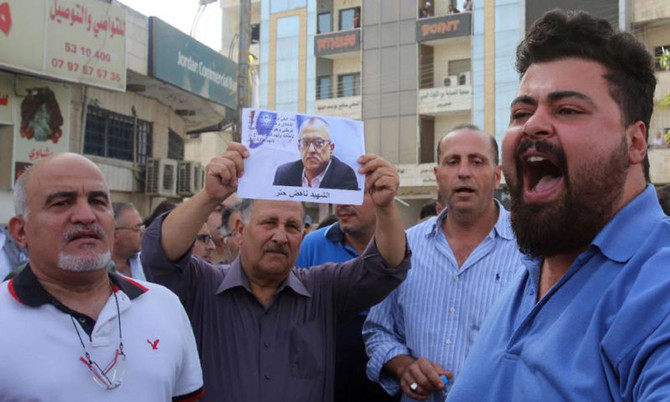
Those executed also included the killer of writer Nahed Hattar; the person responsible for bombing the Jordanian Embassy in Baghdad in 2003; and those involved in a terrorist attack against tourists in Amman’s downtown Roman amphitheater.
The other five death-row inmates executed included a man found guilty of raping and killing his daughter.
Former Information Minister Samih Maaytah told Arab News the executions are meant to send several messages, most notably “to the families of the victims who fell prey to the evil acts committed by the terrorists, and the criminals who tampered with the security of the homeland.”
He added: “It is a clear message that Jordan will not tolerate any attempt to undermine its security and stability, or the safety of its public, under any pretext. The executions send a strong message to those murderers who breached its security.
“The executions are, in the first place, a reflection of the country’s determination to apply the law by all means. Those who were executed had undergone a fair trial, and were given sentences by the court commensurate with the brutal acts they committed, whether they were criminal or terrorist acts ... the country has all the right to punish criminals and take proper action against perpetrators of crimes.”
Maaytah said the executions also send a message that Jordan is serious in tackling grassroots terrorism.
Maaytah did not exclude the possibility of retaliation for the executions by terrorist groups, but said the security agencies are alert and have taken extensive measures to foil any possible attempts to undermine Jordan’s stability.
The executions came almost a year after the incident of March 3, 2016, when the Jordanian intelligence and security services thwarted a Daesh-related terrorist plot in Irbid.
The security operation against the terrorist cell resulted in the death of Maj. Hussein Rashid Al-Zayoud, and the injury of five security forces personnel and two passers-by. Seven terrorists were killed during the operation.
A security source at the time said the GID, due to vigorous and accurate follow-up processes, thwarted a criminal sabotage plot with links to Daesh, which aimed to attack civilian and military targets in Jordan to destabilize national security.
The source had also said the security forces seized in the process guns, ammunition, weapons, explosives and detonators, and arrested 13 individuals involved in the plot.
The Court of Cassation, the highest judicial body in Jordan, ratified on Feb. 6, 2017, a decision issued by the State Security Court that meted out capital punishment to five members of the terrorist cell in Irbid.
The court sentenced three other members of the Irbid cell to 15 years hard labor in prison. Seven others got 10 years, one seven, and four others three years in prison.
The court’s decision was based on charges such as violation of the Prevention of Terrorism Law, including carrying out deadly terrorist acts, and offenses such as being in possession of, manufacturing or using weapons that led to the death of a person.