MIAMI, USA: People who are genetically predisposed to storing belly fat, or having an apple-shaped body type, could face a higher risk of type 2 diabetes and heart disease, researchers said Tuesday.
The study in the Journal of the American Medical Association (JAMA) suggests a person’s genetic makeup may cause health problems down the road.
“People vary in their distribution of body fat — some put fat in their belly, which we call abdominal adiposity, and some in their hips and thighs,” said senior author Sekar Kathiresan, associate professor of Medicine at Harvard Medical School.
“We tested whether genetic predisposition to abdominal adiposity was associated with the risk for type 2 diabetes and coronary heart disease and found that the answer was a firm ‘yes’.”
Previous observational studies have uncovered a link between belly fat and type 2 diabetes and heart disease, but fell short of proving cause and effect.
To investigate further, researchers examined six studies conducted from 2007 to 2015, including some 400,000 participants whose genomes were analyzed.
Previous research had identified 48 gene variants associated with waist-to-hip ratio, resulting in a genetic risk score.
They found that people with certain genes that predisposed them to higher waist-to-hip ratio also had higher lipids, insulin, glucose and systolic blood pressure, as well as a higher risk for type 2 diabetes and heart disease.
“These results illustrate the power of using genetics as a method of determining the effects of a characteristic like abdominal adiposity on cardiometabolic outcomes,” said lead author Connor Emdin, a researcher at Massachusetts General Hospital.
Since researchers did not find any links between body type, genetic risk score and confounding factors such as diet and smoking, that “provides strong evidence that abdominal adiposity itself contributes to causing type 2 diabetes and heart disease,” he added.
Emdin said the findings could one day lead to the development of drugs designed to target belly fat, and perhaps lower the risk of diabetes and heart disease.


'Apple-shaped' body could raise risk of diabetes

'Apple-shaped' body could raise risk of diabetes
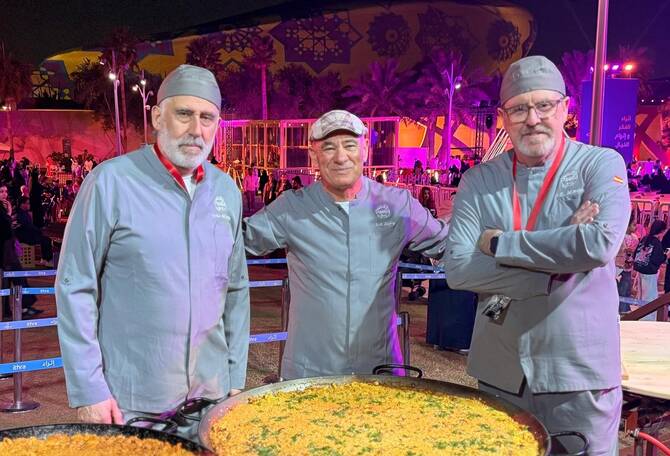
Chef serves up a taste of Spain at Ithra Cultural Days in Saudi Arabia
DHAHRAN: Among the attractions of the Ithra Cultural Days: Spain at the King Abdulaziz Center for World Culture (Ithra), visitors can try a tantalizing selection of Spanish foods — none more renowned than its famous paella.
Arab News spoke with chef Jose Zafra at the event, which runs until Jan. 31, who flew in from Spain to offer a taste of his homeland to the people of Saudi Arabia.
A “master rice cook, paella researcher and promoter,” according to his business card, his logo is even designed around the recognizable cooking pan and the phrase “Pasion por la paella,” or “Passion for paella.”
“That's why the pan is round because people get around and eat all together — to share culture and passion and life,” Zafra told Arab News as foodies lined up behind him, eager to try a plateful.

“It’s not just a food. It’s a link, a connection. Paella is the symbol of unity and sharing. And people now are going to try it — authentic Spanish paella in Saudi Arabia.”
The word “paella” comes from the Latin “patella,” meaning pan.
In Spanish, it refers both to the rice dish itself and the pan in which it is cooked.
Paella was introduced to Spain during Moorish rule. It originated in Valencia, on the country’s eastern coast, as a rural peasant dish that was cooked by farm workers over open fires using local ingredients. Over time, the dish’s popularity spread and other versions evolved, for example featuring seafood and meat.
It is different to Saudi Arabia’s kabsa, a communal dish which similarly uses rice and meat. Kabsa is cooked in a deep pot to ensure the rice stays soft and aromatic from the meaty broth, whereas paella uses a wide, shallow pan to fully absorb flavors evenly, often creating a prized crispy layer at the bottom.
Visitors to Ithra’s Culture Days can enjoy the flavors of Spain made with a sprinkling of local love — true to the origins of the dish.
Find the scoops of Spanish joy near the food truck area and try chicken paella, seafood paella —or both! You will see the signs offering a plate, at SR35 ($9) for chicken and SR40 for seafood, or let your nose lead you there.
Zafra concluded: “The chicken is from here, the seafood is from here — and the passion, well, that is from Spain.”


