The bloodless conquest of Makkah occupies a great moment in the history of Islam. But when the holy Prophet (peace be upon him) heard of war preparedness of Hawazen and Thaqeef, he marched to Taif heading a 12,000 strong force. It was the largest force commanded by him at that time. Initially, Muslims suffered a setback, but with the Prophet’s (pbuh) undaunted courage and strong faith in Allah’s support they defeated the large pagan force at the Battle of Hunain.
The enemy fled leaving behind a large booty: 6,000 captives, 24,000 camels, over 40,000 goats and 4000 Oqya (about 580 kg) of silver. The pagan force re-assembled at Taif and fortified them in the local castle. The Prophet sent the booty under Masud bin Amr Al Ghifari to a safer place called Jairana and marched to Taif and besieged the enemy for 20 days. The purpose of the siege was to break the morale of the enemy. Subsequently many people escaped from the castle and joined the Muslim force. When the Prophet (pbuh) felt that the enemy had no courage to attack the Muslims, he lifted the siege and returned to Jairana where he honored his ‘foster’ sister named Shaima, distributed the booty, released 6000 captives, made a declaration about Ansar of Madinah, welcomed an enemy commander, and performed Umrah.
Shaima: Among the captives was Shaima, who claimed to be the foster sister of the Prophet. When brought before the Prophet, she said she was the daughter of Abu Kabsha and Haleema Saadiya, the Prophet’s foster parents.
The Prophet (pbuh) welcomed her by spreading his shawl on the ground for her. She reminded of his bite mark on her body, which the Prophet (peace be upon him) recognized and tears rolled down his cheeks. He offered her to stay with him. She embraced Islam and the Prophet gave her a gift of one maid with few camels and goats when she left for her tribe.
Distribution of booty: After the fall of political hierarchy, the leaders of Makkah, who had embraced Islam, were left empty-handed. The Prophet honored them in such a way that they were amazed by his generosity. The Prophet (pbuh) gave 100 camels and 40 Oqya silver to Abu Sufyan (his former arch enemy), who said, “What about my son Yazid”? The Prophet said, “The same for him.” Abu Sufyan said, ‘And what about my other son, Muawiya? The Prophet said, “Same for him.”
Safwan bin Omayya saw a valley full of goats. The Prophet asked him, “Is the valley full of goats looking wonderful to you.” He replied “Yes.” The Prophet said, “This is all yours.” He was wonderstruck at the Prophet’s generosity, although he had not yet embraced Islam, which he did after a few weeks. Hakeem bin Hizam got 40 Oqya of silver and 100 camels like Abu Sufyan and when he repeated his request the Prophet doubled and tripled his share. Aqra bin Habis, Oyana bin Habis, Haarith bin Kilda and Abbas bin Mardas, all got 100 camels each. The Prophet did not take even a hair of a single goat from the large booty for himself.
Release of captives: A delegation of 14 nobles from Hawazen and Banu Saad, who had embraced Islam, came to the Prophet, led by Zuhair bin Surad and Abu Barqaan (foster uncle of the Prophet). They pleaded for the release of their captives.
“There, in those huts among the prisoners are your foster mothers and sisters. They have nursed thee and fondled thee in their bosoms. We have known thee a suckling, a weaned child, a youth generous and noble, and now thou hast risen to this dignity, be gracious unto us, even as the Lord hath been gracious unto thee.”
The Prophet was moved by these words. He told them that actually he waited for a week but when none came to him to get the release of the captives, he distributed them. However he said, I can release all the captives of Banu Muttaleb’s share. And for the remaining captives, I will recommend your case to the Mujahedeen.
The next day the Prophet recommended their case to his followers and about 6,000 captives were freed in a day by Mujahedeen.
The Prophet gave each captive a nice Egyptian shawl as a gift. This behavior won their hearts as it was unprecedented in the history of tribal wars.
Glad tidings about Ansars: It seemed strange that the Prophet lavishly gifted to the Muslims and non-Muslims of Makkah, but gave nothing to the Ansars of Madinah. This created bitter feeling among some young Ansars, while the elder ones thought that perhaps the Prophet was displeased with them. When the Prophet heard about it, he called them in a large tent and said:
“O tribe of Ansar, what is this anguish that you feel in your hearts? Did I not find you going astray and Allah guided you through me? You were disunited and fell upon one another. Did Allah not unite you through me? You were needy. Did Allah not enrich you through me?”
In response to each of the questions they cried: “Allah and His Apostle are bountiful.”
He said, “What prevents you from replying to the Apostle of Allah, O tribe of Ansar?” They said, “What should be the reply, O Apostle of Allah, while to the Lord and to His Apostle belong all benevolence and grace.”
The Prophet said: “Ye Ansar, do you feel anxiety for the things of this world, wherewith I have sought to incline these (Makkah) people into the faith in which you are already established. “Are ye not satisfied, O group of Ansar that the people go with ewes and camels while you go along with the Messenger of Allah to your dwellings? By Him in Whose hand is my life, had there been no migration, I would have been one of the Ansars. If the people would go through a valley and passage, and the Ansars go through another valley and passage, I would go through the valley and passage of the Ansars.”
“The Ansars are the inner garment and the people are outer ones. You will surely face, after me, a wave of terrible selfishness. Then have patience until you meet Allah and His Apostle. Verily, I shall be on the ‘Haudh’. May Allah have mercy on the Ansar, their sons and their sons’ sons!”
The audience wept until tears rolled down their beards as they said: “Yes, we are well satisfied, O Prophet of Allah! with our lot and share.”
Welcoming the commander of enemy: The family of Malek bin Awf Al Nasri the pagan commander of Taif, was among the captives. The Prophet sent them honorably to Makkah to stay with their aunt Umm Abdullah bin Umayyah and sent a word to Malek that “if he appears to the Prophet (peace be upon him) as a Muslim, he will release all his wealth and his family to him. Further he will also award him 100 camels as a gift.” When this message reached Malek, he retired secretly from the castle of Taif and embraced Islam at the hand of the holy Prophet (pbuh) at Jairana and won all his promised awards. The Prophet appointed him as the chief of Hawazen Muslims in Taif.
After that the Prophet donned Ihram at Jairana and came to Makkah to perform Umrah thanking Allah for the great success. He appointed Uttab bin Usaid as the first Muslim governor of Makkah. The Prophet then left for Madinah. The whole campaign of Makkah, Hunain and Taif completed within 75 days. This ended the centuries-old enmity of Arab tribes and they entered the fold of Islam as one Ummah.
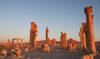
Prophet’s return from Jairana: The Prophet (peace be upon him) was now returning to Madinah with a large force of 10,000 Mujahedeen leaving thousands of Muslims in Makkah and Taif behind him. The whole pagan society of Makkah and their self-made gods were crushed. The entire resistance in the whole of Arabian Peninsula was dissolved. What a great contrast? This success was achieved with the grace of Allah within eight years. This is the place called Jairana, a landmark of Islamic history.


![]()


Jairana: A landmark in the history of Islam
Jairana: A landmark in the history of Islam
The beauty of prayer in Islam
GOING deeper into our spiritual state during prayers (salah) requires that we have a presence of heart and are mindful of the words being said during the prayers.
Our prayer will feel shorter, yet when we look at how much time we actually spent, we will think, “Did I just spend 10 minutes?” or even 15 and 20 minutes.
A person who began applying this said he wished the prayer would never end.
A feeling that Ibn Al-Qayyim describes as “what the competitors compete for… it is nourishment for the soul and the delight of the eyes,” and he also said, “If this feeling leaves the heart, it is as though it is a body with no soul.”
The love of Allah
Some people’s relationship with Allah is limited to following orders and leaving prohibitions, so that one does not enter hell. Of course, we must follow orders and leave prohibitions, but it needs to be done out of more than fear and hope; it should also be done out of love for Allah. Allah says in the Qur’an: “… Allah will bring forth [in place of them] a people He will love and who will love Him.” (Qur’an, 5:54)
We often find that when a lover meets the beloved, hearts are stirred and there is warmth in that meeting. Yet when we meet Allah, there is not even an ounce of this same feeling. Allah says in the Qur’an: “And (yet) among the people are those who take other than Allah as equals (to Him). They love them as they (should) love Allah. But those who believe are stronger in love for Allah.” (Qur’an, 2:165)
And those who believe are stronger in love for Allah. There should be a feeling of longing, and when we raise our hands to start the prayer, warmth and love should fill our hearts because we are now meeting with Allah. A dua of the Prophet (peace be upon him): “O Allah, I ask You for the longing to meet You” (An-Nisa’i, Al-Hakim)
Ibn Al-Qayyim says in his book Tareeq Al-Hijratain that Allah loves His Messengers and His believing servants, and they love Him and nothing is more beloved to them than Him. The love of one’s parents has a certain type of sweetness, as does the love of one’s children, but the love of Allah far supersedes any of that. The Prophet, peace be upon him, said: “Any person who combines these three qualities will experience the sweetness of faith: 1) that God and His messenger are dearer to him than anything else; 2) that his love of others is purely for God’s sake; and 3) that he hates to relapse into disbelief as much as he hates to be thrown in the fire.” (Bukhari)
Thus, the first thing he mentioned was: “… that God and His messenger are more beloved to him than anything else…”
Ibn Al-Qayyim says: “Since ‘there is nothing like unto Him’ (Qur’an, 42:11), there is nothing like experiencing love for Him.”
If you feel this love for Him, it will be a feeling so intense, so sweet, that you would wish the prayer would never ever end.
Do you truly want to feel this love? Then ask yourself: ‘why do you or should you love Allah?’
Know that you love people for one (or all, in varying degrees) of three reasons: For their beauty, because of their exalted character or/and because they have done good to you. And know that Allah combines all of these three to the utmost degree.
All-embracing beauty
We’ve all been touched by beauty. It is almost fitrah (natural disposition) to love what is beautiful. Ali ibn Abi Talib, may Allah be pleased with him, said about the Prophet, peace be upon him, that it was “as if the sun is shining from his face.” Jabir (may God be pleased with him) said: “The Messenger of Allah was more handsome, beautiful, and radiant than the full moon” (Tirmidhi)
Allah made all His Prophets have a certain beauty so that people would have a natural inclination toward them.
And beauty is more than what is in the face, because beauty is in all of creation and somehow has the ability to take our breath away and give us peace simultaneously. The glimmer of the crescent moon on a calm night, the intensity of a waterfall as the water drops for thousands of feet, the sunset by the sea … certain scenes of natural unspoiled beauty stirs something in us. As Allah is the One Who made it beautiful, so what of Allah’s beauty?
Ibn Al-Qayyim said: “And it is enough to realize Allah’s Beauty when we know that every internal and external beauty in this life and the next are created by Him, so what of the beauty of their Creator?”
This fitrah for loving what is beautiful is because Allah is beautiful. One of His Names is Al-Jameel (the Most Beautiful). Ibn Al-Qayyim states that the beauty of Allah is something that a person cannot imagine and only He knows it. There is nothing of it in creation save for glimpses.
Ibn Al-Qayyim says if all of creation were the most beautiful they could be (so let’s imagine, ever single human being looked as beautiful as Yusuf, peace be upon him, and the whole world was like Paradise), and all of them combined from the beginning of time until the Day of Judgment, they would not even be like a ray in comparison to the sun when compared to Allah. Allah’s beauty is so intense that we will not even be able to take it in this life. In the Qur’an, Allah describes Musa’s (peace be upon him) request: “And when Moses arrived at Our appointed time and his Lord spoke to him, he said, ‘My Lord, show me (Yourself) that I may look at You.’ (Allah) said: ‘You will not see Me but look at the mountain; if it should remain in place, then you will see Me.’ But when his Lord appeared to the mountain He rendered it level, and Moses fell unconscious.” (Qur’an, 7:143)
Even the mountain could not bear the beauty of Allah and crumbled, and when Musa, peace be upon him, saw this (he did not even see Allah), he fell unconscious. This is why on the Day of Judgment it is Allah’s light that will shine on everything. We talk about breathtaking beauty, but we have yet to experience Allah’s beauty. While things in this world can be beautiful or majestic or if they combine both they are finite, true majesty and beauty are for Allah: “And there will remain the Face of your Lord, Owner of Majesty and Honor.” (Qur’an, 55:27)
Keeping all of this in mind, the Prophet, peace be upon him, said: “Allah directs His Face toward the face of His servant who is praying, as long as he does not turn away” (Tirmidhi).
Remember this in your prayer, and ask Allah to allow you the joy of seeing Him in Paradise.
Our prayer will feel shorter, yet when we look at how much time we actually spent, we will think, “Did I just spend 10 minutes?” or even 15 and 20 minutes.
A person who began applying this said he wished the prayer would never end.
A feeling that Ibn Al-Qayyim describes as “what the competitors compete for… it is nourishment for the soul and the delight of the eyes,” and he also said, “If this feeling leaves the heart, it is as though it is a body with no soul.”
The love of Allah
Some people’s relationship with Allah is limited to following orders and leaving prohibitions, so that one does not enter hell. Of course, we must follow orders and leave prohibitions, but it needs to be done out of more than fear and hope; it should also be done out of love for Allah. Allah says in the Qur’an: “… Allah will bring forth [in place of them] a people He will love and who will love Him.” (Qur’an, 5:54)
We often find that when a lover meets the beloved, hearts are stirred and there is warmth in that meeting. Yet when we meet Allah, there is not even an ounce of this same feeling. Allah says in the Qur’an: “And (yet) among the people are those who take other than Allah as equals (to Him). They love them as they (should) love Allah. But those who believe are stronger in love for Allah.” (Qur’an, 2:165)
And those who believe are stronger in love for Allah. There should be a feeling of longing, and when we raise our hands to start the prayer, warmth and love should fill our hearts because we are now meeting with Allah. A dua of the Prophet (peace be upon him): “O Allah, I ask You for the longing to meet You” (An-Nisa’i, Al-Hakim)
Ibn Al-Qayyim says in his book Tareeq Al-Hijratain that Allah loves His Messengers and His believing servants, and they love Him and nothing is more beloved to them than Him. The love of one’s parents has a certain type of sweetness, as does the love of one’s children, but the love of Allah far supersedes any of that. The Prophet, peace be upon him, said: “Any person who combines these three qualities will experience the sweetness of faith: 1) that God and His messenger are dearer to him than anything else; 2) that his love of others is purely for God’s sake; and 3) that he hates to relapse into disbelief as much as he hates to be thrown in the fire.” (Bukhari)
Thus, the first thing he mentioned was: “… that God and His messenger are more beloved to him than anything else…”
Ibn Al-Qayyim says: “Since ‘there is nothing like unto Him’ (Qur’an, 42:11), there is nothing like experiencing love for Him.”
If you feel this love for Him, it will be a feeling so intense, so sweet, that you would wish the prayer would never ever end.
Do you truly want to feel this love? Then ask yourself: ‘why do you or should you love Allah?’
Know that you love people for one (or all, in varying degrees) of three reasons: For their beauty, because of their exalted character or/and because they have done good to you. And know that Allah combines all of these three to the utmost degree.
All-embracing beauty
We’ve all been touched by beauty. It is almost fitrah (natural disposition) to love what is beautiful. Ali ibn Abi Talib, may Allah be pleased with him, said about the Prophet, peace be upon him, that it was “as if the sun is shining from his face.” Jabir (may God be pleased with him) said: “The Messenger of Allah was more handsome, beautiful, and radiant than the full moon” (Tirmidhi)
Allah made all His Prophets have a certain beauty so that people would have a natural inclination toward them.
And beauty is more than what is in the face, because beauty is in all of creation and somehow has the ability to take our breath away and give us peace simultaneously. The glimmer of the crescent moon on a calm night, the intensity of a waterfall as the water drops for thousands of feet, the sunset by the sea … certain scenes of natural unspoiled beauty stirs something in us. As Allah is the One Who made it beautiful, so what of Allah’s beauty?
Ibn Al-Qayyim said: “And it is enough to realize Allah’s Beauty when we know that every internal and external beauty in this life and the next are created by Him, so what of the beauty of their Creator?”
This fitrah for loving what is beautiful is because Allah is beautiful. One of His Names is Al-Jameel (the Most Beautiful). Ibn Al-Qayyim states that the beauty of Allah is something that a person cannot imagine and only He knows it. There is nothing of it in creation save for glimpses.
Ibn Al-Qayyim says if all of creation were the most beautiful they could be (so let’s imagine, ever single human being looked as beautiful as Yusuf, peace be upon him, and the whole world was like Paradise), and all of them combined from the beginning of time until the Day of Judgment, they would not even be like a ray in comparison to the sun when compared to Allah. Allah’s beauty is so intense that we will not even be able to take it in this life. In the Qur’an, Allah describes Musa’s (peace be upon him) request: “And when Moses arrived at Our appointed time and his Lord spoke to him, he said, ‘My Lord, show me (Yourself) that I may look at You.’ (Allah) said: ‘You will not see Me but look at the mountain; if it should remain in place, then you will see Me.’ But when his Lord appeared to the mountain He rendered it level, and Moses fell unconscious.” (Qur’an, 7:143)
Even the mountain could not bear the beauty of Allah and crumbled, and when Musa, peace be upon him, saw this (he did not even see Allah), he fell unconscious. This is why on the Day of Judgment it is Allah’s light that will shine on everything. We talk about breathtaking beauty, but we have yet to experience Allah’s beauty. While things in this world can be beautiful or majestic or if they combine both they are finite, true majesty and beauty are for Allah: “And there will remain the Face of your Lord, Owner of Majesty and Honor.” (Qur’an, 55:27)
Keeping all of this in mind, the Prophet, peace be upon him, said: “Allah directs His Face toward the face of His servant who is praying, as long as he does not turn away” (Tirmidhi).
Remember this in your prayer, and ask Allah to allow you the joy of seeing Him in Paradise.
Latest updates


Recommended


© 2026 SAUDI RESEARCH & PUBLISHING COMPANY, All Rights Reserved And subject to Terms of Use Agreement.